
Table of Contents
- What are Flushable Wipes?
- What Does "Flushable" Actually Mean?
- Why Flushable Wipes Don't Break Down Like Toilet Paper
- How Long Does It Take for Flushable Wipes to Clog Your Pipes?
- What Happens Inside Your Pipes When You Flush Wipes
- Why Flushable Wipes Aren't Safe for Septic Systems
- Signs You May Have a Clog Caused by Flushable Wipes
- Are Baby Wipes and Disposable Wipes Safe to Flush?
- How to Avoid Clogs from Flushable Wipes
- Safe Alternatives to Flushable Wipes
No, flushable wipes are not safe to flush, despite what the label says. Flushable wipes are one of the leading causes of clogged drains, sewer backups, and costly repairs we see every day.
And the frustrating part is that most people have no idea the wipes are the problem until they're dealing with a slow flushing toilet, gurgling drains, or a full sewage backup emergency.
Here’s everything you need to know about flushable wipes and why they can be so harmful to your drains and sewer system.
What are Flushable Wipes?
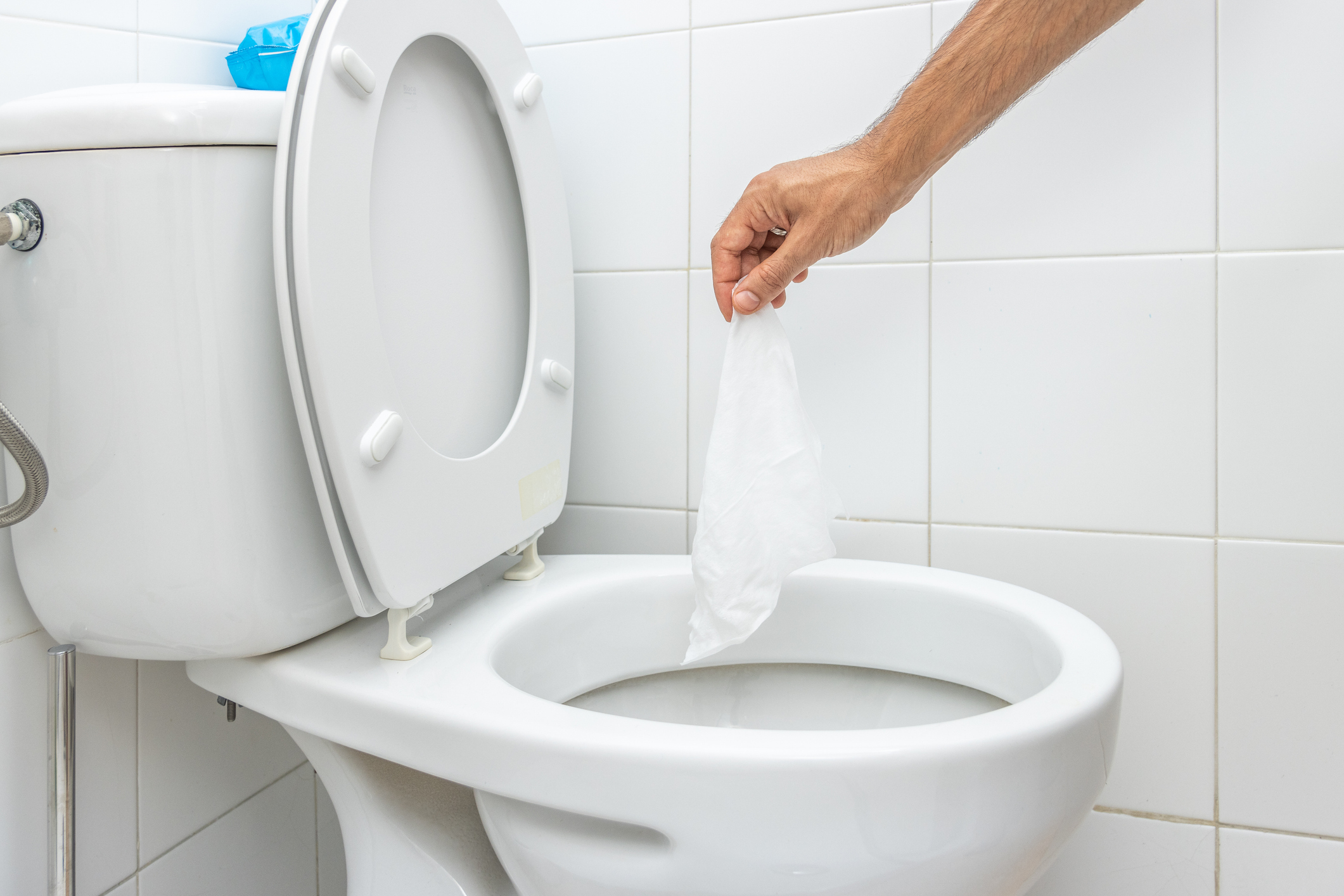
Flushable wipes are pre-moistened disposable wipes marketed as a stronger, softer alternative to toilet paper.
What makes them appealing is what also makes them confusing: packaging that often claims they’re “septic safe,” “sewer safe,” or “break down like toilet paper,” making it easy to assume they're perfectly fine to flush.
Even though brands test their products to support these claims, flushable wipes don’t hold up in drain systems. Inside your drain lines, they don’t break down easily, can catch on rough spots, and often lead to blockages, which can cause costly clogs or sewer backups.
What Does "Flushable" Actually Mean?
The word "flushable" on a wipe's packaging is misleading, since there's no real standard for what's flushable in your drain and sewer system. It simply means the product fits down the toilet and won't immediately block your drain. That's it.
There's no requirement for manufacturers to prove that a product breaks down safely in your drain lines before labeling it as "flushable." It's a marketing term, not a drain safety standard.
For a product to actually be safe to flush, it needs to break apart quickly in water, just like toilet paper. Most wipes on the market, including those labeled “flushable”, don’t come close to meeting that standard.
So when a wipe disappears after you flush it, it hasn't broken down. It's just moved further into your drain lines, where problems can start.
Why Flushable Wipes Don't Break Down Like Toilet Paper
Flushable wipes don’t break down as quickly as toilet paper.
Toilet paper is specifically designed to disintegrate when wet. The fibers are loosely bonded so that when they hit water, the sheet breaks down quickly and moves through your drain system without building up.
Flushable wipes are designed to stay intact when wet. That's what makes them effective for their intended purpose, but also makes them a problem in your drain lines. They're typically made from a blend of synthetic fibers, wood pulp, and binding agents that give them durability.
When a wipe enters your drain system, it stays whole. It moves through as a solid sheet rather than breaking apart, looking for a place to catch. Pipe bends, joints, rough spots inside older cast iron lines, or partial blockages from grease or buildup can all snag a wipe and hold it in place.
Once the first wipe catches, more begin to collect. Over time, this builds into a blockage that no amount of flushing will clear.
How Long Does It Take for Flushable Wipes to Clog Your Pipes?
It can happen faster than you'd think. A single wipe won't clog your drain overnight, but wipes don't flush away; they build up. Each one that catches on a pipe bend or joint gives the next one something to grab onto.
Within weeks or months, that buildup quietly restricts flow until you're dealing with a slow drain or a full backup. The tricky part is you won't notice anything until the damage is already done.
What Happens Inside Your Pipes When You Flush Wipes
The damage from flushing wipes usually builds up slowly, which is why many people don't connect the habit to the drain and sewer problems they experience until things get worse.
Here's what can happen inside your drain and sewer system:
Partial Blockages and Slow Drains
Wipes accumulate over time, gradually restricting flow through your drain line. You might notice your toilet flushing more slowly than usual or draining sluggishly after each flush. These are early signs that wipes have started to build up somewhere in your line, and the blockage will only grow.
Full Clogs and Backups
Eventually, enough wipes can accumulate and completely block your drain line. When that happens, wastewater has nowhere to go and backs up into your home, often into the toilet itself, a basement floor drain, or other lower drains.
Fatbergs in Sewer Lines
Wipes that make it past your home's drain lines don't just disappear. They combine with grease, oils, and debris in the sewer system, forming dense blockages known as "fatbergs" that can affect entire neighborhoods.
Damage to Pump Systems
If your home uses a sewage ejector pump, wipes can be destructive. They get wrapped around the impeller inside the pump and can burn out the motor entirely, turning an avoidable issue into a costly sewer pump repair.
Why Flushable Wipes Aren't Safe for Septic Systems
If your home uses a septic system, flushing wipes can cause even bigger problems. Septic systems rely on waste actually breaking down inside the tank, and wipes don't do that.
Here’s what can happen:
- They accumulate as solid sludge: Wipes sink to the bottom of the tank and build up over time, causing it to fill much faster than it should and requiring more frequent septic tank pumping.
- They disrupt the tank's biological process: Septic tanks need natural bacteria to break down waste. A buildup of non-biodegradable material throws off that balance and reduces the tank's ability to function properly.
- They can clog the drain field: When too much undissolved material escapes the tank, it reaches the drain field and clogs the soil. Once the drain field fails, the entire septic system can fail with it.
- They lead to costly repairs: Septic system failures are not minor fixes. Depending on the extent of the damage, repairs or full replacements can cost tens of thousands of dollars.
Even if your septic system is in good shape right now, consistently flushing wipes is one of the fastest ways to shorten its lifespan and push it toward a costly failure.
Signs You May Have a Clog Caused by Flushable Wipes
If you’ve been flushing wipes, even occasionally, watch for these warning signs:
- Your toilet flushes slowly or doesn't fully clear the bowl in a single flush.
- Your toilet gurgles after flushing, or you hear gurgling from other drains when the toilet is used.
- Your toilet is backing up or overflowing with minimal use.
- Drains in your home are slow, especially in bathrooms.
- You're noticing a sewage smell coming from drains or near the base of the toilet.
- A basement floor drain is gurgling or backing up; this is often an early warning of a main sewer line issue.
If you notice any of these, it’s best to call a drain specialist to inspect before the problem turns into a full backup.
Are Baby Wipes and Disposable Wipes Safe to Flush?
No, and the same rules apply even if the packaging says otherwise. Baby wipes, makeup removal wipes, antibacterial wipes, and toddler wipes are not safe to flush.
In fact, these products are often worse for your drains than wipes marketed as "flushable." They tend to be thicker, more durable, and made with synthetic materials that are even less likely to break down inside your drain and sewer lines.
The label doesn't matter. If it's a wipe of any kind, it belongs in the trash, not the toilet.
How to Avoid Clogs from Flushable Wipes
The simplest way to protect your drain and sewer system is to stop flushing wipes entirely, even those labeled "flushable." Throw them in the trash instead, just like any other non-flushable material.
The only things that should ever be flushed down a toilet are human waste and toilet paper. That's what your drain system is designed to handle.
If you still prefer using wipes for personal hygiene, baby care, or cleaning, that's completely fine; just throw them in a small waste bin with a lid next to the toilet. It's simple, hygienic, and avoids drain and sewer problems.
Along with flushable wipes, here are some other items that should never be flushed down your toilet:
- Baby wipes
- Diapers
- Disposable wipes
- Makeup wipes
- Paper towels and tissues
- Cotton balls or cotton swabs
- Feminine hygiene products
- Dental floss
- Medications
- Grease or cooking oils
- Cat litter
All of these can cause the same types of clogs, backups, and sewer issues as wipes, and none of them belong in your toilet, regardless of what they're made of.
Safe Alternatives to Flushable Wipes
If you prefer something more than dry toilet paper, here are drain-safe options worth considering:
- Bidet attachments and Sprayers: A simple swap that does the job with just water, no wipes needed, and nothing extra to throw away.
- Toilet paper sprays and foams: Spray onto regular toilet paper for the same fresh feeling without anything that could clog your drains.
- Biodegradable dry wipes: A good option if you like the feel of a wipe, just make sure they go in the bin, not the toilet.
- Reusable cloth wipes: They work just like regular wipes, get washed and used again, and never go anywhere near your drains.
Whatever you choose, the rule stays simple: if it isn't toilet paper, it doesn't get flushed.
Protect Your Drains from Flushable Wipes with Zoom Drain
So, are flushable wipes really flushable? The answer is no. Don't flush them. Throw wipes in the trash every time, no matter what the label says.
If you've already been flushing wipes and are noticing slow drains, gurgling sounds, or backups, it could mean a blockage is building up in your drain or sewer line. Contact your local Zoom Drain today for help!
Our technicians are available 24/7 for emergencies to inspect your lines, locate the blockage, and clear the clog completely, so your drains and life get back to flowing smoothly again.