

Table of Contents
- How a Basement Floor Drain Works
- Why Your Basement Floor Drain Is Backing Up
- Steps to Take When Your Basement Floor Drain Backs Up
- How to Prevent Basement Drain Backups in the Future
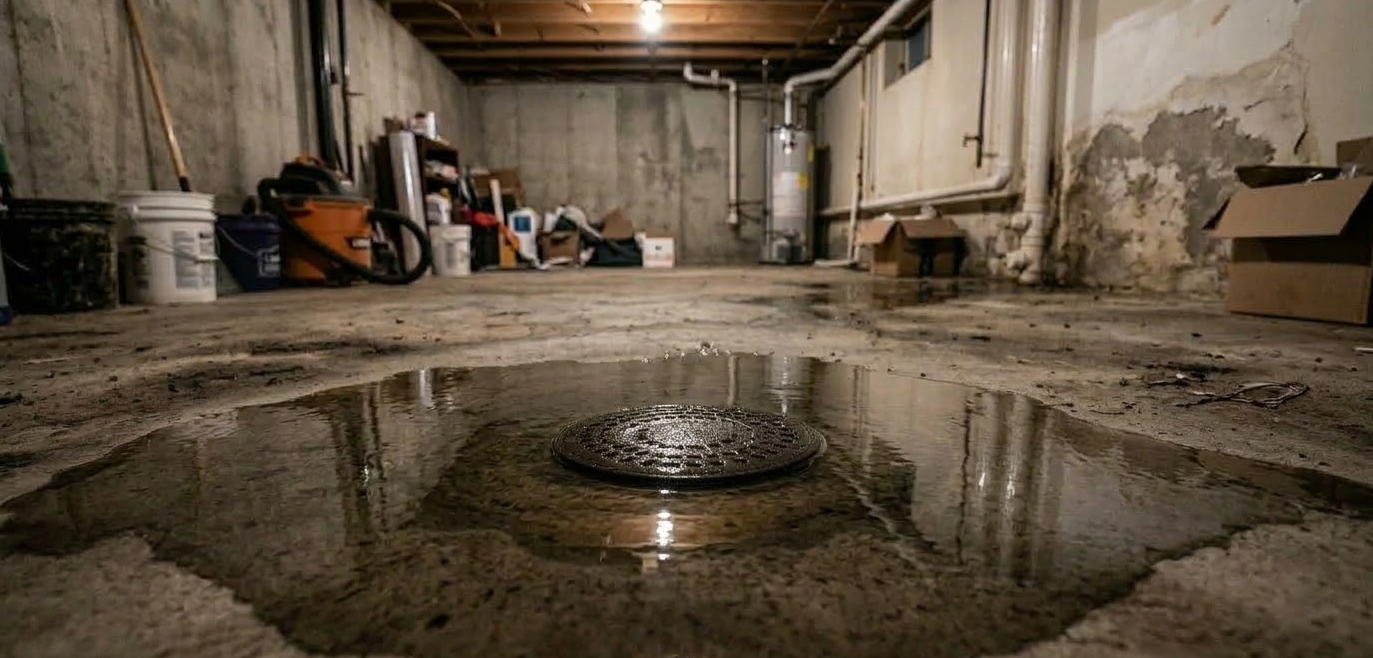
Noticed water or worse, bubbling coming from your basement floor drain? Does it smell or look like sewage? These are clear warning signs of a basement floor drain backup. When it happens, it can lead to water damage, contamination, and flooding in the lowest part of your home.
It's a stressful situation that can quickly turn into a messy, expensive problem if it's not handled properly. The good news is that a basement floor drain backing up is a common issue, and there are steps you can take right away to help limit the damage and protect your home.
We'll walk through why your basement floor drain is backing up, the immediate steps you should take, and when it's time to call in a professional.
How a Basement Floor Drain Works
Your basement floor drain is designed to remove water from flooding, leaks, or plumbing mishaps before they cause serious damage to your home. It directs water into a pipe that channels it safely out of your home.
Most basement floor drains include a trap, a small U-shaped device that holds water to block sewer gases and odors from coming up into your home. It also catches debris that could clog the pipe further down the line. When this system is blocked or damaged, backups happen.
Why Your Basement Floor Drain Is Backing Up
Because your basement floor drain sits at the lowest point of your home's drainage system, it's often the first place problems show up.
A clog or blockage anywhere along your main sewer line will force water and waste to come back up through that drain. Think of it as your home's pressure release valve.
In many cases, the basement drain is simply where you first notice a much larger issue happening deeper in your plumbing system.
Common causes of a basement floor drain backup include:
- A clogged main sewer line: Grease, debris, or years of buildup can block the main line connecting your home to the city sewer, forcing water back up through your basement drain.
- Tree root intrusion: Tree roots naturally grow toward water and can infiltrate older sewer pipes over time, causing serious and recurring blockages.
- A blocked floor drain trap: Sometimes the problem is just the basement drain itself, with a clogged trap full of dirt, hair, or soap residue that simply needs to be cleared.
- Heavy rain: Heavy rainfall can saturate the ground, allowing water to seep into your basement and overwhelm your floor drain. A sump pump can help redirect excess water before it backs up. Read our guide on preventing drain backups during heavy rain.
- Municipal sewer backup: When the city's sewer system gets overwhelmed, it can push wastewater back through your home's drain, a backup that starts outside your property entirely.
- Older or damaged pipes: Homes built before the 1970s often have clay or cast iron pipes that can crack, collapse, or corrode over time, leading to repeated basement drain backups.
- A poorly installed drain: A drain installed uphill or with an undersized line can cause backups regardless of clogs, and will need a professional to fix it.
- Sump pump failure: If your sump pump fails, water can back up fast, especially during heavy rain when your basement drainage system is under the most stress. Learn the top signs your sump pump needs to be replaced.
Important Note: If your basement drain clogs suddenly, especially after running a lot of water upstairs, like filling a bathtub or running the washing machine, there's a good chance you're dealing with a main sewer line blockage rather than just a clog in that one drain.
Steps to Take When Your Basement Floor Drain Backs Up
Step 1: Stop Using The Water Immediately
This is the most important thing you can do right now. Stop running water anywhere in the house; no flushing toilets, no running sinks, no showers, no washing machines. Every drop of water you send down a drain has to go somewhere, and right now, that somewhere is your basement floor.
Continuing to use water will make your basement floor drain backup worse and could turn a manageable situation into a much bigger, messier, and more expensive problem.
Step 2: Stay Out of the Water
If there's standing water on your basement floor, do not walk through it barefoot or without protection.
When a sewer backs up in your basement, the water coming up isn't clean; it can contain raw sewage, bacteria, and other contaminants that are very harmful.
Make sure to:
- Put on rubber boots and gloves before you go near it.
- Keep everyone, including pets, out of the basement until it's been properly assessed and cleaned.
- Shut off electricity to the basement if water is near outlets or appliances.
Step 3: Assess the Situation
Take a look at what you're dealing with before deciding your next move.
Ask yourself:
- How much water is there? A small puddle near a clogged basement floor drain is very different from several inches of standing water.
- Is it only one drain affected? If other drains or toilets in your home are also slow or backing up, this points to a main sewer line issue rather than a localized clog. Learn more about the warning signs of a sewer backup.
- What does it smell like? A sewage or "barnyard" smell is a strong sign that what's backing up is sewage, not just clean water.
- Is it still rising? If water is actively rising, stop all water use and call a professional immediately.
- Did it happen after heavy rain? This could point to a municipal sewer issue rather than a problem starting inside your home's plumbing.
This assessment will help you and any professional you call understand the full scope of the basement drain backup.
Step 4: Try to Clear a Minor Clog (Only If Appropriate)
If the backup seems minor, like a small amount of water, no sewage smell, and it appears to be an isolated clogged floor drain rather than a whole-house backup, you may be able to address it yourself.
Here's how to unclog a basement floor drain:
- Remove the drain cover. Most covers simply lift off or unscrew. Set it aside and visually inspect the opening for any obvious debris you can remove by hand.
- Locate and clean the drain trap. Most basement floor drains have a trap with a removable plug at the bottom. Unscrew it, clear out any buildup or debris, and replace it before moving on.
- Try a plunger first. Before reaching for a snake, place a plunger with a tight seal over the drain and give it a few firm plunges. This can sometimes dislodge a minor, localized clog.
- Use a drain snake or hand auger. Insert it into the drain and work it through the line to break up or pull out the clog. Go slowly; forcing it can damage older pipes. (We don't recommend this unless you are experienced with drain tools.)
- Run water to test the drain. Slowly pour a bucket of water down the drain. If it flows freely without backing up, the clog is cleared. If it backs up again, stop and call a professional.
Do not use chemical drain cleaners on a backed-up drain. If the drain is blocked, those chemicals have nowhere to go and can sit in your pipes or worse, splash back on you, causing more harm than good.
Instead, try a natural alternative: the baking soda-and-vinegar method. Pour one cup of baking soda down the drain, followed by one cup of vinegar. Let it fizz for a few minutes, then flush with hot water. This works best on minor buildup, not major blockages.
Note: this approach only works if the clog is limited to that specific drain. If the basement drain is clogged farther down the main sewer line, a hand snake won't be enough; you'll most likely need professional basement drain cleaning to fully clear it.
Step 5: Clean and Disinfect the Affected Area
Once the immediate backup has stopped, whether you cleared the clogged basement floor drain yourself or are waiting on a professional, clean up the affected area as soon as possible.
The longer contaminated water sits, the higher the risk of mold growth and bacteria spreading.
Here’s how to safely clean and disinfect the affected area:
- Remove standing water first. Use a wet/dry shop vacuum to pull up as much water as possible before mopping.
- Disinfect all affected surfaces. Mop and scrub the floor with a disinfectant solution. A diluted bleach solution (one cup of bleach per gallon of water) works well on concrete and hard surfaces.
- Dry the area thoroughly. Open windows and run fans or a dehumidifier to fully dry the space. Mold can begin forming within 24–48 hours in a damp basement.
- Dispose of contaminated items. Throw away anything porous, such as cardboard boxes, rugs, or fabric, that came into direct contact with backup water. These cannot be fully disinfected and can harbor bacteria and mold.
If you suspect the water contains sewage, consider calling your local water damage restoration company. They have the proper equipment and protective gear to handle contaminated water safely and ensure your basement is fully decontaminated.
Step 6: Call a Drain Specialist
Here's the honest truth: if your basement floor drain is backing up, you almost always need a professional. Even if you manage to get the water to drain, the underlying cause of the basement drain clog doesn't go away on its own.
Call a drain specialist immediately if:
- The water contains sewage or has a foul odor.
- Water is actively rising or won't stop backing up through the floor drain.
- Multiple drains in your home are affected at the same time.
- Your basement drain keeps backing up repeatedly.
- You have an older home with aging or corroded pipes.
A professional can:
- Use a drain camera to inspect the inside of your pipes and pinpoint the exact location of the blockage or damage.
- Snake the line, perform a thorough drain cleaning, and hydro jet the pipe.
- Recommend a sewer backup repair if the pipe itself is damaged.
Don't wait. A slow basement floor drain can quickly turn into a full sewage emergency, and the cleanup and cost get much worse the longer it sits.
How to Prevent Basement Drain Backups in the Future
Once you've fixed the immediate issue, here are a few things you can do to help prevent your basement drain from clogging again:
- Schedule regular drain maintenance: Having your main sewer line inspected and cleaned every couple of years goes a long way, especially in older homes or homes with large trees nearby. See how often you should clean your drains.
- Watch what goes down your drains: Grease, coffee grounds, wipes (even "flushable" ones), and hair are among the most common culprits of clogged floor drains in the basement and throughout your home.
- Install drain screens or strainers: Placing screens over your drains catches hair, soap, and debris before they enter the pipes; a simple and inexpensive preventive measure.
- Flush your drains regularly: Periodically pouring hot water down your basement floor drain helps break up grease and debris buildup before it becomes a clog.
- Manage landscaping near your sewer line: Large trees or shrubs planted too close to your sewer line can cause root intrusion over time. Keep them trimmed or consider relocating them. Learn more about how landscaping can affect your drains.
- Know where your sewer cleanout is: It is usually a white or black-capped pipe in your yard or basement. Knowing where it is makes it much easier for a technician to access your sewer line quickly in an emergency.
- Consider installing a backwater valve: If municipal sewer backups are common in your area, it can prevent city sewage from flowing back into your home through the basement floor drain.
Get Your Basement Drain Flowing Again with Zoom Drain®
If your basement floor drain is backing up or you're noticing early warning signs of a drainage problem, don't wait for the situation to get worse.
The longer you wait, the higher the risk of water damage to your basement, belongings, and even your home’s foundation; and if sewage is involved, it becomes a health hazard that needs to be addressed immediately.
Zoom Drain provides fast, reliable emergency basement drain cleaning. Our technicians use drain camera inspections to pinpoint exactly what's causing the backup, whether it's a clogged basement floor drain, a blocked main sewer line, root intrusion, or damaged pipes.
Once we identify the issue, we can help you determine the best next step, whether that’s professional drain cleaning, hydro jetting, or a full sewer repair if needed. Contact your local Zoom Drain today and get your basement drain flowing properly again.