

You've raked the yard, cleared the flower beds and swept the patio. There's just one last layer of leaves and dirt left behind, so you grab the hose and start washing it away.
The driveway looks clean. The patio looks better.
But where did everything go?
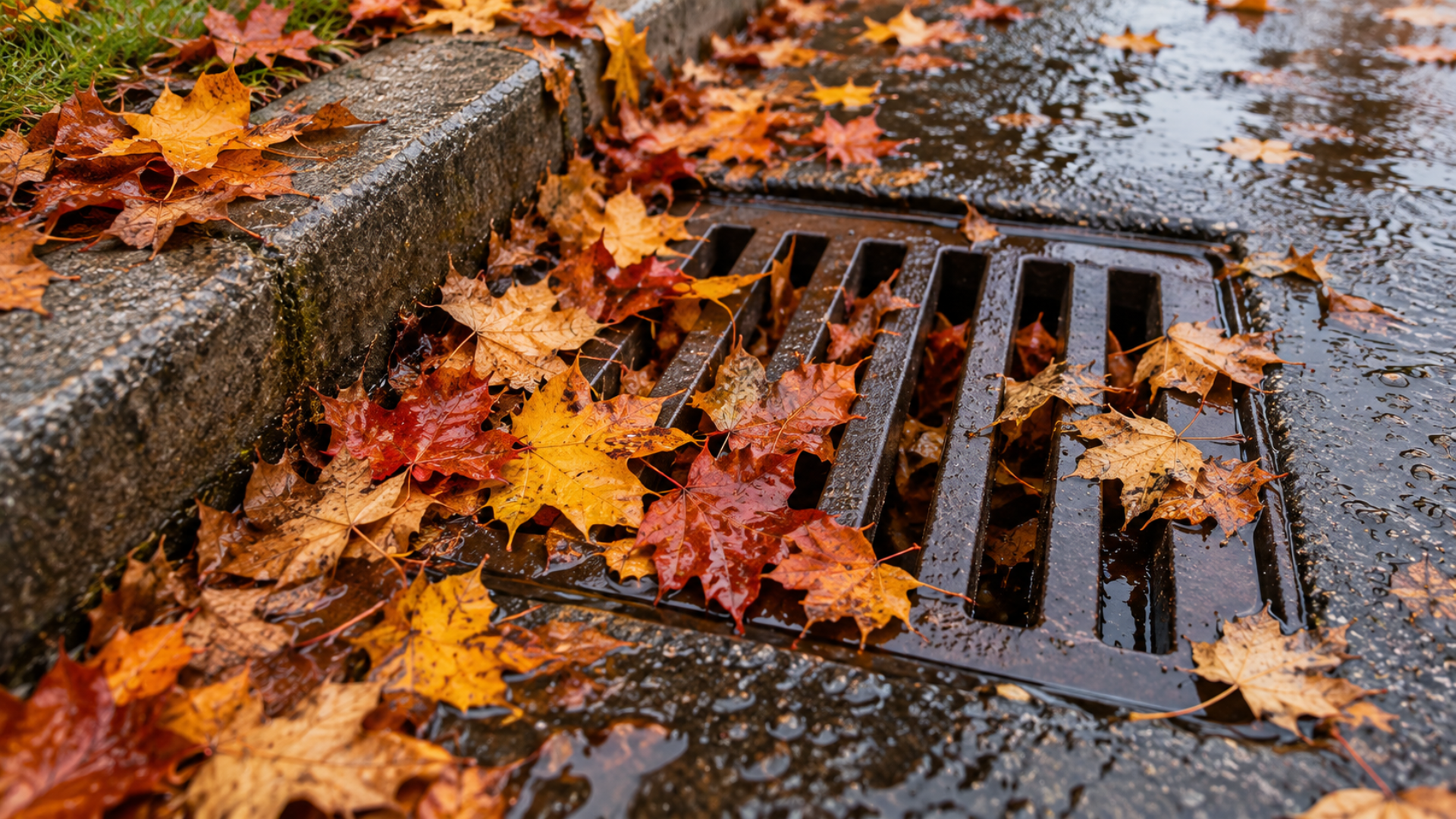
Leaves, dirt, grass clippings and other yard debris can get pushed toward outdoor drains and drainage areas. Once that debris gets wet, it can clump together, collect around drain openings and make it harder for water to flow where it should.
Yes, fall leaves can contribute to clogged outdoor drains. When wet leaves and yard debris collect over drain openings or inside accessible drainage areas, they can restrict water flow and contribute to pooling or standing water.
That quick fall cleanup may be sending more toward your outdoor drains than you realize.
Can Fall Leaves Clog Outdoor Drains?
It usually doesn't start with a giant pile.
One or two leaves near an outdoor drain probably won't get your attention. But fall has a way of turning a few leaves into a lot of leaves pretty quickly.
Add rain or water from the hose, and those leaves can become a soggy layer that traps dirt, twigs, grass clippings and other debris.
When that material collects around an outdoor drain, water may have a harder time getting through.
Depending on your property, outdoor drainage areas may include:
- Driveway and patio drains
- Yard drains and catch basins
- Outdoor stairwell drains
- Drainage grates near walkways or other low-lying areas
These drains help manage water around your property, but accumulated leaves and debris can interfere with how they function.
And when the next heavy rain arrives, a partially blocked drain may have trouble handling the additional water.
Think Before You Wash Fall Debris Away
When you're trying to finish yard work, washing that last layer of dirt and leaves off the driveway can feel like the easiest solution.
The problem is that the debris doesn't disappear. The water simply carries it somewhere else.
Instead of washing leaves, grass clippings and other larger debris toward outdoor drains, take a few minutes to collect them first.
A few simple fall cleanup habits can help reduce the amount of debris reaching your drainage areas:
- Sweep before you spray. Collect leaves, dirt and grass clippings before rinsing outdoor surfaces.
- Check outdoor drain openings. Look for leaves, twigs and other visible debris collecting around grates.
- Remove accessible buildup. Clear loose debris from around drain openings when it's safe to do so.
- Pay attention after heavy rain. Water that repeatedly pools near an outdoor drain may indicate a drainage problem worth investigating.
You don't have to make fall cleanup complicated. Just be mindful of where the debris is going.
There's More Happening Below Your Yard
Leaves aren't the only reason to think about your drains this fall.
While you're cleaning up above ground, there's another part of your property's drainage system you probably aren't thinking about.
Your home's main sewer line.
Unlike many outdoor stormwater drains, which are designed to carry rainwater away, your home's sanitary sewer line carries wastewater from sinks, showers, toilets and other fixtures to a municipal sewer system or private septic system.
Much of that line is buried underground, out of sight and usually out of mind.
But the trees and shrubs growing around your property can sometimes affect what's happening inside it.
Can Tree Roots Cause Sewer Line Problems?
Tree and shrub roots naturally spread through the soil in search of moisture and nutrients.
If there's a crack, loose joint or another opening in a sewer pipe, roots may find their way inside.
Once roots enter the line, they can continue growing, restrict the flow of wastewater and catch other debris moving through the pipe.
Over time, that can contribute to recurring clogs or sewer line backups.
Tree roots can cause sewer line blockages, but fall leaves and tree root intrusion are two separate drainage concerns. Leaves may obstruct outdoor drainage areas, while roots can enter vulnerable underground sewer pipes.
And unlike a pile of leaves covering a drain grate, a problem inside your sewer line isn't something you can spot while walking around the yard.
Sometimes, the first clues show up inside your home.
What Are the Warning Signs of a Drain or Sewer Line Problem?
Maybe the kitchen sink suddenly seems slower.
Then you hear the toilet gurgle.
Or you notice water backing up into the shower when another fixture is being used.
One slow drain may point to a problem with that individual drain. But when several fixtures start acting differently around the same time, the issue may be farther down the drainage system.
A few warning signs worth paying attention to include:
- Multiple drains slowing down around the same time
- Recurring clogs
- Gurgling sounds from drains or toilets
- Water backing up into another fixture
- Unusual drain or sewer odors
These symptoms don't necessarily mean tree roots are the cause. Grease, debris, damaged pipes and other blockages can create similar problems.
A blockage in a shared drain line can also affect multiple fixtures without involving the main sewer line.
That's why identifying where the problem is located matters.
If wastewater is backing up into your home, stop using affected fixtures, limit water use and contact a drain and sewer professional.
Give Your Drains a Little Attention This Fall
Fall cleanup is mostly about what you can see: leaves covering the lawn, dirt on the patio and debris collecting around the house.
But it's worth paying attention to what you can't see, too.
Sweep up leaves and larger debris instead of washing them toward outdoor drains. Check accessible drainage areas around your property and remove visible buildup. And if the drains inside your home start slowing down, gurgling or backing up, don't ignore the signs.
Those changes may point to a problem farther down the line.
At Zoom Drain, drains and sewers are our specialty. Our expert service technicians have the training and specialized equipment to evaluate drain and sewer problems, identify potential causes and recommend the appropriate solution.
So while you're getting the yard ready for the season ahead, give your drains a little attention, too.
Contact your local Zoom Drain and Get Your Life Flowing Today®.