

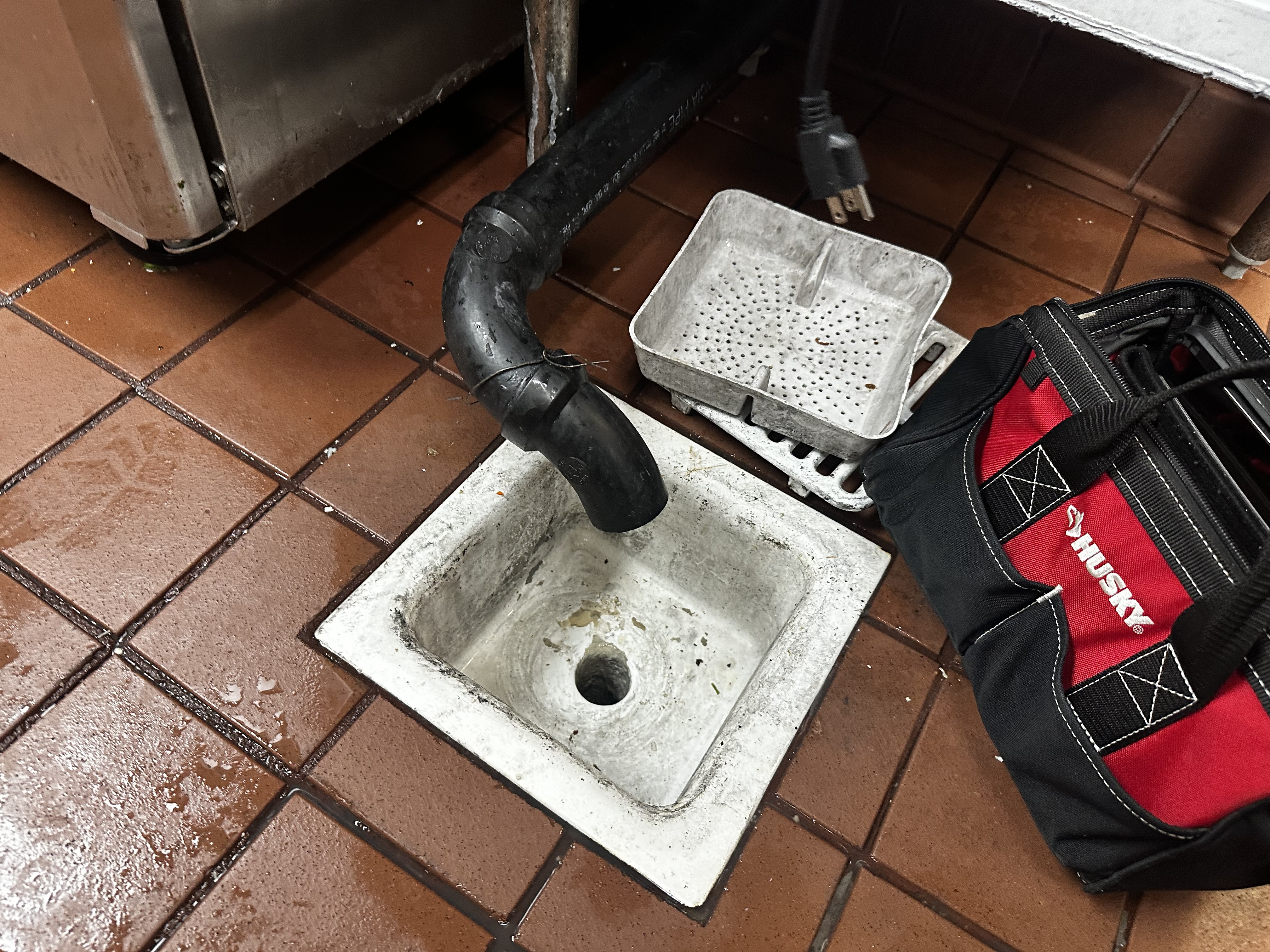
For most commercial properties, preventative drain cleaning is recommended every three months to once a year, depending on the type of business, how heavily the drains are used, and the condition of the drainage system.
Restaurants and commercial kitchens often benefit from quarterly cleaning. Office buildings and general commercial properties may only need annual maintenance. Larger properties may benefit from dividing maintenance into smaller, regularly scheduled visits.
But these are starting points—not fixed rules.
The best maintenance schedule starts with understanding the condition of the drains and how they're actually being used.
For businesses throughout the South Bay, the goal is straightforward: keep the drainage system working reliably and avoid unexpected interruptions to daily operations.
How Often Should Different Commercial Drains Be Cleaned?
While every property is different, these are common starting recommendations:
| Commercial property | Typical starting frequency |
|---|---|
| Restaurants and commercial kitchens | Quarterly |
| Office buildings and general commercial properties | Annually |
| Multifamily and multi-unit properties | Annually, often divided into scheduled sections |
| Commercial main sewer lines | Annually |
| High-use or problem-prone drains | Based on inspection, usage and maintenance history |
Restaurants often require more frequent cleaning because grease, food particles and other waste accumulate in their drains. Seasonal changes in business volume can also affect how quickly buildup develops.
Office buildings generally have different drainage demands. Annual maintenance may be sufficient, depending on occupancy, usage and system condition.
For larger properties, maintaining every drain at the same time isn't always practical.
A property manager might divide a building into four sections and schedule one section each quarter. Each section still receives annual maintenance, but the work is spread throughout the year.
This approach makes budgeting easier, improves scheduling flexibility and reduces disruption to tenants or building operations.
What Determines the Right Cleaning Frequency?
Inspection is the most important starting point.
We can make assumptions based on the type of business, but seeing what's happening inside the drain provides much better information.
A sewer camera inspection can reveal accumulated grease, debris, scale, root intrusion or other conditions affecting drainage.
From there, we consider two additional factors.
How frequently is the drain used?
A busy commercial kitchen may place substantially greater demands on its drains than a small office building. Even within the same business, some lines receive much heavier use than others.
What does the maintenance history tell us?
Previous stoppages, cleaning records and inspection findings help establish how quickly material accumulates.
If a line remains relatively clean after a year, annual maintenance may be appropriate. If significant buildup returns after several months, we may need to shorten the interval or investigate the cause.
The objective isn't to clean as frequently as possible. It's to establish a schedule that makes sense for the property.
How Do You Establish a Commercial Drain Maintenance Program?
We start by understanding the drainage system, reviewing its maintenance history and identifying the lines that need attention.
Depending on the property, we may use camera inspection, hydro jetting and flow testing to evaluate the system's condition and performance.
Establishing a baseline is particularly important.
After cleaning and inspecting a line, we have a reference for its condition. Subsequent maintenance visits help us understand how quickly grease, debris or other material accumulates.
That information allows us to adjust the cleaning interval based on actual findings.
Seasonality matters, too. Restaurants may experience heavier traffic during certain months, while other commercial properties have predictable periods of increased use.
A good maintenance program accounts for those changes rather than treating every month as identical.
Why Is Preventative Maintenance Important for Businesses?
The primary reason is to avoid unexpected business interruptions.
A backed-up commercial drain can affect employees, customers, tenants and daily operations.
For a restaurant, a sewer stoppage may interfere with kitchen operations or force part of the business to close until the problem is resolved.
For a commercial building, a backup can disrupt tenants, create sanitation concerns and require emergency service during normal business hours.
Scheduled maintenance allows owners and managers to plan the work at more convenient times while identifying developing problems before they cause stoppages.
Regular cleaning also helps preserve the useful life and performance of drain lines by removing accumulated material before it becomes a significant restriction.
In some cases, consistent maintenance may reduce the need for more extensive corrective work.
When Repeated Cleaning Isn't Really Preventative Maintenance
There's an important difference between maintaining a drain and repeatedly cleaning it because of an unresolved problem.
Consider a sewer line with significant root intrusion.
Hydro jetting may trim the roots and restore flow, but it doesn't repair the opening that allowed the roots to enter.
Cleaning every few months might provide temporary relief. However, the underlying problem remains and could worsen unexpectedly.
That's temporary management of an existing problem—not the same as routine preventative maintenance.
Depending on the findings, a more permanent solution might involve targeted repair, lining or replacement.
By contrast, routine maintenance removes the normal accumulation of grease, debris and other material from a serviceable drainage system.
Preventative maintenance helps preserve performance. Temporary cleaning of an unresolved defect may buy time, but it doesn't eliminate the associated risk.
A Torrance Restaurant With Recurring Grease Backups
We worked with a restaurant in Torrance that was experiencing recurring grease-related drain stoppages.
Snaking and hydro jetting provided partial relief, but the problems continued returning and disrupting restaurant operations.
The underlying issue wasn't simply that the drain lines needed more frequent cleaning.
The restaurant's grease interceptor needed to be emptied more frequently.
When the interceptor wasn't serviced often enough, grease accumulated in the drainage system and contributed to additional stoppages.
Cleaning the drains addressed the accumulated material, but it didn't correct the maintenance issue that allowed the grease to keep building up.
This illustrates why commercial drain maintenance needs to consider the complete system.
For restaurants, that may include kitchen branch drains, main sewer lines and grease interceptors. Each serves a different purpose, and maintaining one component doesn't compensate for inadequate maintenance elsewhere.
The appropriate schedule needs to reflect how those components work together.
Should Every Commercial Drain Be Cleaned on the Same Schedule?
Not necessarily.
Even within one property, different drain lines may have different maintenance requirements.
A commercial kitchen branch line might accumulate grease quickly, while the building's main sewer remains relatively clean.
A large apartment complex may have several drainage sections serving different parts of the property.
Rather than treating every drain identically, we can establish a maintenance program based on usage, condition and operational needs.
That may mean cleaning certain lines quarterly while inspecting or maintaining others annually.
For larger properties, dividing the work into scheduled sections provides more consistent oversight without requiring a major maintenance event every time.
A Maintenance Schedule Should Change When Conditions Change
A preventative maintenance program shouldn't remain unchanged simply because it was established years ago.
Drain usage changes. Businesses grow. Tenants change. Equipment and operating practices evolve.
The condition of the drainage system can change, too.
That's why we recommend periodically reviewing inspection findings and maintenance history.
Sometimes the interval can be extended. Sometimes it should be shortened. And sometimes the findings indicate that cleaning alone is no longer appropriate.
For commercial properties throughout Torrance and the South Bay, our goal is to help owners and managers understand their drainage systems and maintain them with as little disruption as reasonably possible.
Start with inspection. Establish a baseline. Clean and verify. Then adjust the schedule based on what the system actually needs.
The right maintenance program should help keep your business operating—not simply put another cleaning appointment on the calendar.
Published: November 6, 2026
Last reviewed: November 6, 2026
South Bay Drain Guide | Zoom Drain Los Angeles
Practical drain and sewer guidance for South Bay homeowners, businesses and property managers.