

Older cast-iron drain pipes can develop a rough, scaled interior that gradually restricts the opening of the pipe and gives debris more places to catch.
Sometimes hydro jetting can loosen and flush away portions of that buildup. But when hardened scale remains attached to the cast iron itself, cleaning the line may require a more physical process called descaling.
So how do you remove scale from a cast-iron drain pipe?
The first step is understanding what is actually inside the line and the condition of the pipe underneath it.
What Does Cast-Iron Scale Look Like?
Scale inside cast-iron drain pipe is different from the material we normally think of as a clog.
Grease can be soft or gooey. Roots tend to be stringy or fibrous. Loose debris can usually move around or flush through the system.
Cast-iron scale is different. It forms along the walls of the pipe and can be chunky, rough and irregular, with edges protruding into the path of the wastewater.
That matters for two reasons.
First, enough scale can reduce the usable opening inside the drain.
Second, all those rough edges create places where toilet paper and other material can catch. What starts as deterioration along the pipe wall can therefore contribute to recurring stoppages.
A customer may experience the problem simply as another clogged drain without realizing what's happening inside the pipe.
Can Hydro Jetting Remove Cast-Iron Scale?
Hydro jetting can be an important part of cleaning a scaled cast-iron line. High-pressure water can remove accumulated debris and loosen some scale.
But there is a limit to what water alone can accomplish.
One way we explain it is to think about washing a cast-iron skillet.
Some material rinses away. Other material requires you to physically scrub or scrape the surface.
A similar distinction applies inside a drain pipe. Hydro jetting can clean and flush the line, but hardened scale may remain attached to the cast iron.
That's when mechanical descaling may make sense.
What Is Cast-Iron Pipe Descaling?
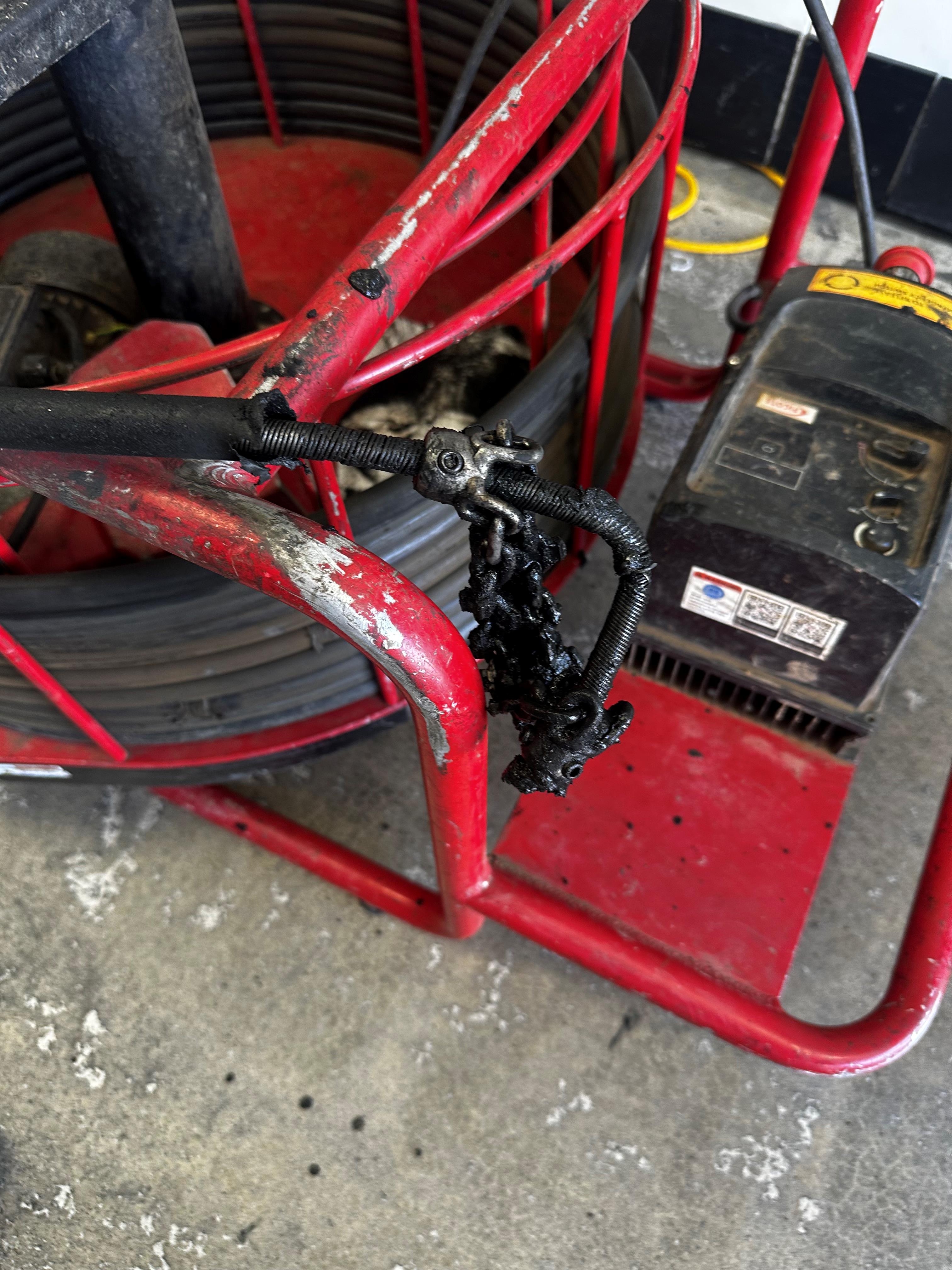
Descaling uses mechanical action to work against the buildup along the interior of the pipe.
Rather than relying on water pressure alone, specialized equipment physically works on the hardened material to loosen it from the pipe wall. As scale is removed, we flush the loosened material from the drain.
This isn't necessarily a one-pass process.
We may work an area gradually, flush the material we've loosened, inspect our progress and continue as appropriate. Taking the time to do the work carefully matters because we're physically interacting with an existing pipe—not simply washing loose debris through it.
Diagnosis Comes Before Descaling
We don't want to assume every older cast-iron drain needs descaling simply because it has some scale.
Often, the investigation starts with the history of the drain.
Has it experienced recurring clogs or stoppages? Is toilet paper or other debris repeatedly catching in the line? What has previous cleaning removed?
A camera inspection can be particularly useful because it allows us to see the interior surface of the pipe and distinguish loose material from scale attached to the cast iron.
We may first clean the line as much as practical to remove grease, debris and other material. That gives us a better view of what remains.
If hardened scale is still significantly affecting the line, mechanical descaling becomes another tool we can consider.
Afterward, we can inspect the pipe again. That visual verification helps us compare the condition before and after the work and understand what the process actually accomplished.
Descaling Has to Be Done Carefully
There is an important limitation to understand:
Descaling is a mechanical process, and mechanical work can affect the pipe itself.
Cast iron can deteriorate over time. In some lines, the remaining pipe may be capable of handling careful descaling. In others, deterioration may have progressed far enough that aggressive mechanical cleaning could damage an already weakened section.
That's why we take our time and work gradually.
The goal isn't to attack the pipe as aggressively as possible. It's to improve the drain while preserving as much of the existing pipe as circumstances reasonably allow.
And sometimes the condition of the cast iron means descaling isn't the appropriate answer.
That's another reason inspection matters. Removing debris and scale isn't useful if we ignore what the condition of the underlying pipe is telling us.
A Preventative-Maintenance Discovery in San Pedro
Not every scaled drain first gets our attention because of an emergency.
We recently worked at a commercial facility in San Pedro where the customer hadn't been experiencing recurring clogs. The drain lines were being evaluated as part of preventative maintenance.
We found substantial debris inside the cast-iron system along with signs of tuberculation and scale.
The interesting part was that the line was already showing how a future stoppage could develop. Toilet paper was catching on the rough areas inside the pipe even though the customer hadn't yet experienced a backup.
They had caught the problem early.
We worked with the customer to descale the line, gradually loosening and flushing out the material.
The difference was readily apparent during the following camera inspection. With the accumulated material removed, the usable opening through the drain appeared substantially larger and the line was able to maintain good flow.
Instead of waiting for a stoppage to force the issue, preventative maintenance gave the customer an opportunity to identify and address the condition beforehand.
Hydro Jetting, Descaling and Other Cleaning Methods Have Different Jobs
There isn't one drain-cleaning tool that's right for every situation.
Power snaking can help open a blockage. Hydro jetting can clean and flush material from a line. Mechanical descaling can work on hardened scale that water alone cannot adequately remove.
Sometimes more than one method is appropriate during the same job.
The important part is understanding what problem we're trying to solve.
If the line is filled with loose debris, removing that debris may be the priority. If cleaning reveals substantial hardened scale, descaling may be appropriate. If inspection reveals that the pipe itself is too deteriorated for further mechanical work, the conversation may need to move in a different direction.
The tools should follow the diagnosis—not the other way around.
The Goal Is to Get More Useful Life From the Drain
Finding scale inside a cast-iron drain doesn't automatically mean the pipe needs to be replaced.
Depending on its condition, careful cleaning and descaling may improve the usable opening of the pipe, reduce the rough areas that catch debris and help the system flow more effectively.
But descaling also isn't simply a more aggressive version of hydro jetting. It's physical work on an existing pipe, and it takes time and care to perform properly.
That's why we want to understand the history, clean what can be cleaned, inspect the condition of the line, use the appropriate tools and verify the results afterward.
Whether that's power snaking, hydro jetting, descaling or eventually discussing repair, the objective is the same:
Use the right process for the condition we actually find and provide the greatest practical value from the drain system that's there.
Published: October 23, 2026
Last reviewed: October 23, 2026
South Bay Drain Guide | Zoom Drain Los Angeles
Practical drain and sewer guidance for South Bay homeowners, businesses and property managers.