

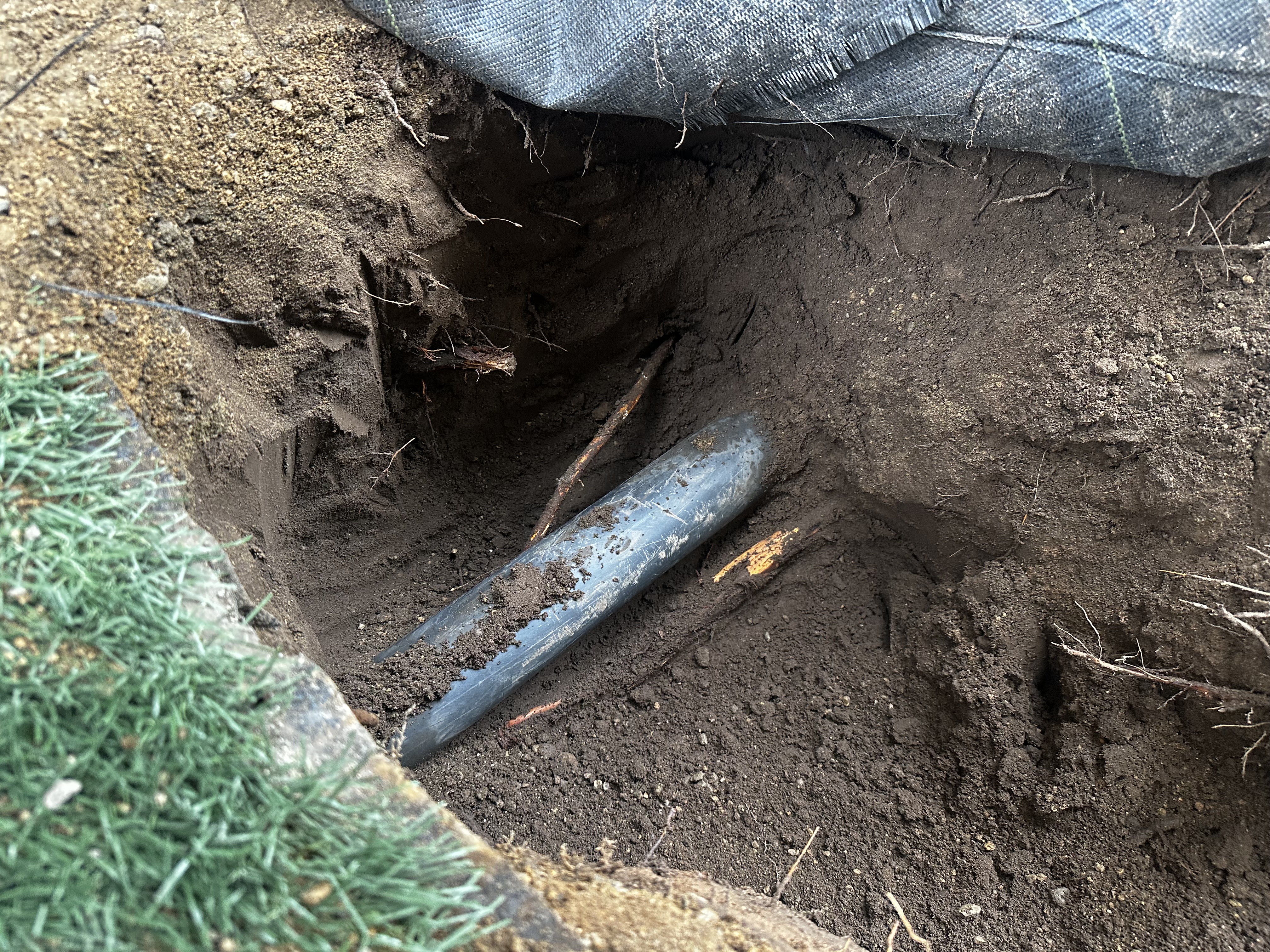
A drain that clogs once may simply need cleaning. A drain that keeps having problems may need more investigation. And even when we find damage, roots or another issue inside the pipe, that doesn't automatically mean the entire line needs to be replaced.
So when does a drain actually need repair instead of cleaning?
It depends on what is causing the problem, how the system performs after cleaning, and what you need that drain to do going forward.
That's why we prefer to understand the complete situation before recommending the next step.
Cleaning and Repair Solve Different Problems
Drain cleaning is primarily about removing material that is restricting flow. Depending on the situation, that might mean debris, grease, sediment, roots, buildup or other obstructions.
Repair addresses a physical condition of the drain itself.
A damaged section of pipe, significant root intrusion, an offset connection or another structural problem cannot necessarily be corrected by cleaning. But finding one of those conditions doesn't automatically tell us how urgently it needs to be repaired.
The degree matters.
A small root entering a drain might be trimmed and monitored. If that same root grows back aggressively and repeatedly obstructs the pipe, the conversation changes.
The important question becomes: What can we reasonably expect to happen next?
Start With the History
Some customers call us for preventative maintenance. Others call because wastewater is backing up, a storm drain isn't draining, or something has already become an emergency.
Either way, the history matters.
Has this drain clogged before? How recently? How often has it been cleaned? What was found previously? Has the problem been getting worse? Is one fixture affected, or is a larger part of the property involved?
We combine that context with what we observe ourselves.
Depending on the situation, that may include cleaning the line, flow testing, camera inspection, locating problem areas and comparing what we see before and after the work.
The goal isn't simply to find an imperfection inside a pipe. It's to understand whether that condition is actually affecting the drain and what it means for the customer.
Sometimes Cleaning Buys Valuable Time
We do our best to resolve a drain problem fully, but sometimes the most valuable thing we can do today is improve the situation and gather enough information to make a better decision about tomorrow.
Consider root intrusion.
Roots inside a drain tell us that they've found a way into the pipe. Cleaning can remove or trim the roots, but it doesn't eliminate the opening that allowed them to enter.
Does that mean the pipe has to be repaired immediately?
Not necessarily.
If the intrusion is relatively minor, the line cleans well, flow is restored and the roots return slowly, monitoring and periodic maintenance may be a reasonable option.
But suppose those roots grow back quickly, substantially restrict the pipe and cause another backup a short time later. Now we have additional information.
Repeated cleaning may still provide temporary relief, but repair may provide greater long-term value.
That's why time can be part of the diagnosis. What happens between service visits can tell us something a single inspection cannot.
A Drain Can Flow and Still Have a Problem
Seeing water come out of the other end of a drain is useful information—but it doesn't necessarily tell us how much of the pipe is open.
We saw a good example of this while cleaning storm drains at a home near LAX.
The customer knew there was flow because they could see water reaching the outlet. They even suspected that roots might be present.
Our initial inspection showed something much more significant: a large portion of the line was packed with roots.
Water had still found a way through.
Fortunately, much of the storm drain itself remained intact. We were able to remove the majority of the root mass and get a much better understanding of the condition of the system.
That changed the repair conversation.
Instead of replacing the full length of storm drain through the yard, the customer chose a spot repair at the area where the roots were entering.
The goal wasn't to sell the largest repair possible. It was to identify the actual problem area and correct what needed correction while preserving the portion of the system that was still serviceable.
Repair Doesn't Always Mean Replacing Everything
This is an important point when customers hear that a drain has a structural problem.
Repair can mean different things depending on what we find.
Sometimes a specific damaged area can be addressed with a localized repair. In other situations, the condition may affect enough of the line that a more extensive repair makes sense. And sometimes cleaning and monitoring remain reasonable for the time being.
The appropriate approach depends on factors such as the location and extent of the problem, how the drain is performing, how quickly the condition is creating new problems, and what the customer wants to accomplish.
That's why diagnosis should come before deciding on the repair.
The Right Question Is What Makes Sense Next
There isn't one camera image, one number of clogs or one universal rule that automatically changes a drain from a maintenance problem into a repair problem.
Instead, we try to build the complete picture:
What happened? What does the customer already know? What did we find? What could we clean or correct? How did the system perform afterward? What remains? And what can the customer reasonably expect if nothing else is done?
For a South Bay homeowner, that might mean monitoring a root intrusion and maintaining the line for now. For a business that can't tolerate another sewer backup, the same type of recurring problem may justify a different timeline.
Sometimes cleaning solves the problem.
Sometimes it buys valuable time.
And sometimes cleaning, inspection and testing give us the evidence needed to recommend a repair.
The goal is to understand which situation you're dealing with—and then build an action plan that professionally addresses the problem while providing the greatest practical value.
Published: October 16, 2026
Last reviewed: October 16, 2026
South Bay Drain Guide | Zoom Drain Los Angeles
Practical drain and sewer guidance for South Bay homeowners, businesses and property managers.