
Tables of Contents
- Signs Your Garbage Disposal is Clogged
- How to Unclog Your Garbage Disposal
- Common Causes of Garbage Disposal Clogs
- Why Your Garbage Disposal Keeps Clogging
- When to Call a Professional for Help
- Frequently Asked Questions
A clogged garbage disposal can quickly throw off your day, leaving you with standing water in your kitchen sink, foul odors, and a motor that hums but won't grind. If your disposal isn't draining or keeps backing up, you're likely dealing with a blockage that needs attention.
The good news? Some garbage disposal clogs can be handled safely at home. Others, however, may signal a deeper drain problem that won’t go away with a quick reset. Knowing the difference can save you time and stress and help prevent damage to your plumbing.
In this guide, we’ll walk you through how to unclog your garbage disposal, explain what causes these clogs in the first place, and help you figure out when it’s time to call a professional for help.
Signs Your Garbage Disposal is Clogged
If you have a clogged garbage disposal, it usually gives you a few warning signs before completely backing up.
Common signs include:
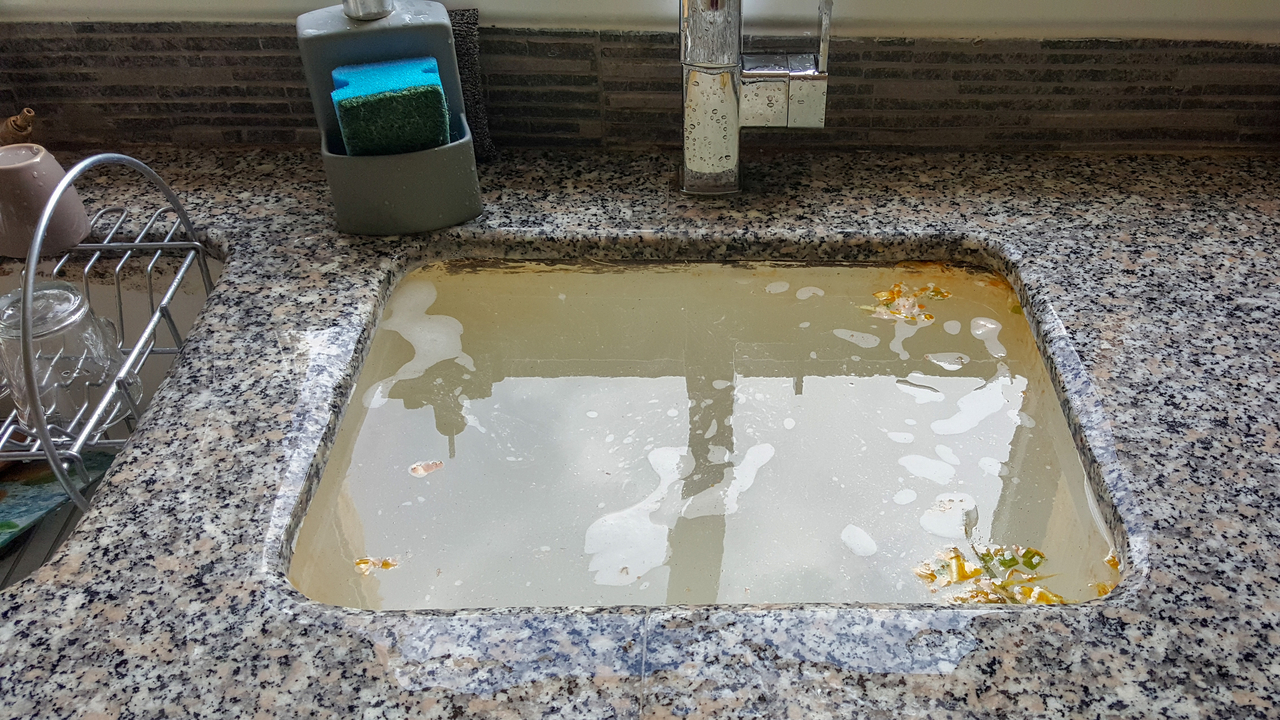
- Water isn’t draining or is backing up into the sink, even after running the disposal.
- Slow drainage happens even when the disposal is running.
- Humming, clanking, or grinding noises mean the motor is running, but something is blocking the grinding components or stopping food from moving through.
- Foul or lingering odors coming from the sink are usually from trapped food waste.
- Your garbage disposal shuts off or needs frequent resets, often due to strain from a clog.
- Your sink disposal is clogged, but other drains in the home seem slow, too, which may point to a clog deeper in the drain line.
If your garbage disposal is not draining at all, or water rises every time you run it, there’s likely a clog in the unit, the P-trap, or the drain line below it.
If multiple fixtures are backing up at the same time, that can be a sign of a bigger issue in the main drain or sewer line, not just a blocked garbage disposal.
How to Unclog Your Garbage Disposal
Before starting, remember this rule: never put your hand inside your garbage disposal. Even when it’s off, the grinding components can still cause serious injury.
Work through these steps in order, but you can stop as soon as the clog clears, as you may not need all of them:
Step 1: Turn Off the Power
Safety comes first. Turn off your garbage disposal switch, and then shut off the power at the breaker. This protects you while you inspect and clear the clog and ensures the disposal won’t accidentally turn on while you’re working.
Step 2: Check for Visible Blockages
Use a flashlight to look inside the disposal from the top. If you see food scraps or debris stuck inside, use tongs or pliers to remove them; never your hands.
The most common items that cause your garbage disposal to become blocked include fibrous vegetables, utensils, bottle caps, bones, and bits of food packaging.
Once cleared, restore power and test your disposal briefly with cold water running. If it spins and drains normally, you may have solved the problem.
If your garbage disposal hums but the grinding components aren't turning, you may also need to use the Allen wrench (hex key), typically ¼ inch, that comes with many disposals. Insert it into the bottom center of the unit and gently turn to free the stuck grinding plate. Do this only with the power off.
Step 3: Reset the Garbage Disposal
If your garbage disposal is not working after removing debris, try pressing the reset button:
- Find the small reset button on the bottom of the disposal (usually red or black).
- Press it firmly until it clicks.
- Restore power and test the disposal with cold water running.
If it runs normally afterward, the clog or overload may have just been minor. If it immediately shuts off again, there may still be a blockage or a deeper issue with your garbage disposal or the drain line.
Step 4: Baking Soda and Vinegar Method
The baking soda and vinegar method works best for loosening light buildup and deodorizing your garbage disposal, but it won’t fix deep, hardened, or grease-heavy clogs.
Here’s how to do it:
- Turn off the power for your garbage disposal.
- Pour ¼ cup of baking soda into your garbage disposal.
- Add ½ cup white vinegar.
- Let it fizz for 5–10 minutes.
- Flush with hot water, then test your garbage disposal.
Step 5: Use a Sink Plunger
A sink plunger can help loosen a clog below the disposal when water isn't moving through the line.
Here's how to use it correctly:
- Make sure there’s enough water in the sink to cover the plunger’s edge.
- If you have a double basin sink, seal off the second drain with a stopper or a wet cloth.
- Place the plunger over the disposal drain, create a tight seal, and plunge several times firmly.
- If water begins draining more quickly, the clog has likely loosened.
Here's an example of plunging your disposal drain:
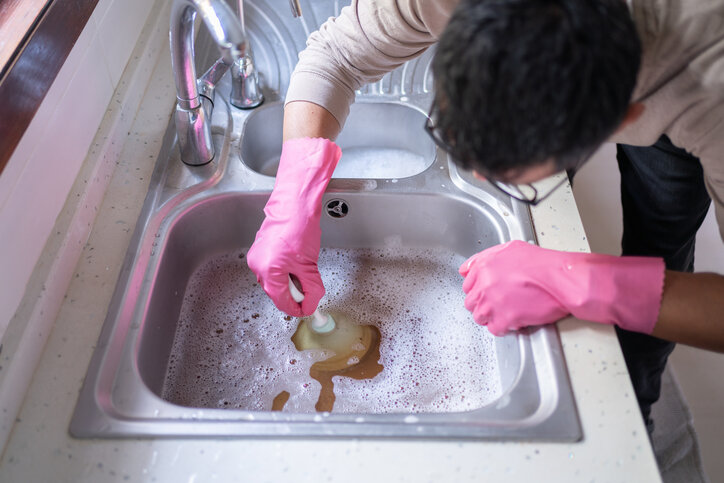
This method works well for a garbage disposal that isn't draining due to softer buildup or partial blockages that haven’t hardened yet.
Step 6: Clean the P-Trap (If Needed)
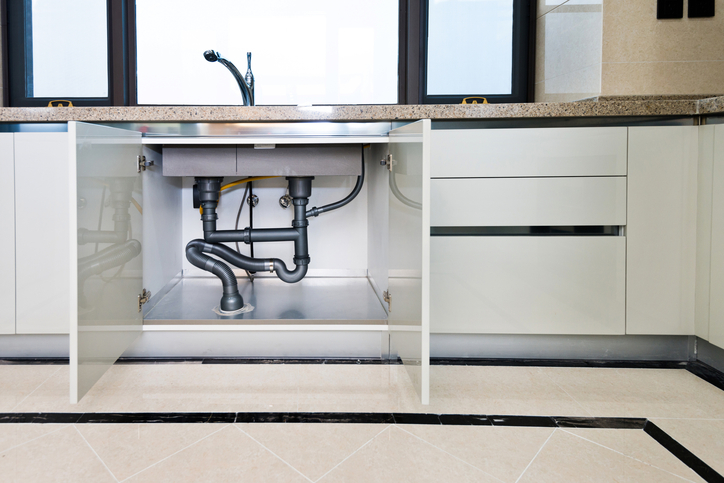
If plunging your garbage disposal doesn’t work, the clog may be sitting in your P-trap (the curved pipe under the sink) or the horizontal section of pipe leading to the wall.
Below is a photo of a P-trap under the kitchen sink:
To clean your P-trap:
- Place a bucket underneath the P-trap to catch water and debris.
- Carefully loosen the slip nuts and remove the P-trap.
- Look for and remove any buildup or debris inside the trap.
- Check the horizontal pipe that connects to the wall for visible clogs as well.
This step is especially helpful for recurring disposal clogs, as repeated backups usually mean the blockage isn’t just in the disposal, but farther down the drain.
If the P-trap and nearby piping are clean but your disposal is still clogged, the issue may be deeper in the drain line and not something you’ll easily reach without professional equipment.
Note: All these steps are intended for minor clogs in a working garbage disposal. If your disposal is not working at all, or you smell burning or see leaks, skip the DIY and call a professional drain specialist.
Common Causes of Garbage Disposal Clogs
Understanding why garbage disposals clog can help you avoid another headache down the road.
Some common causes include:
- Not running water while using the disposal: Water helps carry ground-up food through the drain line. Without it, debris sticks to the pipe walls and builds up over time.
- Grease, fats, and oils: These harden inside pipes and are a leading cause of garbage disposal not draining and slow kitchen sinks. Even if the disposal grinds food, the grease can still cool and cling to the drain line.
- Starchy or expandable foods: Foods like rice, pasta, potatoes, and bread swell with water and create dense blockages.
- Overloading the disposal: Putting too much food in at once can overwhelm the unit and send large chunks into the drain, leading to a clogged sink disposal.
- Worn or malfunctioning parts: If your garbage disposal is not working efficiently, it may not grind food small enough, causing buildup and repeated clogs.
- Aging units: Most disposals last around 8–15 years. Older units clog more easily, jam more often, and may need more frequent resets or repair.
As mentioned, one of the biggest causes of garbage disposal clogs is putting the wrong food down the drain. For more tips on what’s safe to put down your disposal, check out our blog, Foods You Should and Should Not Put Down the Garbage Disposal.
Why Your Garbage Disposal Keeps Clogging
If your garbage disposal keeps clogging, even after you clear it, the issue may not be the appliance itself; it may be the drain system.
Some common reasons are:
- Partial clogs deeper in the drain line that never fully clear.
- Grease buildup beyond the kitchen sink or P-trap.
- Improper installation or venting that makes drains more prone to backups.
- A blocked garbage disposal is masking a larger drain issue further down the line.
- Main drain or sewer line problems that cause multiple fixtures to back up at once.
If your garbage disposal keeps clogging no matter what you try, it's time to stop treating it as a one-off annoyance and start looking at the bigger picture.
When to Call a Professional for Help
While DIY methods work for minor garbage disposal clogs, it may be time to call a professional if you notice:
- Frequent or recurring garbage disposal clogs.
- Water backing up into other sinks or fixtures when you run the disposal.
- Standing water that won’t drain at all, even after plunging and cleaning the P-trap.
- Burning smells, leaks under the sink, or complete garbage disposal failure.
- Your garbage disposal is not working, and resetting it doesn’t help.
These signs usually mean there is a deeper drain issue that won’t be fixed with plunging or cleaning alone. Ignoring it can lead to bigger, more expensive problems, especially if the main drain or sewer line is involved.
Clear Your Clogged Garbage Disposal with Zoom Drain
If your garbage disposal still isn’t draining, it may be a sign that the problem goes beyond the disposal itself. Taking care of it sooner can help prevent more serious drain issues later and protect the rest of your plumbing.
At Zoom Drain, we’re available 24/7 to help diagnose what’s really going on. Our technicians can take a look at your sink and drain system, explain what they find, and clear the blockage if needed. We focus on the entire drain line, not just the appliance, so you don’t have to call back for the same clog a few weeks later.
Contact your local Zoom Drain today for a no-cost assessment and get your garbage disposal flowing properly again!
Frequently Asked Questions
How Can I Prevent My Garbage Disposal from Clogging Again?
To prevent future clogs, always run cold water before, during, and after using your disposal. Avoid putting grease, fats, or starchy foods down the drain, and feed scraps in small batches rather than all at once.
You can also clean the disposal regularly using a combination of baking soda, vinegar, and ice cubes to help clean the grinding chamber and dislodge buildup. Regular maintenance like this helps your disposal run smoothly and prevents recurring problems.
Are Chemical Drain Cleaners Safe for Garbage Disposals?
Chemical drain cleaners are not recommended for garbage disposals. They can damage the unit’s seals, grinding components, and other internal parts, and they’re harsh on your pipes and the environment.
Instead, consider professional drain cleaning or using an eco-friendly solution like Zoom Drain Bio™. This natural formula works like a probiotic for your plumbing, breaking down soap residue, food particles, grease, and other organic buildup.