

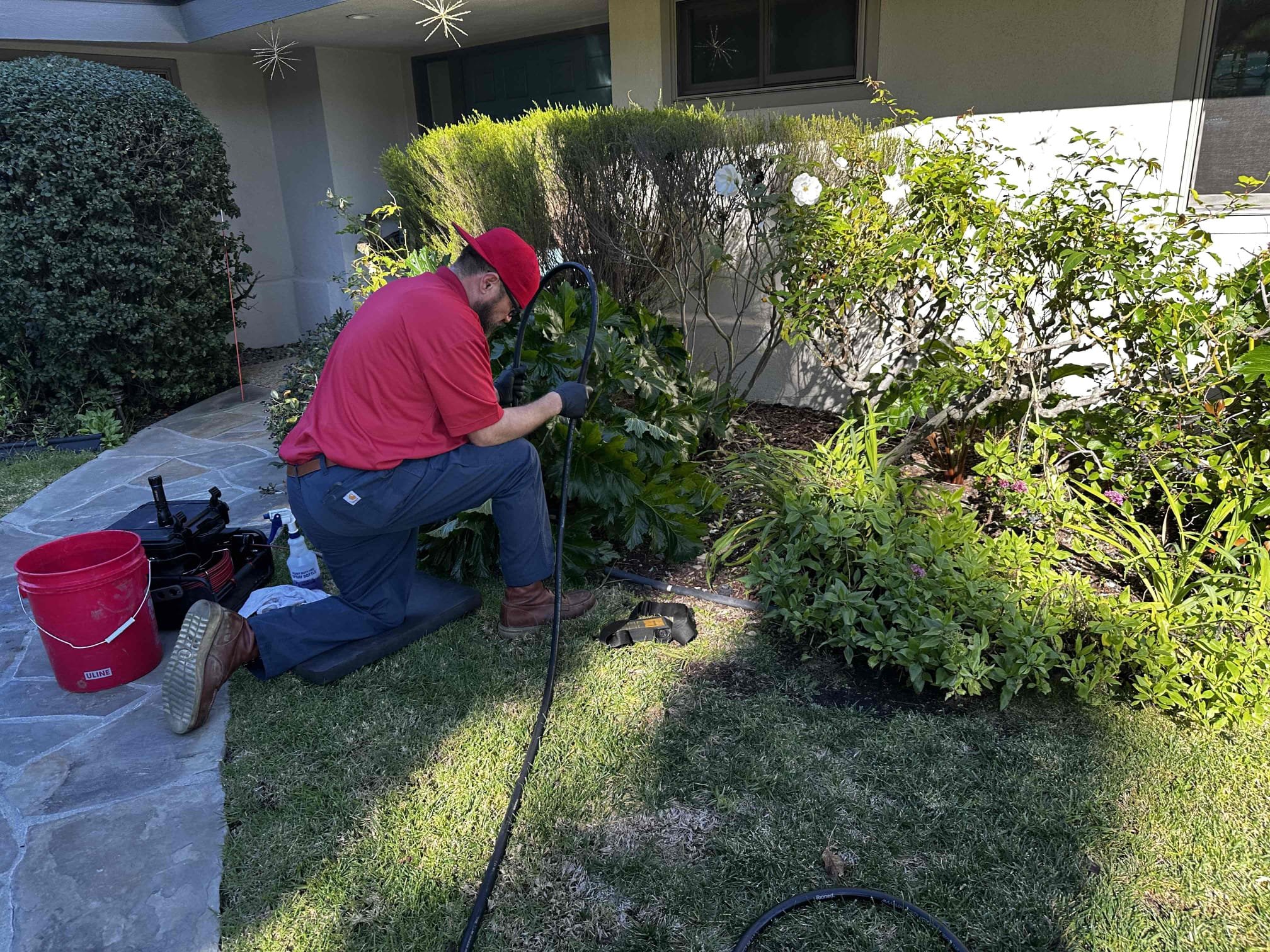
Hydro jetting is generally the more complete drain-cleaning solution because it does more than open a path through a clog. It removes buildup from more of the pipe’s interior, improving flow and leaving the drain in better operating condition.
Power snaking remains valuable, especially when standing water must first be relieved, access is limited, or conditions inside the pipe are unknown. But in many cases, snaking treats the immediate symptom while hydro jetting addresses more of the condition causing it.
The short answer: Power snaking usually opens a pathway through a clog to restore immediate flow. Hydro jetting uses controlled high-pressure water to remove more grease, roots, sludge, and debris from the pipe. When access and conditions are suitable, hydro jetting is generally the better long-term cleaning solution. Snaking remains valuable for immediate relief, difficult access, and as a first step when the blockage prevents inspection.
What is the difference between hydro jetting and snaking?
A power snake advances a rotating cable and cutting head through a drain. Its primary purpose is to penetrate, break apart, or move an obstruction so wastewater can flow again.
A hydro jetter sends controlled, high-pressure water through a specialized hose and nozzle. It can break apart debris, flush material through the system, and clean more of the pipe’s interior.
In general, power snaking is designed to relieve a stoppage. Hydro jetting is designed to improve the condition of the drain.
| Consideration | Power snaking | Hydro jetting |
|---|---|---|
| Primary purpose | Open a pathway and restore flow | Clean the pipe and restore flow |
| Typical result | Immediate relief | More complete removal of buildup |
| Grease and sludge | May penetrate or disturb it | Better suited to removing and flushing it |
| Roots | Can cut an opening | Can trim and remove more of the intrusion |
| Pipe-wall cleaning | Limited | Cleans more of the interior surface |
| Reach | Limited by the cable and pipe layout | May travel farther in suitable lines |
| Best use | Relief, initial access and unknown conditions | Thorough cleaning and improved future performance |
These are general comparisons, not guarantees. The actual result depends on the access, pipe layout, structural condition, type of obstruction, and how the drainage system is used.
When do I need hydro jetting?
Hydro jetting deserves serious consideration when:
A drain repeatedly clogs.
Grease, sludge, roots, sediment, or substantial buildup is present.
Snaking restored flow without removing the underlying material.
A longer drain run needs to be cleared.
An outdoor main sewer or storm drain provides suitable access.
The goal is to clean the line rather than only stop an immediate backup.
Hydro jetting’s value is not simply that it is more powerful. It changes the condition left behind.
A snake may create an opening through grease, roots, or accumulated debris. Hydro jetting can remove more of that material across a greater portion of the pipe. That can improve flow, leave fewer places for new debris to collect, and provide a clearer camera view of the pipe itself.
When conditions support it, the customer is paying not only to stop today’s backup, but also to improve the drain’s operating condition and learn more about what could happen next.
In the South Bay, we use hydro jetting across very different systems—from grease-heavy restaurant drains in the Beach Cities to residential main sewers and outdoor storm drains. The location alone does not determine the service. Access, pipe layout, the material inside the line, and where the water can safely travel are more important than the city or neighborhood.
When is snaking better than hydro jetting?
Power snaking is often the appropriate first step when:
Standing water or an active backup must be relieved.
The obstruction’s type or location is unknown.
Hydro jetting from an indoor access point could create an unacceptable flooding risk.
The available access is too small or poorly positioned for jetting equipment.
Restrictive turns may prevent a jetting nozzle from advancing safely.
An opening is needed before the line can be properly inspected or cleaned.
When conditions are unknown, we want to simplify the problem. Relieving the stoppage can lower the water, create visibility, and allow us to inspect and test the system.
Snaking and hydro jetting are therefore not always competing choices. Snaking may provide immediate relief and access. Hydro jetting can then provide the more complete cleaning once the working conditions are understood.
Does snaking completely clean a drain?
Not usually. A snake may penetrate, cut, or move enough of an obstruction to restore flow, but it generally does not clean the full interior of the pipe.
An overflowing toilet, stopped sink, or backed-up floor drain is the visible symptom. Grease, roots, scale, sludge, or other material may remain along the pipe walls or farther downstream after that symptom disappears.
There are cases where snaking is sufficient. But when significant removable buildup remains, restored flow should not automatically be confused with a cleaned drain or a resolved underlying condition.
A Hermosa Beach restaurant where clearing the clog was not enough
We were called to a restaurant in Hermosa Beach after a main drain-line stoppage caused floor drains in the food-preparation area to back up. The restaurant occupied one end of a building with several neighboring businesses along the block.
Working through an interior cleanout, we initially used a power snake. It cleared the immediate stoppage and restored relief to the restaurant. If we had stopped when the floor drains began flowing, the service might have appeared successful.
We continued testing. A sewer camera helped us inspect the accessible line, while running water and checking with neighboring businesses showed that the obstruction had moved farther downstream and was affecting the shared drainage system.
Hydro jetting provided the additional reach and cleaning power needed to continue through the connected line. Because we were working from an interior access point, we carefully controlled the water flow to reduce the risk of flooding. We ran water, coordinated with neighboring occupants, and tested normal toilet-paper use to verify that the system could handle ordinary building conditions.
Ultimately, we restored drainage not only for the original restaurant, but for the connected businesses along the building.
What this job demonstrated: Restoring flow at the affected restaurant did not prove that the shared drain was clear. Continued testing, communication with neighboring businesses, camera inspection, and hydro jetting revealed and resolved the larger downstream condition.
The restaurant’s floor drains flowing again was a symptom-level result. Verifying that the shared line could handle normal use was the system-level result.
Is hydro jetting safe for older cast-iron or clay pipes?
Pipe material alone does not determine whether hydro jetting is appropriate. The more important questions are whether the drain remains structurally sound, whether its layout allows the equipment to travel safely, and whether the hose and nozzle can be recovered.
Severe defects, restrictive turns, separated sections, partial collapses, and improper installation can increase the risk of equipment becoming stuck. These risks also exist with power-snaking equipment.
A sewer camera can provide valuable information, but it cannot always show the full pipe while the line remains blocked or filled with dirty water. Sometimes the stoppage must first be relieved before a useful inspection can be completed.
We carefully advance the equipment based on what we know, what the drain’s history suggests, and what remains unseen. Those uncertainties and risks should be explained before proceeding.
What can neither service fix?
Neither hydro jetting nor power snaking can correct a structural defect.
A broken, collapsed, severely offset, improperly sloped, or incorrectly installed drain may require repair or replacement. Cleaning may improve flow through a compromised line, but it cannot rebuild the pipe or correct how it was installed.
Repeatedly cleaning a defective drain can provide temporary relief while leaving the actual cause unchanged. This is why diagnosis matters more than simply choosing the strongest tool.
What should you expect after hydro jetting?
When hydro jetting successfully removes buildup, it can restore a significant amount of the drain’s functionality. The system can then be evaluated based on its structural integrity and normal use—not only on the blockage that brought us there.
For a restaurant grease line, future performance may depend on how effectively the restaurant limits grease entering the system. For a residential sewer or outdoor storm drain, roots may grow back after being trimmed, especially if defective joints continue giving them access.
Hydro jetting can improve conditions and reduce the chance of retained buildup contributing to another stoppage. It cannot control what enters the drain, stop roots from growing, or repair structural defects.
A post-cleaning camera inspection and appropriate flow testing can show how much function was restored, reveal visible defects, and help determine whether recurring maintenance makes sense. Not every customer needs scheduled hydro jetting. That recommendation should come from the pipe’s condition, use, service history, and rate of recurring buildup.
Frequently asked questions
Is hydro jetting better than snaking?
Hydro jetting is generally the better cleaning solution because it can remove more buildup and improve the condition of the drain. Snaking remains useful for immediate relief, restricted access, standing water, and situations where the blockage must first be opened and evaluated.
Will hydro jetting permanently prevent another clog?
No drain-cleaning service can guarantee that a clog will never return. Hydro jetting can remove substantial buildup and improve flow, but grease, roots, debris, continued use, and structural defects can cause future problems.
Should a sewer camera be used with hydro jetting?
Camera inspection is often valuable before, during, and after cleaning. It can help identify the suspected material, guide nozzle selection, reveal visible defects, and verify the result. A complete view may not be possible until standing water or the obstruction has been cleared.
Choose the result, not just the tool
The choice between hydro jetting and snaking should begin with the story of the drain: What is backing up? Has it happened before? What does the line serve? Where is the access? What type of obstruction is suspected? What can be verified after flow returns?
Snaking may be the right tool to restore immediate use and help us see what is happening. When conditions support it, hydro jetting is generally the better solution for cleaning the line, improving flow, and leaving the drain in better operating condition for the future.
At Zoom Drain Los Angeles, our goal is to explain what we know, what remains uncertain, and what each option can reasonably accomplish. If your drain keeps backing up, we can inspect the system, test its performance, and help you decide whether immediate relief is enough—or whether the line would benefit from a more complete cleaning.
Published: August 28, 2026
Last reviewed: August 28, 2026
South Bay Drain Guide | Zoom Drain Los Angeles
Practical drain and sewer guidance for South Bay homeowners, businesses and property managers.