

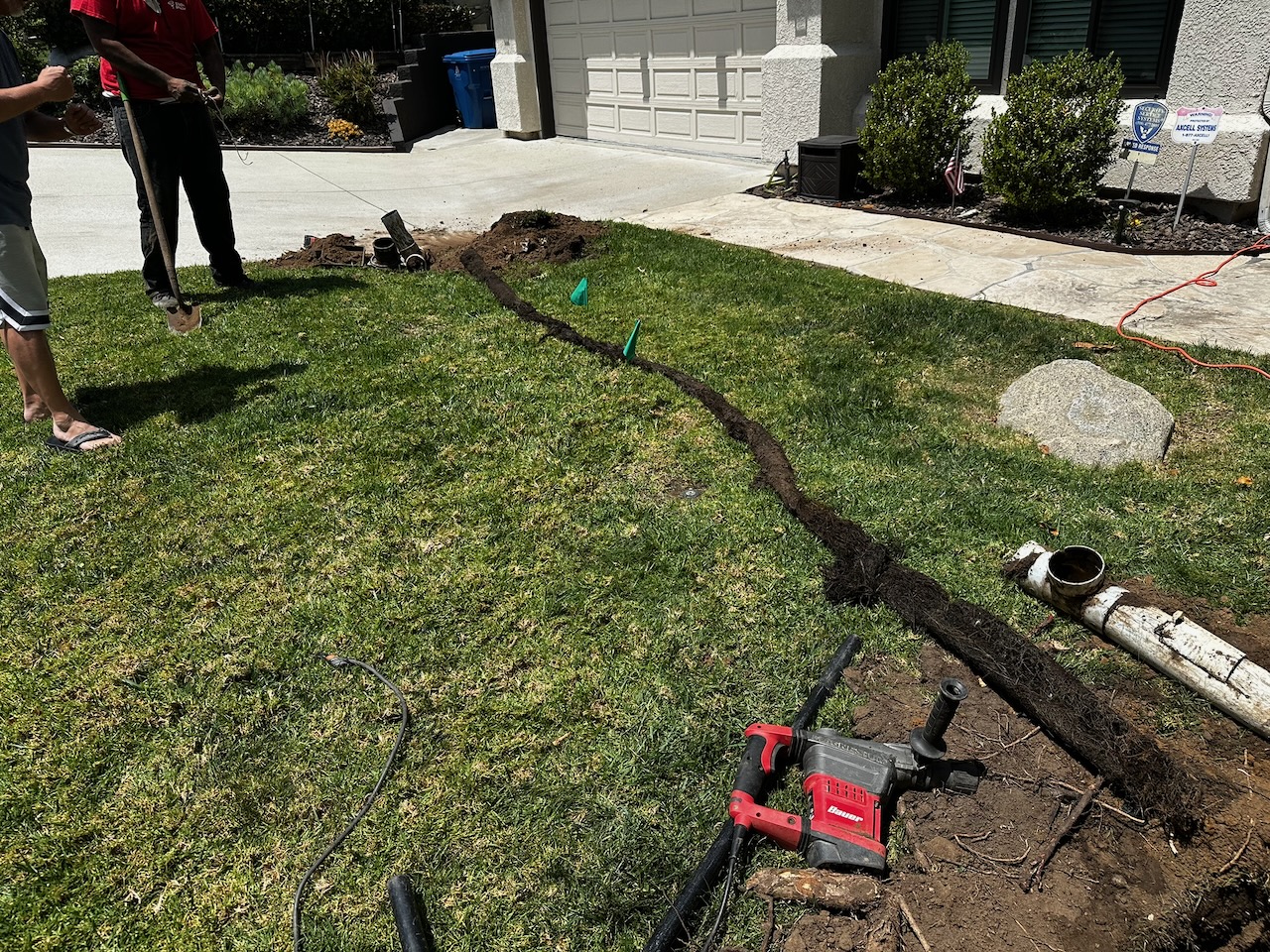
After months of hot, dry weather in the South Bay, it’s easy to forget about your storm drains. The yard is dry, the grates are open, and everything may appear fine.
But a drain that looks clear at the surface isn’t necessarily ready for heavy rain.
Dirt, sediment, leaves, street debris, roots, and other material can accumulate inside drainage systems during dry weather. Problems with underground piping can also remain unnoticed until the system suddenly has to handle a large volume of runoff.
The best time to understand how your storm drainage system is working is before it has to perform during a storm.
Think Back to What Happened During the Last Rain
Before looking at the drains themselves, think about what you’ve already observed around your home.
Where does water collect when it rains? Does one area take longer to drain? Have you noticed water approaching a doorway, garage, patio, or other part of the home? Does sediment repeatedly appear in the same place? Has a drain ever struggled to keep up during heavier rain?
These observations are useful clues.
Something you’ve become accustomed to may also be worth another look. A yard drain that has “always been a little slow,” for example, may be telling you something about the underground line or the amount of water the system can handle.
You don’t need to diagnose the problem yourself. Start by remembering what the water has already shown you.
Walk Around Your Home and Follow the Water
Now walk around your home and think about what will happen when rain starts falling.
Where will water come from? Where will the slope of the yard, driveway, patio, or landscaping send it? Where is that water supposed to enter the drainage system?
Look at your catch basins, area drains, trench drains, French drains, and roof-drain or downspout connections.
Then look beyond the drains themselves.
Watch for:
Dirt, leaves, and sediment collected along the path of runoff
Erosion or disturbed landscaping
Low areas where water may collect
Debris gathering around grates and basins
Staining or other signs of previous standing water
Places where heavier runoff could carry debris toward a drain
These are clues about how water has moved around your home before.
When substantially more water arrives during a storm, those same conditions can become more noticeable.
An Open Grate Doesn’t Mean the Drain Line Is Clear
Clearing leaves from a drain grate is good preparation, but the grate is only the entrance.
The water still has to travel through underground piping.
During dry weather, dirt and sediment can settle farther down the line. Leaves and other debris can enter the system. Roots may intrude into piping. Material can also be blown or washed farther underground where you can’t see it from the surface.
There can also be conditions unrelated to debris, including pipe offsets, poor slope, damaged or disconnected sections, erosion, or other problems that affect how water flows.
So looking down at an open drain and seeing nothing obvious doesn’t tell you everything about the pipe below it.
Don’t Just Look at the Drain—Test It
Where it is safe and practical, introducing a manageable amount of water can tell you more about a drain than looking at it while it is dry.
Watch what happens.
Does the drain accept the water readily? Does water begin accumulating? Does it disappear and then back up? Does it reach the outlet you expect? Does anything unusual happen somewhere else?
A garden hose cannot reproduce the volume of a major rainstorm, but a controlled test gives you something useful: evidence of how the system actually behaves.
Water flows through pipes. Testing allows you to observe that flow rather than simply assuming the underground line is clear.
If something doesn’t behave as expected, that gives you a reason to investigate further before the rain arrives.
When a Camera Inspection Can Help
Not every storm drain needs a camera inspection.
But if you’ve experienced drainage problems before, notice something unusual during your inspection, or find that a drain isn’t accepting water as expected, a camera can help look farther into accessible underground piping.
Depending on the system, an inspection may reveal sediment, roots, partial restrictions, offsets, standing water, damage, or other conditions affecting flow.
Locating equipment can also help determine where underground piping travels and where a particular condition may be located.
The objective is simple:
Find out what is actually happening before deciding what needs to be done.
When Storm Drain Cleaning Makes Sense
If dirt, sediment, roots, or other appropriate buildup is restricting an otherwise serviceable storm line, hydro jetting can be an effective way to clean the piping and restore flow.
That can be particularly useful before the rainy season because a storm drain needs to do much more than accept a small amount of test water. During significant rain, it may suddenly need to move a much larger volume.
But cleaning isn’t the solution to every drainage problem.
Hydro jetting can remove appropriate buildup. It cannot correct a collapsed or disconnected pipe, an offset, poor slope, erosion, or a drainage system that simply cannot handle the amount of runoff reaching it.
Those situations need to be understood separately so you can consider the options that make sense for your home.
Give Yourself Time Before the Rain
Water problems are much easier to consider when water isn’t actively entering the property.
If you remember a drain being slow during previous storms, water collecting where it shouldn’t, recurring erosion, sediment appearing in the same area, or another drainage concern, now is a good time to look at it again.
The goal isn’t to assume that something is wrong.
It’s to give yourself time to find out.
If there is a restriction, you may be able to clean it. If there is a larger problem, you have time to understand your options. And if everything is working properly, you have useful information and greater confidence going into the rainy season.
That’s much better than trying to diagnose the system while the water is rising.
A Simple Pre-Rain Check Around Your Home
You can perform a useful first inspection yourself before the first substantial rain.
Remember. Walk. Clear. Inspect. Test. Document.
Remember: Think back to what you saw during previous rains. Where was water slow, deep, or somewhere it shouldn’t have been?
Walk: Walk around your home and follow the path rainwater is likely to take.
Clear: Remove accessible leaves, dirt, trash, and landscaping debris from grates and the areas immediately around them.
Inspect: Look at the drains, but also look for sediment, erosion, low spots, standing water, and other evidence of previous runoff.
Test: Where safe and appropriate, introduce a manageable amount of water and watch what happens.
Document: Take pictures or notes if something looks unusual. They can be useful if you need to investigate further or compare what happens during the next rain.
If your home relies on a sump pump or other stormwater pumping system, test that system too. Don’t just confirm that the pump makes noise—make sure it actually moves water and that the controls, basin, discharge, check valves, alarms, and other components are functioning as intended.
Have Questions About What You’re Seeing?
You don’t need to diagnose an underground drainage system yourself.
If you’ve had drainage problems before, a drain isn’t behaving as expected, or you simply want to understand what is happening underground, that’s where professional inspection can help.
Sometimes additional equipment, such as a sewer camera or locating equipment, is needed. Sometimes a catch basin or drain line needs to be cleaned. Other times, the evidence points toward a condition that cleaning alone won’t correct.
At Zoom Drain Los Angeles, we help South Bay homeowners understand what their drains are doing, what we can objectively see and test, and what options make sense from there.
We’re your local drain and sewer experts, but we’re also your neighbors in the South Bay. Our goal is to help keep your drains flowing and give you useful information so you can make decisions before a drainage concern becomes an emergency.
If you have questions about what you’re seeing around your home, give us a call. It’s better to investigate on a dry day than discover a restriction during the first heavy rain.
Published: September 4, 2026
Last reviewed: September 4, 2026
South Bay Drain Guide | Zoom Drain Los Angeles
Practical drain and sewer guidance for South Bay homeowners, businesses and property managers.