

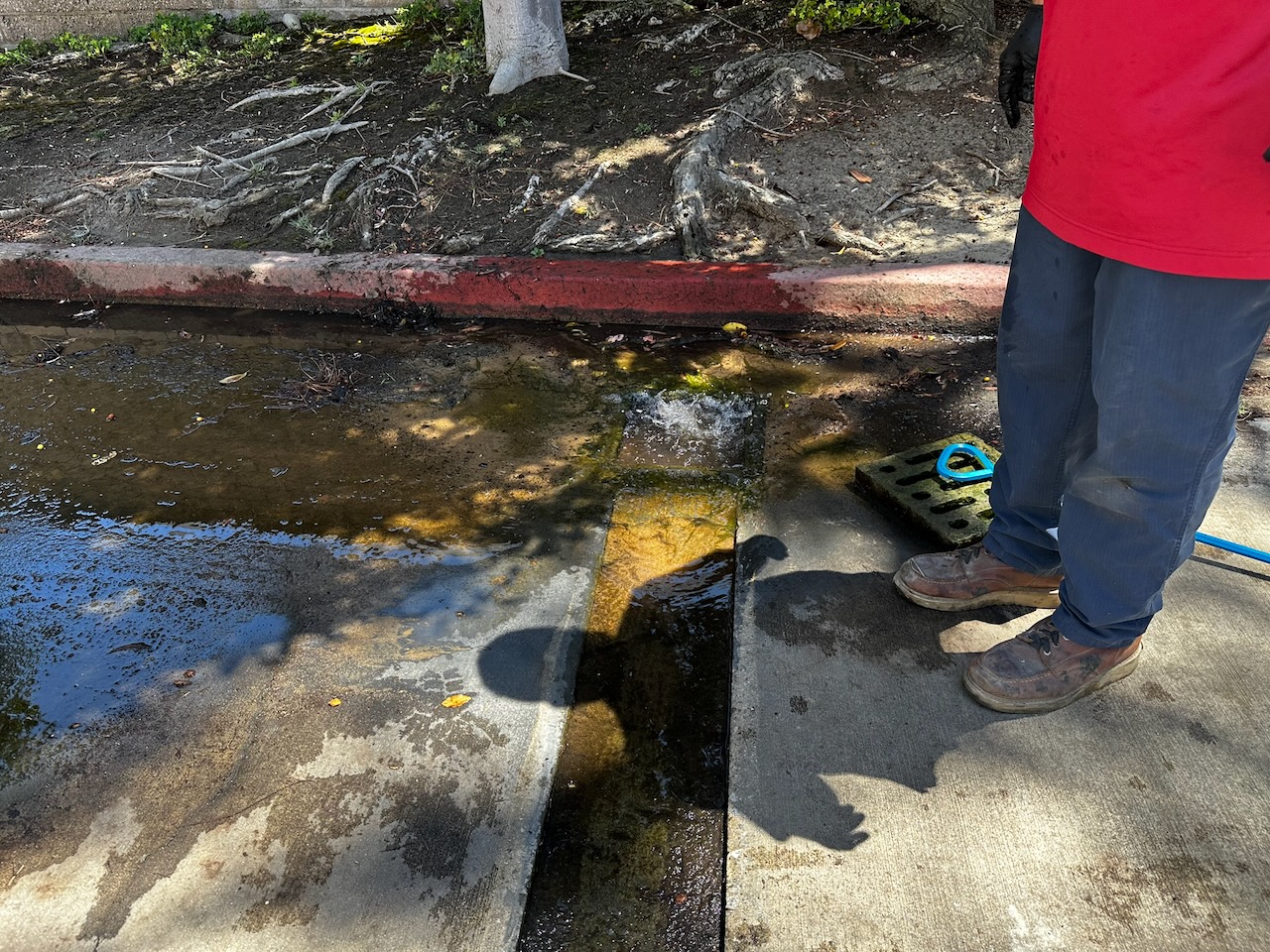
If your storm drain keeps clogging, the most common causes are leaves and debris, sediment, roots, an obstruction farther downstream, damaged or offset piping, or a line that doesn't drain properly because of its slope.
Sometimes cleaning is all that's needed. But if the same yard drain or catch basin repeatedly backs up, drains slowly or holds water, the recurrence itself is useful information. Clearing the drain may solve the immediate problem without explaining why it happened.
The next question is whether you're dealing with routine maintenance or a recurring condition worth investigating.
Start by Following the Water
When a yard drain or catch basin overflows, it's easy to assume the clog is directly beneath it. The actual restriction may be somewhere else.
Several drains may connect to the same underground piping before reaching a discharge point. A restriction farther downstream can affect one or several drains upstream.
Think about what you've seen around your property:
Where does water normally collect?
Which drains have been slow before?
Does one drain overflow while another drains normally?
Does a basin remain full after the rain stops?
Has the same line required repeated cleaning?
Are there mature trees nearby?
Has landscaping, paving, grading or construction changed?
These observations help us trace the water and compare what the drainage system is doing with what you expect it to do.
Why Does a Storm Drain Keep Clogging?
Leaves, Dirt and Landscaping Debris
Outdoor drains naturally collect material from the surrounding property. Leaves, dirt and landscaping debris can cover drain openings, fill catch basins and enter underground piping.
This is especially relevant in the South Bay after long periods of dry weather. Material can accumulate for months before the first significant rains reveal the restriction.
If the underlying drainage system is otherwise working properly, cleaning may be all that's necessary.
Mud, Sand and Sediment
Catch basins and underground storm piping can gradually collect sediment.
The question is whether that material is incidental accumulation or part of a recurring problem. Cleaning the basin and flushing the line can establish a baseline so you can see how well the system performs afterward.
Roots
Roots can enter underground piping through joints, separations or damaged areas.
They can restrict water flow directly and also catch leaves and debris traveling through the line. If roots repeatedly return, opening the drain may restore flow without addressing the condition that allowed them into the pipe.
Offsets, Separations and Damaged Pipe
Underground storm piping can shift, separate, deteriorate or become crushed.
These conditions can restrict flow or create places where sediment and debris repeatedly collect. A drain may flow after cleaning while still having an underlying condition that makes another clog more likely.
Poor Slope or Low Spots
A storm drain that holds water isn't necessarily clogged.
Poor slope or a low spot in underground piping can allow water and sediment to remain in the line. What matters is whether that condition is affecting how effectively the drainage system operates.
A Restriction Farther Downstream
The drain where you see water isn't necessarily where the problem is.
An obstruction farther downstream—or at the system's discharge point—can cause water to back up elsewhere. Understanding where the underground piping goes can therefore be just as important as inspecting the drain that's overflowing.
Why Repeated Clogs Tell Us More
A drain that clogs once may simply need maintenance.
A drain that repeatedly clogs gives us more information.
If the same basin keeps filling, roots return after cleaning, sediment repeatedly accumulates, or the same area floods during rain, it's reasonable to ask why.
Broadly, we may be looking at one of three situations:
A maintenance problem: Debris or accumulated material is restricting an otherwise functional system.
A pipe problem: Roots, offsets, separations, deterioration or poor slope are contributing to the restriction.
A system problem: The drains may be open, but the property still isn't managing water as expected.
That last situation is different from a clogged drain. It becomes a question of overall drainage performance, which we'll explore separately in the next South Bay Drain Guide.
Sometimes Cleaning Is Part of the Diagnosis
Storm-drain diagnosis often happens in layers.
If a catch basin is full of muddy water and debris, there may not be much to inspect initially. Sometimes the first step is simply to clean the basin, establish flow and clear accumulated material.
Depending on what is found, drain cleaning or hydro jetting may be appropriate to clean and flush the underground line.
That doesn't assume cleaning is the final answer.
It establishes a better baseline.
If the system drains normally afterward, maintenance may have been all it needed. If roots, offsets, standing water or another condition remain, we now have better information for deciding whether further investigation makes sense.
Getting the water moving and understanding why it stopped moving aren't always the same thing.
When Does Further Investigation Make Sense?
Not every clogged storm drain needs extensive diagnosis.
When warranted, a professional may progress from visual inspection and cleaning into flow testing, camera inspection, locating or tracing underground piping, or evaluating the discharge point.
A drain camera can be particularly helpful for identifying roots, offsets, separations and other underground conditions. Storm drains can also contain mud or standing water that limits visibility, and a severe obstruction may prevent the camera from traveling farther.
Even then, the objective is the same: gather useful information rather than guess about what's underground.
Frequently Asked Questions
Why does my storm drain keep clogging?
Leaves, sediment and roots are common causes. Repeated clogging can also indicate an offset, damaged pipe, poor slope or a restriction farther downstream.
Why does my yard drain back up when it rains?
The drain itself may be restricted, but the problem can also be farther downstream. Following where the water enters, travels and eventually discharges helps identify the cause.
Why does my catch basin stay full of water?
Debris or sediment may be restricting the outlet. Underground piping can also have low spots or poor slope that retain water. Cleaning and establishing flow can help distinguish between these conditions.
Will hydro jetting clear a clogged storm drain?
Hydro jetting can clean and flush accumulated material from storm piping. It can also establish a cleaner baseline for further evaluation. It does not repair damaged piping or correct every underlying drainage condition.
Can a camera find what's clogging a storm drain?
Often. Camera inspection can reveal roots, offsets, separations and other underground conditions. Mud, standing water or severe restrictions can sometimes limit visibility or how far the camera can travel.
Understand Why the Problem Keeps Returning
Sometimes cleaning is enough.
If the same problem returns—or the drain still doesn't perform as expected—the recurrence itself gives us useful information.
At Zoom Drain Los Angeles, our approach is to understand what is happening, explain what we know and what we don't know, and provide appropriate options based on the actual condition of the drainage system.
That way, you're not simply left knowing that the drain flows today. You have a better understanding of why it clogged and what to expect the next time it rains.
Published: September 12, 2026
Last reviewed: September 12, 2026
South Bay Drain Guide | Zoom Drain Los Angeles
Practical drain and sewer guidance for South Bay homeowners, businesses and property managers.