

Water is collecting somewhere it shouldn't.
Maybe there's standing water around a yard drain after rain. Maybe a section of the yard suddenly seems to flood. Or perhaps an outdoor drain that used to keep up now takes much longer to clear.
These problems can seem sudden, but they often develop gradually. Dirt accumulates. Roots grow. Pipes shift. Basins collect sediment. Landscaping changes. Then the right rain comes along and makes the problem noticeable.
The important question isn't simply, “Is the drain clogged?”
We want to understand where the water is coming from, where it's supposed to go, and what may be preventing the drainage system from working as intended.
The Visible Drain May Not Be the Problem
Standing water near a drain naturally makes the drain itself look suspicious. But an outdoor drainage system can include much more than the opening you see at the surface.
There may be catch basins or pits, underground piping, multiple connected drains, discharge points, and sometimes pumps. A restriction anywhere along that route can affect how quickly water leaves the property.
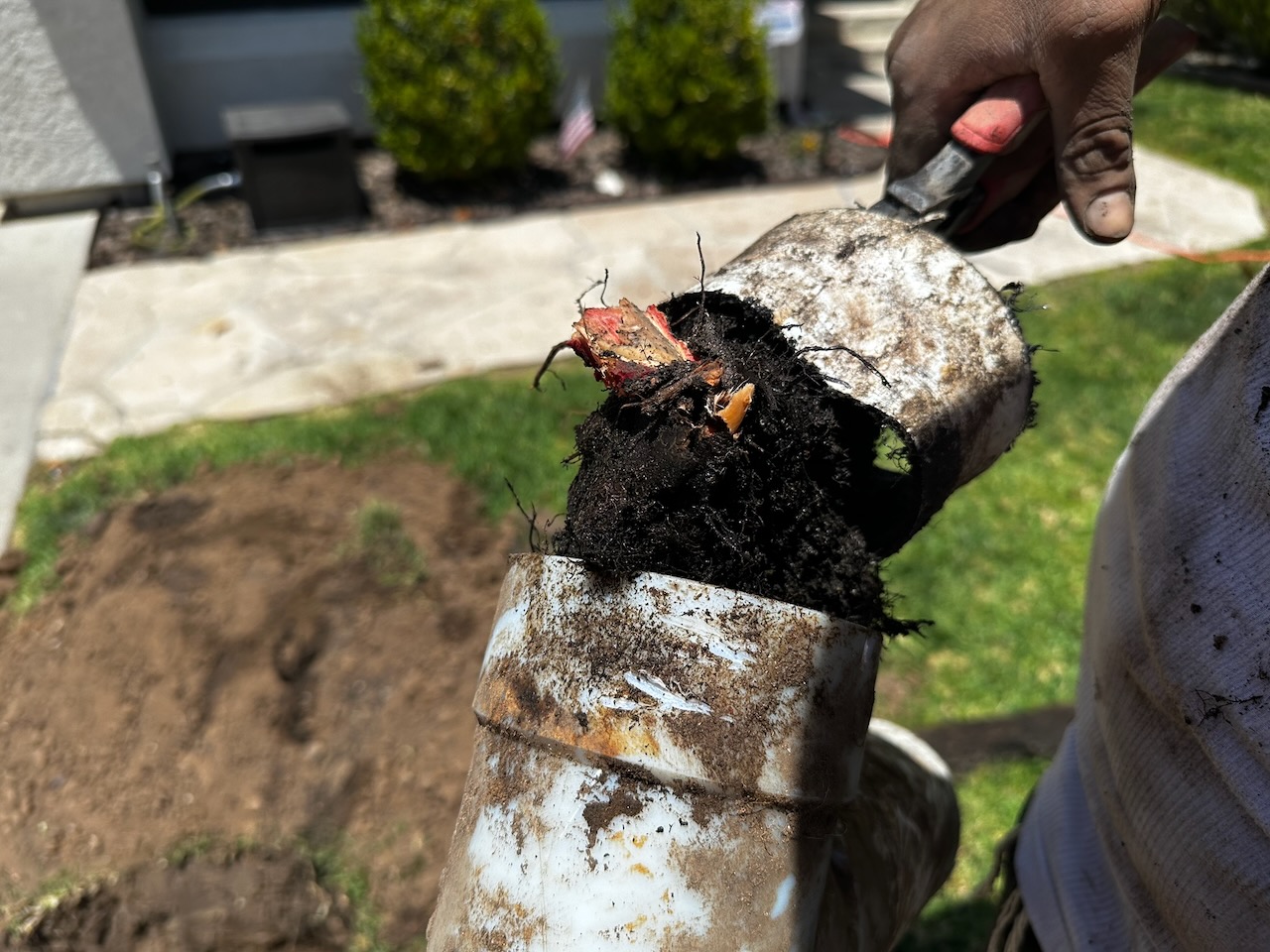
The cause might be relatively simple, such as debris accumulated in a basin during the South Bay's long dry periods. It could also be sediment farther into the line, roots entering the piping, an offset that has gradually worsened, or a low section of pipe holding debris and water.
Sometimes the piping is reasonably clear and the issue is elsewhere. The amount of water reaching the system may exceed its capacity, a discharge point may be restricted, or changes to the property may have altered how water reaches the drains.
That's why simply seeing standing water doesn't tell us which repair—or even whether a repair—is appropriate.
Cleaning Can Tell Us a Lot
Outdoor drain cleaning can accomplish more than removing a clog.
Clearing accumulated dirt and debris from a basin may restore the system immediately. Drain cleaning or hydro jetting can remove material from underground piping and restore more of the available flow through the line.
Cleaning can also make the drainage system easier to evaluate.
Once accumulated debris is removed, we have a better opportunity to see how the system actually performs. Flow testing, camera inspection, or locating underground piping may be useful when the symptoms or condition of the property warrant additional investigation.
That doesn't mean every slow yard drain needs every diagnostic service.
The goal is to use what we find to determine the appropriate next step.
Cleaning can restore capacity that has been lost to buildup. It cannot make an undersized drainage system larger, correct improper grading, or repair a damaged pipe.
How Is the Property Supposed to Drain?
One of the most useful things we can establish is where the water is actually supposed to go.
A drain at one corner of a yard may connect to several other drains before reaching its discharge point. Another property may rely on a basin and pump. Some systems have more than one route for moving water away from the property.
Understanding that path helps explain current problems—and can be valuable years later if another problem develops.
We want to know whether each part of the system is contributing positively to its capacity or taking away from it.
Is debris restricting flow? Is a pipe damaged or offset? Is a pump operating but taking too long to empty its basin? Is water reaching the drains properly? Can the system move the volume of water being delivered to it?
A drainage system can technically be “working” while still performing poorly.
Sometimes the Problem Isn't Where the Water Pools
We encountered this at a Westchester property where water was pooling near a drain basin rather than entering it properly.
A separate drain entry had been added in response to the problem. But looking at the larger system told a different story. There was a clog farther downstream, and the surrounding area had settled over time, changing how water moved across the property.
Correcting those conditions helped restore the function of the original basin and also addressed a developing cavity below grade.
The lesson is useful even if your property is completely different: where you see the water isn't necessarily where the problem began.
Sometimes the Equipment Isn't the Problem Either
At another property, the homeowner wasn't sure whether the drainage pumps were working.
They were—but they were taking a long time to empty the basin.
Years of accumulated debris were interfering with water reaching the pump inlet freely. Once the basin was cleaned and the remaining debris removed, water could reach the pumps properly and the system evacuated the basin much more effectively.
Replacing the pumps would not have addressed the actual problem.
That's why understanding the entire drainage path matters.
When Should a Slow Outdoor Drain Be Investigated?
A little standing water during unusually heavy rain doesn't automatically mean something is wrong. What matters is how the property behaves and whether that behavior has changed.
If a yard that historically drained well now holds water, a drain takes noticeably longer to clear, the same area repeatedly floods, or multiple drains appear slow, those observations are worth investigating.
The same applies if you don't know where the drains discharge or how different parts of the system connect.
The objective isn't to assume the worst. It's to understand what has changed and whether normal drainage can be restored.
Frequently Asked Questions
Why is water suddenly pooling in my yard?
The underlying condition may not actually be new. Sediment can accumulate, roots can grow into piping, pipes can shift, and landscaping can settle gradually. A rainstorm may simply be when the change finally becomes noticeable.
Can I clean a clogged yard drain myself?
Accessible leaves, dirt, and loose debris around a drain or catch basin can often be removed safely. If water remains slow afterward, the restriction may be farther into the drainage system and worth investigating.
Will hydro jetting fix a slow outdoor drain?
Hydro jetting can be very effective when buildup or debris inside the piping is restricting flow. It can also help prepare a line for further inspection. It won't correct an undersized system, improper grading, or structural pipe damage.
How do I know where my yard drains go?
Sometimes the route is apparent from visible drains and discharge points. Other systems require flow testing, camera inspection, or locating to establish how underground piping is connected. Knowing that route can make both current and future drainage problems easier to understand.
Does standing water mean my drainage system is too small?
Not necessarily. A system that appears to lack capacity may simply have lost some of its original capacity to sediment, debris, roots, damaged piping, or another restriction. Cleaning and investigation can help distinguish lost capacity from a true sizing or design problem.
Understand How the Water Moves
When water starts pooling around your home or property, the best place to begin is with the story the water is telling you.
Where does it collect? Where should it go? How quickly does it get there? And what has changed?
For South Bay properties that spend much of the year dry, the first significant rains can reveal conditions that have been developing quietly for months or years.
Sometimes the answer is cleaning. Sometimes the underground drainage system deserves a closer look. And sometimes the drains themselves aren't the underlying problem.
Understanding how water moves across the property and through the drainage system helps you make a better decision about what—if anything—needs to be corrected.
Published: September 18, 2026
Last reviewed: September 18, 2026
South Bay Drain Guide | Zoom Drain Los Angeles
Practical drain and sewer guidance for South Bay homeowners, businesses and property managers.