

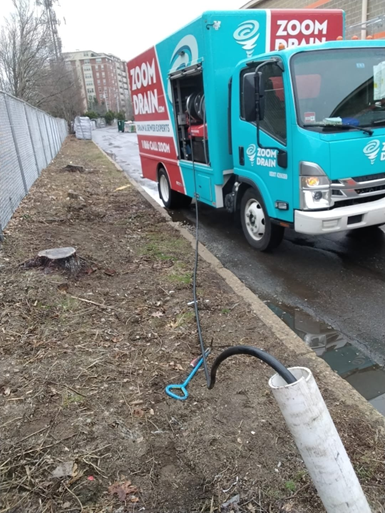
Summer in Rhode Island has a rhythm. Stretches of clear, beautiful days punctuated by sudden heavy thunderstorms, the occasional soaking nor'easter, and the kind of cloudbursts that drop an inch of rain in twenty minutes. If you live in North Kingstown — especially anywhere near Wickford Harbor, Quonset, or the wooded neighborhoods around Saunderstown and Hamilton — those storms are going to test every drain in your yard. The question is whether they're ready.
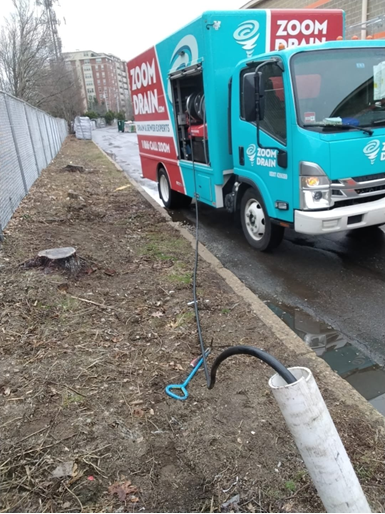
Summer in Rhode Island has a rhythm. Stretches of clear, beautiful days punctuated by sudden heavy thunderstorms, the occasional soaking nor'easter, and the kind of cloudbursts that drop an inch of rain in twenty minutes. If you live in North Kingstown — especially anywhere near Wickford Harbor, Quonset, or the wooded neighborhoods around Saunderstown and Hamilton — those storms are going to test every drain in your yard. The question is whether they're ready.
Most homeowners don't think about exterior drains until water is already pooling against the foundation or running across the driveway. By then, the clog is in control. The good news is that yard, area, rain leader, and landscape drains all clog in predictable ways, on a predictable timeline — and June is the perfect month to get ahead of it.
At Zoom Drain Rhode Island, we get a measurable spike in North Kingstown calls every time a heavy summer storm or nor'easter passes through. Almost every one of those calls started with a drain that was already partially blocked weeks earlier.
Why North Kingstown Yards Are Especially Tough on Drains
A few specifics make exterior drains in this town clog faster than they would in, say, central Cranston:
Heavy tree canopy. Saunderstown, Hamilton, and the wooded streets around Belleville and the Wickford historic district sit under big maples, oaks, and pines. Every spring drops a layer of pollen catkins and seed pods into yard drains. Every fall drops a layer of leaves. The two layers don't just sit on top — they pack together with sediment into a dense plug.
Sandy and clay-mixed soil. Closer to the bay, the soil moves easily in heavy rain. Sediment washes into area drains and settles at the lowest bend. Inland, the heavier clay-mixed soil clings to the inside of the drain pipe and narrows it over time.
Older drainage systems in the historic district. Many of the homes in and around Wickford were built generations ago. The yard drains, perimeter drains, and rain leader lines tied into them are often original — and often partially collapsed, root-invaded, or held together by little more than memory.
Newer construction with engineered drainage. Out toward Davisville and the developments around Quonset, the homes rely on engineered yard drainage with French drains, catch basins, and pop-up emitters. When any single component clogs, the whole system fails as a unit.
The coastal angle. Yards within a half mile of Narragansett Bay see salt spray on landscaping, periodic tidal flooding, and wind-driven storm events that push yard debris straight into every available opening.
The Six Outdoor Drains You Probably Have — and Probably Forgot About
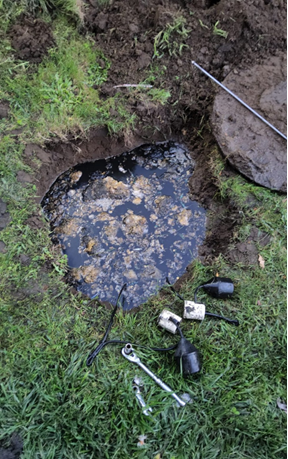
Before you can clear them, it helps to know what's actually out there. Walk your yard and check:
Rain leaders and downspout extensions. The vertical leader pipes carrying gutter water down and the underground extensions that route it away from the foundation. Clog point: the elbow where they enter the ground, and any low spot in the buried run.
Area drains. The round or square grates you see in low spots in the yard, near patios, at the bottom of stairs, around pool decks. Clog point: leaves and grass clippings that fall straight through the grate.
French drains. Perforated pipe buried in gravel along the foundation or along property edges. Clog point: silt and fine sediment that gets pulled in through the perforations.
Driveway trench drains. Long, narrow grated channels at the bottom of sloped driveways. Clog point: sand, road grit, and oak catkins.
Catch basins. Larger underground boxes that collect water from multiple drains. Clog point: sediment buildup at the bottom and at the outlet pipe.
Pop-up emitters. The hinged plastic cap where yard drainage ultimately exits, usually toward a slope or the curb. Clog point: spider webs, mulch, and grass clippings sealing the cap shut.
If even one of these is blocked, the rest of the system backs up behind it.
7 Signs Your North Kingstown Yard Drains Are Already Failing
You don't need a storm to diagnose the problem. Walk the property and look for:
Standing water in a low spot for more than 24 hours after a normal rain
A driveway that's developed a "river" during downpours that didn't run that way last year
Erosion patterns or mulch washouts near rain leader exits
Water against the foundation after rain, or damp basement walls in normally dry months
A pop-up emitter that no longer pops up — or one stuck open and full of debris
A catch basin grate with leaves visibly packed beneath it
A musty smell near a yard drain when you walk past it after rain
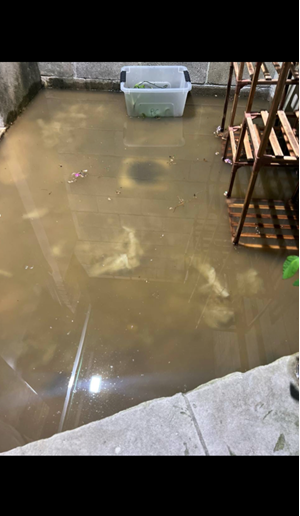
Any one of these is enough to justify a look before the next big storm.
What Happens If You Wait
Here's the typical escalation for a North Kingstown yard with neglected drainage:
Stage 1 (Slow buildup): Yard drains accept water more slowly. You don't notice because normal rain still drains eventually.
Stage 2 (Visible pooling): Standing water lingers after every rain. The lawn near downspouts gets soggy. Mosquitoes appear.
Stage 3 (Storm event failure): A heavy thunderstorm or nor'easter dumps two-plus inches of rain in a few hours. The blocked drains can't keep up. Water finds the foundation, the basement, the garage, the crawl space.
Stage 4 (Structural): Repeated water intrusion causes foundation seepage, basement flooding, mold, and yard erosion that costs more to repair than years of drain maintenance would have cost combined.
The cost gap between Stage 1 and Stage 4 is enormous. Stage 1 is a single visit. Stage 4 is a multi-thousand-dollar restoration.
What NOT to Do
A few honest warnings:
Don't poke a garden hose into a yard drain at full pressure and call it cleared. You'll dislodge the top of the plug and leave the rest sitting deeper.
Don't pull the grate and dig out leaves with a stick. You'll get the visible debris but not the compacted sediment six feet down the line.
Don't ignore a pop-up emitter that's been stuck open all winter. It's full of debris, and it's the exit point — meaning everything upstream is already partially blocked.
Don't wait until the storm is forecast. Calling for drain clearing the day before a major storm is exactly when emergency rates kick in and crews are booked solid.
How Zoom Drain Rhode Island Clears Exterior Drains
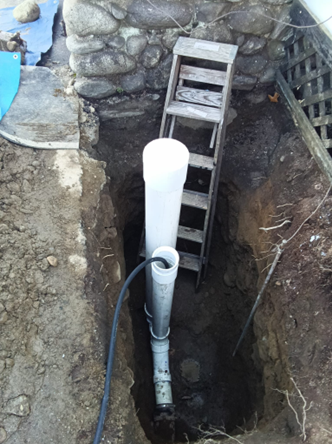
Yard and storm drain clogs need different tools than indoor drains. Here's what we actually do on a North Kingstown exterior drain call:
Hydro jetting designed for exterior lines. A high-pressure water jet that scours sediment, packed leaves, and root intrusion out of yard drains, area drains, and rain leader pipes. It cleans the pipe wall, not just punches a hole through the clog.
Video camera inspection to find buried catch basins, collapsed sections, or root intrusion you'd otherwise have to dig blindly to locate.
Root removal from underground drain lines with jetting and treatment for North Kingstown's tree-heavy properties.
Landscape drain repair and reroute when the camera shows a line that's structurally failed, with clear options and honest pricing.
We'll always show you the camera feed and walk you through what we found. No mystery, no upsell.
Why Choose Zoom Drain Rhode Island?
Free Arrival — Monday through Saturday, 8am–8pm for all Rhode Island residents
Free Estimates — transparent pricing, always
Same-Day Service Available — storms don't wait, and neither do we
24/7 Emergency Service — evenings, weekends, and holidays
Drain & Sewer Specialists — this is all we do, and we do it right
Get Ahead of the Season
The cheapest yard drain service you'll ever buy is the one you schedule before the storm — not after. June and early July are the right window to clear what fall and spring left behind, while crews still have open same-day appointments and your yard isn't already underwater.
Serving North Kingstown, Wickford, Saunderstown, Hamilton, Davisville, Quonset, and all of Washington County.
Call Zoom Drain Rhode Island: (401) 496-9669
zoomdrain.com/rhode-island