

.2608111228231.jpg)
Picture this: a wooded lot off a back road in Glocester. Beautiful maples and oaks shade the yard. The house has been in the family for decades. And over the last few months, there's been a slow drain in the first-floor bathroom that keeps getting worse.
The homeowners have tried the usual fixes — a bottle of drain cleaner, a plunger, a basic snaking from a local plumber. Things improve for a few weeks, then slide right back. Nobody can seem to get ahead of it.
The problem isn't inside the house. It's outside, about three feet underground, and it has roots.
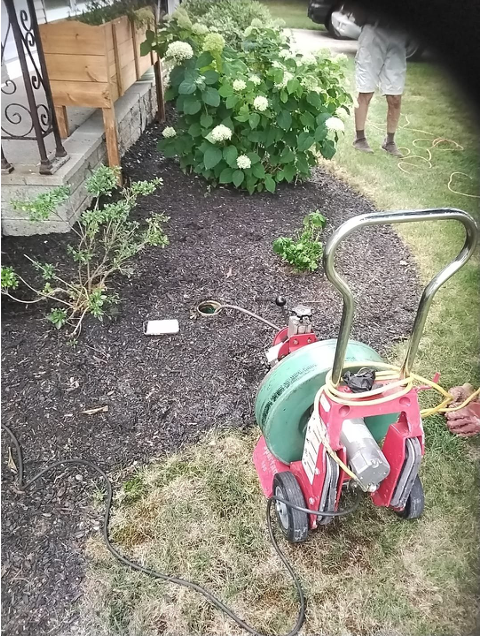
Why Northwestern Rhode Island Is Especially Vulnerable
If you live in Burrillville, Foster, Glocester, or the surrounding towns — Chepachet, Harrisville, Pascoag, Scituate — you already know what sets this part of the state apart. Dense forest, long driveways, properties with history. It's one of the most beautiful and rural corners of Rhode Island.
It also happens to be one of the most challenging environments for underground drain and sewer lines.
The trees that make these towns so appealing — oak, maple, birch, pine — have root systems that spread 2 to 3 times the height of the tree, often much farther. A 40-foot maple in your side yard may have roots extending 80 feet in every direction, quietly following any available moisture source underground. And in most homes built before 1980, there is no shortage of those sources: aging clay tile pipes and cast iron sewer lines with joints that have shifted, cracked, or opened slightly over decades of soil movement and freeze-thaw cycles.
Those gaps are an open invitation.
The Pascoag Reservoir watershed area, for instance, has deep, established tree cover that's been growing alongside residential pipe systems for 50 to 80 years in many neighborhoods. The trees and the pipes have coexisted for so long that most homeowners have no idea a problem is developing — until it announces itself with a backed-up toilet or a floor drain that won't clear.
How Tree Roots Get Into Your Sewer Line — and What Happens Next
Tree roots don't break into pipes. They're drawn to them.
Sewer lines naturally emit warmth and moisture through their walls, even when intact. Roots sense that moisture gradient and follow it. When they find a hairline crack, an offset joint, or a section of deteriorating clay pipe, they enter — and once inside, they don't stop growing.
A small root tendril entering a joint becomes a fibrous mass over months and years. That mass acts like a net, catching grease, toilet paper, food particles, and other debris that would otherwise pass through. The blockage builds gradually, which is why so many homeowners in Foster and Burrillville describe the same pattern: drains start running slow, there's occasional gurgling from the toilet, and eventually things back up entirely.
The telling signs that roots — not just a clog — are the culprit:
- Multiple slow drains throughout the house, not just one fixture
- Gurgling sounds from your toilet when the washing machine or sink drains
- Drains that clear temporarily after snaking, then slow down again within weeks or months
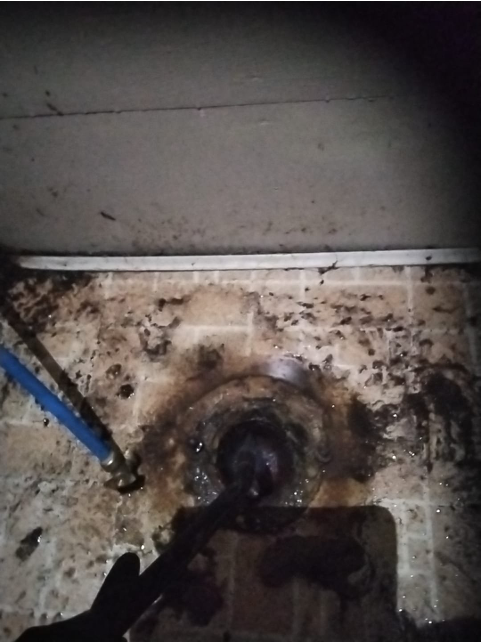
- Sewage odor in the basement or near floor drains
- Unusually green or lush patches of grass in the yard over where the sewer line runs
If any of those sound familiar, there's a good chance you have root intrusion, and the problem is not going to resolve itself.
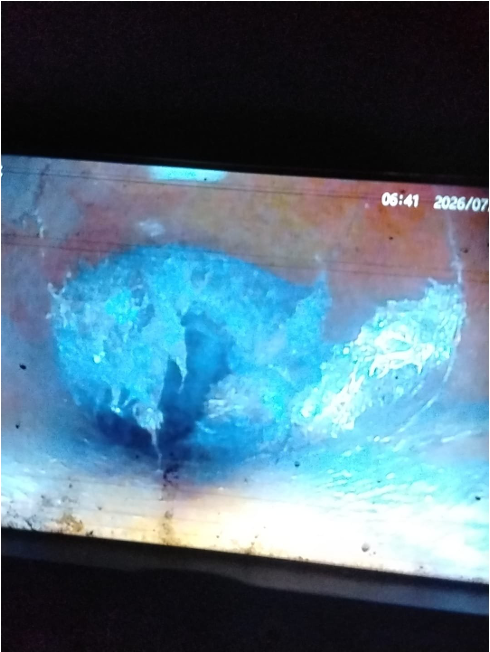
Why a Snake Doesn't Fix the Problem
When a drain backs up, the most common response is to call a plumber with a drain snake. A snake will often clear the immediate blockage and restore flow — which makes it easy to assume the problem is solved.
It isn't.
A mechanical snake drills or hooks through a root mass to create an opening for water to pass. It doesn't clean the pipe walls, and it doesn't remove the root structure that remains behind. Within weeks to months, roots regrow through the same openings, and the debris accumulation process starts again. This is exactly why some homeowners in the Burrillville and Chepachet area end up calling a plumber for the same drain two, three, even four times in a single year.
The snake gives you temporary relief. It doesn't give you a solution.
What Actually Solves a Root Problem
Solving tree root intrusion in a sewer line requires two things: knowing exactly what you're dealing with, and then clearing it the right way.
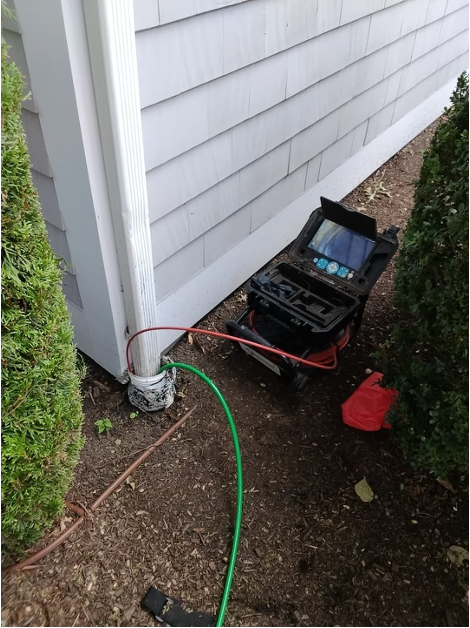
Camera inspection first. Before any cleaning or clearing happens, a drain camera goes through the line and shows precisely where the root intrusion is, how severe it is, and whether there's any structural pipe damage that needs to be addressed. This isn't guesswork — you see the pipe on a monitor in real time. That information shapes every decision that follows.
Hydro jetting to clear it properly. High-pressure water jetting — typically 3,000 to 4,000 PSI — blasts the full circumference of the pipe, removing root tendrils, grease buildup, and mineral scale from the pipe walls. Unlike a snake, hydro jetting doesn't just punch through the blockage. It cleans the pipe, leaving the interior as close to clear as possible and dramatically slowing the rate at which roots can reestablish.
For homes in Glocester, Foster, and Burrillville with older clay or cast iron lines, the camera inspection often reveals additional information worth knowing — offset joints, belly sections, or areas of structural concern that the homeowner was unaware of. That knowledge is valuable whether a repair is needed now or something to plan for down the road.
Frequently Asked Questions
How do I know if tree roots are in my sewer line? The most reliable way is a camera inspection — it's the only method that shows the inside of the pipe directly. Common indicators include recurring slow drains, gurgling toilets, drains that back up in multiple fixtures at once, and prior snaking that only provides temporary relief.
Can I use chemical root killers from the hardware store? Root-killing foams and chemical treatments can slow root growth inside a pipe, but they don't remove an existing root mass or address structural damage. They're a temporary maintenance tool, not a fix for active intrusion.
How often do roots grow back after hydro jetting? It depends on the condition of the pipe and the extent of the intrusion. In pipes with intact joints and no structural damage, regrowth is significantly slower after jetting than after snaking. In pipes with open joints or cracks, roots will return more readily — which is why the camera inspection matters. If the pipe is damaged, repair or lining may be the longer-term answer.
Does Zoom Drain service Burrillville, Foster, and Glocester? Yes. Zoom Drain Rhode Island services all of northwestern Rhode Island, including Burrillville, Foster, Glocester, Harrisville, Pascoag, Chepachet, and Scituate. We come to you.
Don't Wait for a Full Backup
Root intrusion is one of those problems that announces itself gradually — and then all at once. The slow drain that's been getting worse since spring rarely stays a slow drain. Left unaddressed, it becomes a sewer backup on a weekend when the whole family is home.
If you live in Burrillville, Foster, Glocester, or the surrounding towns and you've been dealing with recurring drain issues, the problem is likely underground — and it's likely roots. A camera inspection is the fastest way to know for certain and the first step toward getting it fixed for real.
Call Zoom Drain Rhode Island to schedule a drain camera inspection. We'll show you exactly what's in your pipes — and tell you exactly what to do about it.
Zoom Drain Rhode Island provides drain cleaning, hydro jetting, and sewer camera inspection services throughout northwestern Rhode Island, including Burrillville, Foster, Glocester, Harrisville, Pascoag, Chepachet, and Scituate.