

There's a farmhouse on a quiet road in Scituate that sold last fall for well under market value — at least compared to what similar properties fetch closer to the coast. The buyers loved it. Old stone walls, a barn out back, hardwood floors throughout. The home inspection came back clean. They closed in October.
By February, they had sewage backing up into their basement.
The clay sewer lateral running from the house to the road had been failing for years. Offset joints, partial root intrusion, a belly section that had been collecting solids for who knows how long. None of it was visible from inside the house. None of it showed up on the standard inspection. A $350 camera inspection before closing would have caught all of it — and given them real leverage with the seller, or at minimum, a clear picture of what they were buying.
If you're purchasing a home in Chepachet, Scituate, Glocester, or anywhere in northwestern Rhode Island, this is the one thing your home inspector almost certainly won't do — and the one thing that can cost you the most if you skip it.
What a Standard Home Inspection Misses
Home inspectors are thorough professionals, and a good inspection covers a lot of ground: the roof, the foundation, the electrical panel, the HVAC, visible plumbing fixtures, the water heater, insulation. It's a valuable service.
But a standard home inspection is almost entirely visual and surface-level. What it does not include — in the vast majority of cases — is any look at what's happening underground.
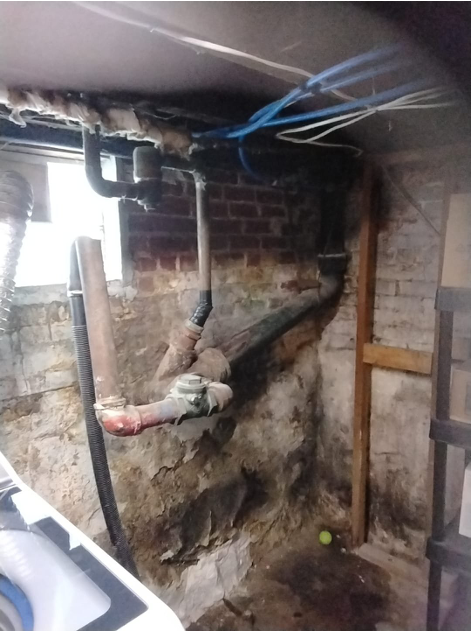
The sewer lateral is the pipe that connects your house to the municipal sewer main or your septic system. It runs underground, typically 4 to 6 feet deep, from the foundation of the house to the street or to the septic inlet. It is completely invisible during a standard inspection. The inspector can confirm that water goes down when you flush a toilet, but they cannot tell you anything about the condition of the pipe carrying that water away.
In most parts of Rhode Island, that's an acceptable gamble. In northwestern Rhode Island, it's a much riskier one.
Why NW Rhode Island Homes Carry More Risk
The towns along the Route 6 and Route 44 corridors — Chepachet, Scituate, Glocester, Foster, Burrillville — have a few things in common that make aging drain infrastructure especially prevalent.
The housing stock is old. A significant share of homes in these towns were built between the 1940s and 1970s. Clay tile and cast iron sewer laterals were standard in that era. Clay pipes shift and crack as soil settles over decades. Cast iron corrodes from the inside. Joints open. Neither material was designed to last 60 to 80 years without any inspection or maintenance, but that's exactly what most of them have gotten.
The lots are wooded. The tree coverage that makes these towns beautiful is also the source of one of the most common drain problems in the region: root intrusion. Roots from mature oaks, maples, and birches follow moisture into any crack or open joint in a sewer line. Over time, they build into masses that restrict or block flow entirely. A home with large, established trees anywhere near the lateral run is a home worth scoping before you buy.
Many properties have longer lateral runs. Rural lots tend to be larger, and homes are often set farther back from the road. A longer lateral means more pipe, more joints, more potential points of failure — and more distance for a camera to travel to give you the full picture.
Some homes have mixed or unknown systems. Older properties in these towns sometimes have complicated histories — portions of a septic system abandoned in place, old field lines near the drain run, or lateral connections that were modified by previous owners without permits. A camera inspection clarifies exactly what you're working with before it becomes your problem.
What a Pre-Purchase Sewer Inspection Looks Like
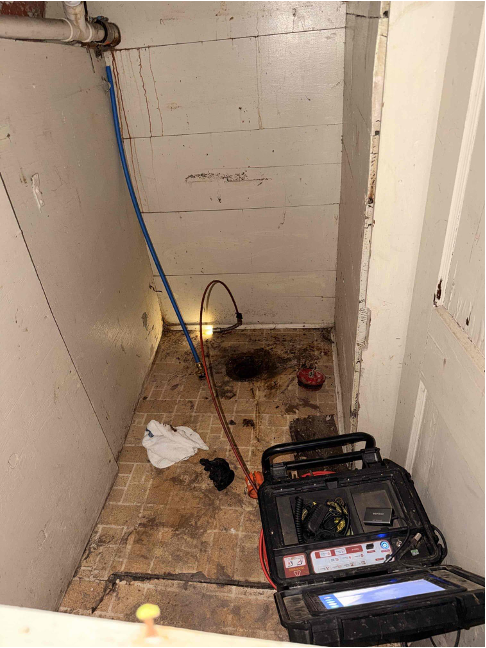
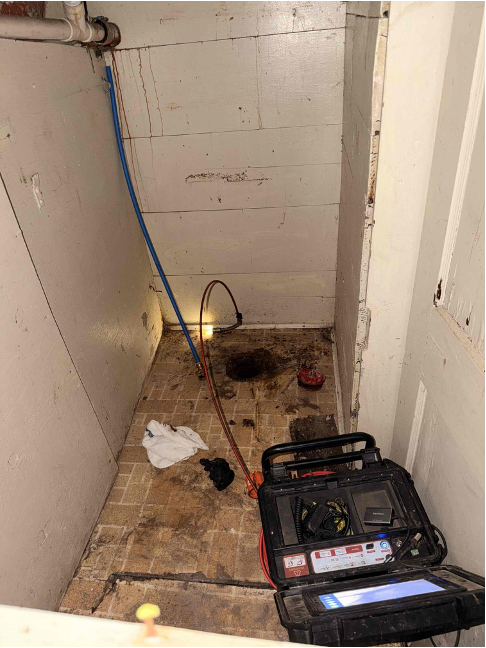
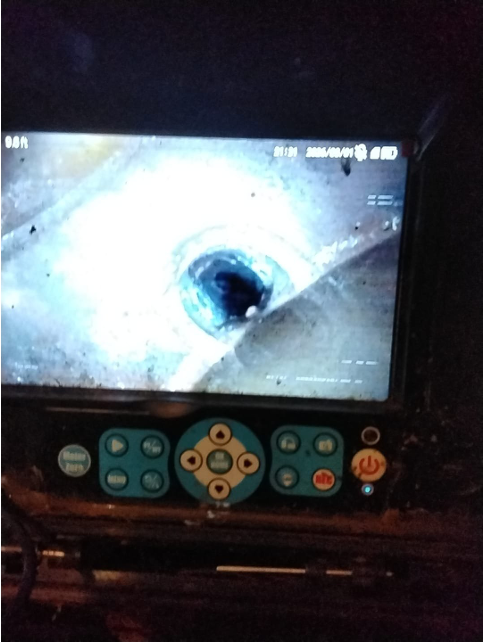
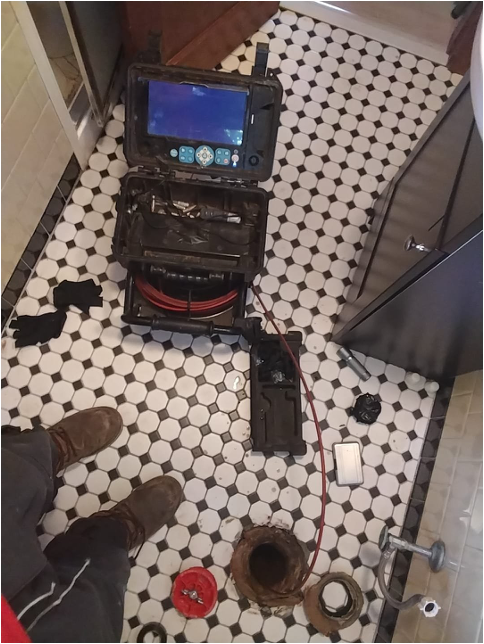
The process is simple and non-invasive. A camera is inserted through a cleanout access point — typically located in the basement or near the foundation — or through a toilet if no cleanout is accessible. The camera travels the length of the lateral, transmitting live video to a monitor above ground.
The whole inspection typically takes under an hour. You get a recorded video of the pipe's interior and a written assessment of what was found — the pipe material, any signs of root intrusion, offset joints, cracks, scale buildup, belly sections, or areas of structural concern.
That report gives you three things: knowledge, negotiating leverage, and peace of mind. If the pipe is in good shape, you close with confidence. If there are issues, you can ask the seller for a credit, request the repair as a condition of sale, or factor the cost into your offer. And if the pipe has a serious problem — a collapsed section, for instance — you may decide you don't want the house at all, which is a far better outcome than finding that out six months after closing.
What Repairs Actually Cost
Understanding the potential cost range is part of understanding why the inspection matters so much.
A minor root clearing on an otherwise intact pipe might cost a few hundred dollars and be resolved in a single visit. A cracked or offset section of lateral that needs spot repair typically runs in the range of $3,000 to $8,000 depending on depth and access. A full lateral replacement — new pipe from the house to the street, including excavation — commonly runs $8,000 to $20,000 or more, depending on the length of the run, how deep the pipe sits, and whether the work crosses landscaping, a driveway, or other obstacles.
Against those numbers, a pre-purchase sewer inspection is straightforwardly the cheapest form of insurance a buyer can get.
Frequently Asked Questions
Does a home inspection include the sewer line? In most cases, no. Standard home inspections assess visible and accessible components of the home. Underground sewer laterals are not included unless the inspector specifically offers a camera inspection as an add-on service — and most do not. A dedicated drain inspection from a drain specialist is a separate engagement.
When should I schedule the sewer inspection? Schedule it during your inspection period, before you've committed to closing. That way, any findings can be factored into negotiations before it's too late to act on them.
What if there's no cleanout access? If a home doesn't have a readily accessible cleanout, the camera can typically be run through a toilet or another fixture. It's a slightly more involved setup but doesn't require any demolition or major access work.
Does Zoom Drain serve Chepachet, Scituate, and Glocester? Yes. Zoom Drain Rhode Island services all of northwestern Rhode Island, including Chepachet, Scituate, Glocester, Foster, Burrillville, Harrisville, and Pascoag.
Get the Full Picture Before You Close
If you're buying a home in northwestern Rhode Island — anywhere along the Route 6 corridor, in the villages of Chepachet or Harrisville, on a wooded lot in Scituate or Foster — a sewer scope should be part of your due diligence as surely as a home inspection.
Call Zoom Drain Rhode Island to schedule a pre-purchase sewer inspection. We'll send a camera through the line, give you a full recorded video, and walk you through exactly what we found. Same-day and next-day appointments available.
Know what you're buying before you buy it.
Zoom Drain Rhode Island provides drain camera inspection, sewer lateral inspection, hydro jetting, and drain cleaning services throughout northwestern Rhode Island, including Chepachet, Scituate, Glocester, Foster, Burrillville, Harrisville, and Pascoag.