

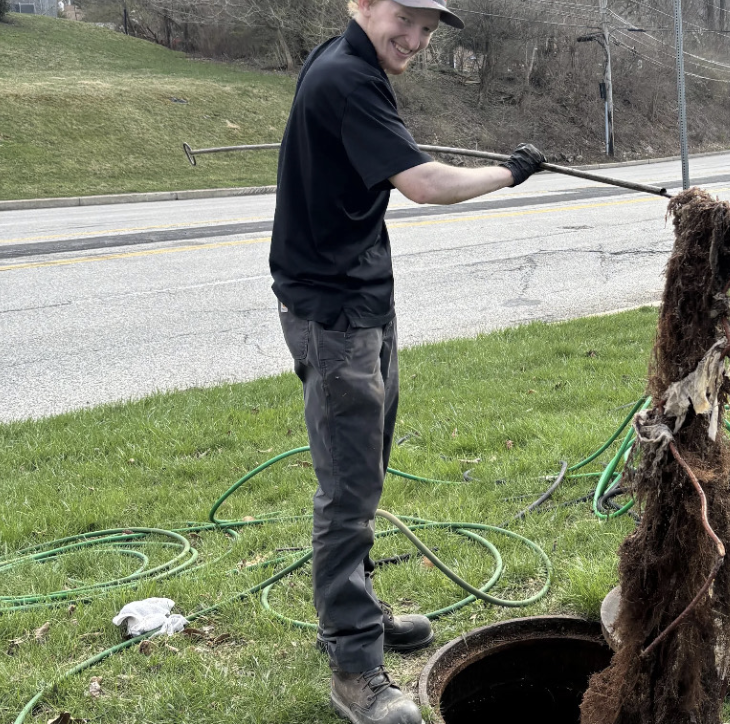
If you live in Pascoag, you already know the trees. The village of Burrillville is genuinely wooded — shaded streets, mature maples in front yards, tall oaks along property lines, and willows in the lower spots near the Pascoag River. It's one of the things that makes the neighborhood feel the way it does.
What most Pascoag homeowners don't realize is that those same beautiful trees are one of the leading causes of sewer line damage in the area. Tree roots and underground sewer pipes are a bad combination — and in a village with homes dating back to the early 1900s, the problem is more common than most people expect.
At Zoom Drain Rhode Island, we respond to root intrusion calls throughout Pascoag and Burrillville regularly. This guide explains why it happens, how to recognize it early, and what we do to fix it.
.jpeg)
Why Pascoag Homes Are Especially Vulnerable
Root intrusion doesn't happen at random. It tends to concentrate in places where three conditions come together: old pipes, mature trees, and moist soil.
Pascoag has all three.
Old Pipes. Pascoag's housing stock spans more than a century. Many homes still running on their original plumbing were built when clay and cast iron were the standard materials for sewer lines. Both of those materials — unlike modern PVC — develop small cracks and joint separations over time. Those gaps don't have to be large. Even a hairline crack is enough for a tree root to find its way in.
Mature Trees. A tree planted in 1960 has had 65 years to extend its root system. Roots from a large maple or oak can travel 20, 30, even 50 feet from the base of the tree. That front yard maple that looks well away from your house? Its roots may already be at your sewer line.
The Pascoag River and Moisture. Pascoag sits along the Pascoag River, and that proximity to water means the soil through much of the village holds moisture well. Tree roots follow moisture. In dry soil, roots spread widely in search of water. In the moist, nutrient-rich environment around an older sewer pipe, roots don't just find the line — they grow into it aggressively.
Put those three things together, and root intrusion becomes less of a possibility and more of an inevitability for many Pascoag properties — especially those with older pipe materials and established landscaping.
.jpg)
The Trees Most Likely Causing the Problem
Not all trees are equal when it comes to sewer line damage. In Pascoag and the surrounding Burrillville area, the species most likely to cause problems are the ones most common here.
Red Maple and Sugar Maple. Both grow fast and develop wide, shallow root systems. They are by far the most common sewer line invaders in Rhode Island's older residential neighborhoods. If you have a mature maple within 30 to 40 feet of your home, it deserves attention.
Oak. Oaks grow more slowly than maples, but their roots are persistent and travel far. A large oak on the edge of a property can affect pipes well beneath the house footprint.
Willow. Willows grow near water — and Pascoag has plenty of low-lying areas and spots near the river where willows thrive. Willow roots are especially aggressive. They have fine, hair-like root structures that can penetrate even the smallest pipe opening. If you have a willow on your property, root intrusion should be on your radar.
Poplar and Locust. Fast-growing and increasingly common in northern Rhode Island, both species have expansive root networks that spread quickly.
Warning Signs You May Already Have Root Intrusion
The tricky thing about root intrusion is that it develops slowly. By the time there's a full backup or an emergency, roots have typically been growing inside the pipe for months or years. Catching it earlier saves money and prevents bigger damage.
Here's what to watch for:
Multiple slow drains at once. If just your kitchen sink is slow, it's likely a localized clog. If your kitchen sink, your shower, and your toilet are all draining slowly around the same time, the problem is further down in the main line — and root intrusion is one of the most common causes.
Gurgling sounds from toilets or drains. Partial blockages in the sewer line trap air. That air forces its way back up through the lowest fixtures in the house. A toilet that gurgles when you run the sink two rooms away is a classic sign of a main line obstruction.
Recurring backups despite cleaning. If you've plunged, used drain cleaner, or had a basic drain cleaning done and the problem keeps coming back weeks or months later, the underlying cause hasn't been addressed. Roots regrow after mechanical cutting unless additional treatment is applied.
Sewage smell in the yard or basement. A functioning sewer line is sealed. If sewer gas is escaping into your yard or through your basement drain, the pipe has a breach — possibly from root damage that has cracked or separated a joint.
Unusually green or wet patches of grass. A leaking sewer line fertilizes the soil above it. If there's a strip of your yard that's lush and green while the rest is ordinary, or a soft, wet spot that doesn't go away after dry weather, a compromised sewer line below may be the reason.
If you're seeing any of these signs at your Pascoag home, the right move is a professional sewer camera inspection — not another trip to the hardware store.
.jpg)
How Zoom Drain Rhode Island Handles Root Intrusion
When Zoom Drain comes to a Pascoag home for a root intrusion call, we follow a clear process designed to solve the actual problem, not just the symptom.
Step 1: Sewer Camera Inspection. We start by running a high-resolution camera through your sewer line. This lets us see exactly what's happening inside the pipe — where the roots are, how established they are, and what condition the pipe itself is in. There's no guessing and no unnecessary digging. You see what we see.
Step 2: Mechanical Root Removal. If roots are present, we use mechanical augers and our Zoom Jetting™ hydro jetting equipment to cut through and clear the root mass. Zoom Jetting™ uses high-pressure water to break apart roots, clear blockages, and clean the interior walls of the pipe in a way that mechanical cutting alone can't achieve. The line is fully opened and restored to proper flow.
Step 3: RootX® Foaming Root Treatment. Cutting the roots solves the immediate blockage. What it doesn't do is stop roots from growing back. For that, we apply RootX® — an EPA-registered foaming herbicide designed specifically for sewer line use. RootX foam fills the pipe and adheres to the root tissue that remains after cutting. It kills existing root material and leaves behind a treatment that inhibits regrowth. It does not harm the tree above ground. We recommend RootX as a regular maintenance application for any Pascoag property with trees near the sewer line.
Step 4: Repair If Needed. If the camera inspection reveals that roots have caused structural damage to the pipe — cracks, collapsed sections, or broken joints — we discuss repair options. For most cases, we can use trenchless pipe lining, which installs a new pipe lining inside the existing one without excavation. Your yard stays intact. If the damage is more extensive, we'll walk you through the options honestly, including full sewer line replacement when that's the right call.
.1).png)
Prevention for Pascoag Homeowners
Not every root problem requires an emergency call. If you're proactive about it, you can protect your sewer line and avoid the bigger repairs.
Know where your sewer line runs. Ask us during an inspection and we'll map it for you. Knowing the path of the line tells you which trees are close enough to pose a risk.
Schedule a camera inspection every two years. For any Pascoag home with mature trees and pipes more than 20 years old, a routine camera inspection is the single most effective preventive measure. We see problems at the early stage, when they're inexpensive to fix.
Consider a RootX maintenance schedule. For properties we know have root-prone trees near the line, we can set up a regular RootX application — usually once a year — that keeps roots from establishing themselves after each clearing.
Be thoughtful about new plantings. If you're adding trees to your yard, plant them as far from the sewer line as possible and choose species with less aggressive root systems. Ornamental trees like dogwoods, serviceberries, and Japanese maples have much smaller root footprints than maples and oaks.
Don't Wait on This One
Root intrusion is one of those problems that homeowners tend to put off until it becomes impossible to ignore. By that point — a full backup, sewage in the basement, a collapsed section of pipe — the repair is far more disruptive and expensive than it needed to be.
In a wooded village like Pascoag, with older housing stock and the kind of mature tree canopy that makes the neighborhood beautiful, root intrusion is simply part of the maintenance picture. It's manageable when you stay ahead of it.
Zoom Drain Rhode Island serves Pascoag and all of Burrillville. If you're noticing slow drains, recurring backups, or you just want to know what's going on inside your sewer line, give us a call or schedule online. We'll send a technician, run the camera, and give you a straight answer about what's there and what to do about it.
Call or book online at zoomdrain.com/rhode-island/