

Every September, landlords across the East Side, Federal Hill, Elmwood, and South Providence get the same calls. A new tenant moved in two weeks ago and the bathroom drain is backing up. The kitchen sink is running slow. The toilet gurgles when the washing machine runs.
The tenant wonders if they caused it. The landlord wonders the same thing. In most cases, the answer is: probably not. The drain has been building toward this moment since spring, and what it took to push it over the edge was five people using it instead of one — or a vacant unit returning to full occupancy after a summer of sitting quiet.
Providence is home to Brown University, RISD, Providence College, Johnson & Wales, and several other schools that collectively move tens of thousands of students into the city's rental housing stock every September. If you own rental property in this city — a triple-decker on the East Side, a duplex in Elmwood, a converted Victorian near Federal Hill — you already know what October looks like. This year, you can get ahead of it.
Why Rental Properties Are High-Risk Drain Environments
The physics of a rental property's drain system are simple: more people, more daily drain load, faster accumulation of buildup, faster path to a blockage.
A single-occupancy unit generates a certain amount of grease, hair, soap scum, and daily waste through its drains. A five-person student apartment generates five times that — concentrated into the same pipe runs, often in the same narrow window of morning usage. The shared drain stack in a Providence triple-decker is handling multiple units' worth of that load simultaneously.
There's also the occupant familiarity issue. Experienced homeowners know what shouldn't go down a drain. New tenants — especially college students living independently for the first time — often don't. Wipes labeled "flushable" (they aren't). Food waste from the kitchen sink without a proper trap. Feminine hygiene products. These go into the drain system and accumulate. One month of that behavior in a new tenancy can add meaningfully to years of prior buildup.
And then there's summer vacancy. Many Providence rentals — especially those catering to students — sit empty or at reduced occupancy between May and September. During that time, the drain lines aren't getting used much, and problems don't present themselves through backed-up fixtures. What you can't see is that grease and soap scum are cooling and hardening on pipe walls, root tendrils are advancing through any open joint, and the system is slowly getting worse without any signal that it's happening. September move-in is when the signal arrives.
Providence's Rental Housing Stock
The challenge for Providence landlords isn't just tenant behavior — it's what the tenants are moving into.
A substantial portion of Providence's rental housing was built between 1890 and 1940. The three-decker tenement style that defines neighborhoods like Smith Hill, Elmwood, and South Providence was constructed during the mill era, and the drain infrastructure in many of these buildings has been in place — in some form or another — for most of that time. Cast iron drain stacks, lead trap connections in the oldest buildings, clay sewer laterals running to the street. These are materials that were never designed to last 80 or 100 years, and many of them are doing exactly that.
The East Side presents a different but equally challenging profile. Larger Victorians and colonials, many converted to multifamily use, with drain systems that have been modified and patched by multiple owners over decades. Shared main laterals serving the entire property. Mature elms and oaks on the streets and in the yards — and roots that have had generations to find every available joint in an aging clay line.
For a landlord, the consequence of deferred drain maintenance isn't just an inconvenient service call. It's a tenant who can't use the bathroom on a Sunday night, a potential health code issue if the backup involves sewage, and in the worst cases, water damage to finished tenant spaces.
What Pre-Season Drain Service for a Rental Property Looks Like
The window between August 15 and September 10 — after most prior tenants have vacated and before new tenants settle in — is the best possible time to service the drain lines in a Providence rental property. The unit is empty, access is unobstructed, and any problem found can be addressed before it becomes a tenant complaint.
Camera inspection of the main stack and lateral. A camera goes through the shared stack from cleanout access to the main, showing the condition of the pipe: scale buildup, root intrusion, offset joints, and any sections where the pipe has shifted or cracked. For a multi-unit property, this is the most important piece of information you can have before the building fills with tenants.
Hydro jetting the kitchen lines. Grease buildup from prior tenants accumulates in kitchen drain runs and the shared stack below them. Hydro jetting the kitchen line removes that buildup from the pipe walls, not just from the immediate bend — so it takes significantly longer to re-accumulate.
Hydro jetting bathroom stacks. Years of soap scum, hair, and mineral deposits in shared bathroom stacks respond well to jetting, and the result is noticeably better drain performance for all units on that stack.
Documentation. A camera inspection produces a recorded video of the pipe's condition at the time of service. For property owners, this documentation is useful in two ways: it establishes the pipe's condition at the start of a tenancy (relevant if there's a lease dispute involving plumbing), and it gives you a baseline to compare against in future inspections.
The Math on Prevention vs. Emergency Service
Consider what an emergency drain call costs in a Providence rental property on an October Saturday evening: an after-hours rate, a disrupted tenant who may be within their rights to demand a rent reduction for habitability issues, possible water damage if waste reached the floor, and the time it takes you to coordinate all of it.
Compare that to a scheduled pre-season inspection and cleaning during the quiet window before move-in — which can be planned, is priced at standard rates, and leaves you with documented proof that the system was in serviceable condition when the tenancy began.
For a landlord managing multiple properties, the arithmetic gets clearer with every unit. One prevented emergency pays for several preventive visits.
Frequently Asked Questions
How often should a rental property's drain lines be serviced? For Providence multi-family properties with older pipe and high occupancy, annual inspection is a reasonable standard. For newer builds or single-family rentals with lower occupancy, every two to three years is typical. If you've had prior drain incidents, annual is strongly recommended.
Do I need to be present for the inspection? Not necessarily — if a property manager or maintenance contact can provide access to the cleanout, that's sufficient. We can provide the inspection report and video directly to the owner.
What if the inspection reveals a damaged lateral that needs repair? We'll tell you exactly what we found, show you the video, and give you a clear assessment of your options — cleaning, spot repair, trenchless lining, or full replacement depending on the scope and location of the damage. You make the call with complete information.
Does Zoom Drain service Providence rental properties on a commercial basis? Yes. We work with individual landlords and property management companies throughout Providence. Commercial service calls are treated with the same camera-first, no-guesswork approach as residential.
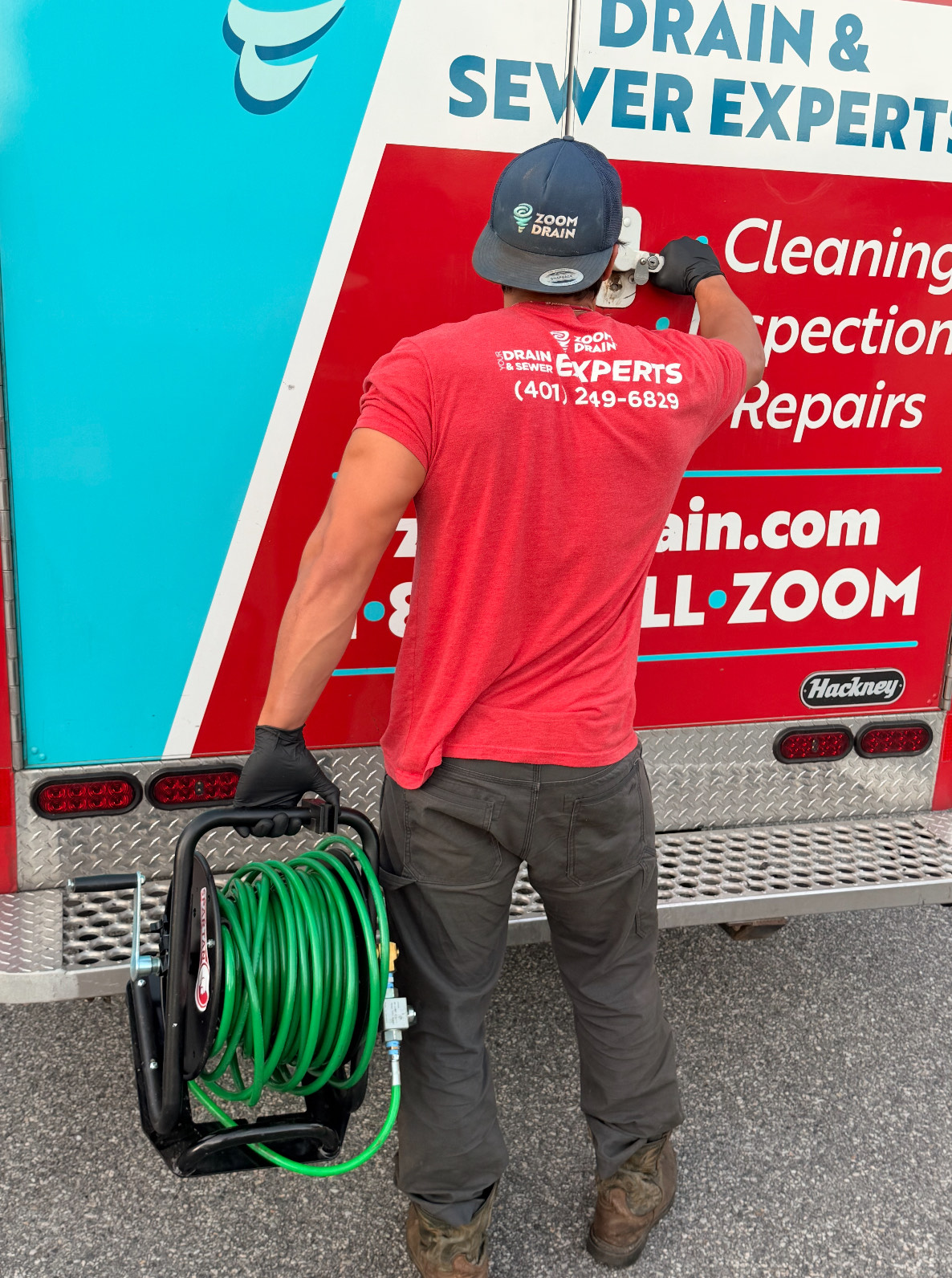
Schedule Service Before Move-In Season Closes
The best window for pre-season drain service is narrow. Once tenants are in and settled, scheduling becomes more complicated and the disruption is higher.
If you own rental property in Providence and you haven't had the drain lines inspected recently — or ever — September is the time to do it.
Call Zoom Drain Rhode Island. We work with Providence landlords and property managers to schedule drain inspections and cleaning around tenant turnover. Camera inspection on every call, honest findings, no work you don't need.
Zoom Drain Rhode Island provides commercial and residential drain cleaning, camera inspection, and hydro jetting services throughout Providence and all of Rhode Island.