

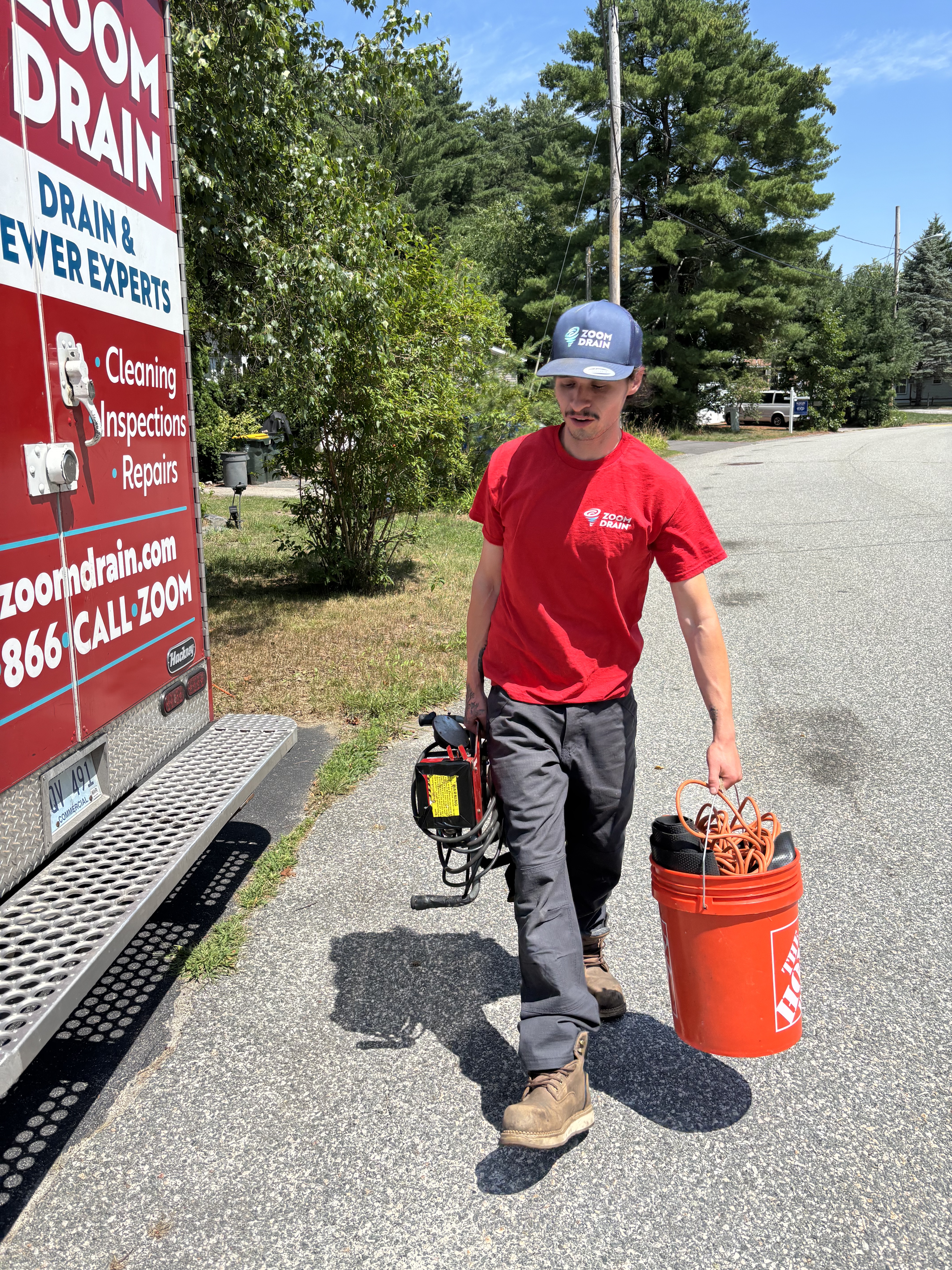
September arrives in Cranston and the pace of the house shifts. School buses are back on Reservoir Avenue. The AC unit is finally quiet. For the first time since June, every person in the household is home at the same time, every morning, using every shower, every sink, and every toilet in a window of about forty-five minutes.
The drain that was running a little slow all summer — the one you made a mental note about and then forgot — is about to find out what it's made of.
Fall is the season when drain problems announce themselves in Cranston homes. Not because something sudden happens, but because quiet summer buildup finally meets the full load of a busy household. And by the time a backup happens, the problem has usually been developing for months.
Here's what Cranston homeowners should know, and do, before the weather turns.
Why Fall Is the Right Time to Address Drain Issues
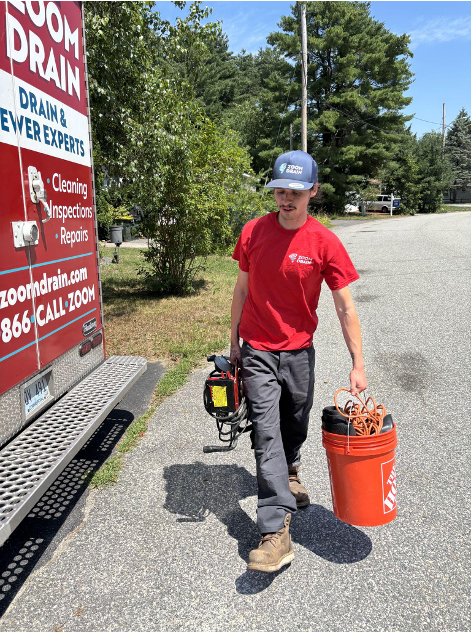
Most people think about their drains only when something goes wrong. The more useful approach is to think about them in September, before they have a chance to.
Summer actually creates ideal conditions for undetected drain buildup. Household water usage is lower when people are outside more, on vacation, or running on irregular schedules. A main drain line that's 40% restricted still handles summer flow without obvious symptoms. Add a full fall household load on top of that restriction and the same pipe that seemed fine in July backs up in October.
There's also a grease factor. Fall and winter bring more cooking at home. More heavy meals means more fat and oil going down the kitchen drain. A pipe that's already coated in buildup becomes a blockage faster when the holiday cooking season starts. Getting it clean in September means starting that stretch with pipes that can actually handle it.
Cranston's Housing Stock and What It Means for Your Drains
Cranston is Rhode Island's second-largest city, and a significant portion of its residential neighborhoods were developed between the 1940s and the 1970s. Auburn, Edgewood, Meshanticut, Oaklawn; these are established neighborhoods where homes have been lived in for five or six decades, and in many cases, the drain infrastructure underneath them has never been inspected.
Cast iron and clay sewer pipes were standard during that era. Cast iron corrodes from the inside over time, developing a rough, scaled surface that grips grease and debris. Clay tile joints shift as soil settles and contracts through annual freeze-thaw cycles, creating the small gaps that tree roots eventually find. Neither material fails dramatically or suddenly. Both degrade gradually, which is exactly why the problem isn't obvious until it is.
Cranston is also a tree-lined city. The mature oaks and maples in neighborhoods like Edgewood and Meshanticut have root systems that have been growing alongside underground sewer infrastructure for decades. Where there are open joints in clay pipe — and in a 50-year-old clay lateral, there almost certainly are — roots have found them.
The Fall Drain Checkup: What It Actually Involves
A drain inspection and cleaning before fall doesn't require a major plumbing project. For most Cranston homes, it's a straightforward, minimally disruptive process.
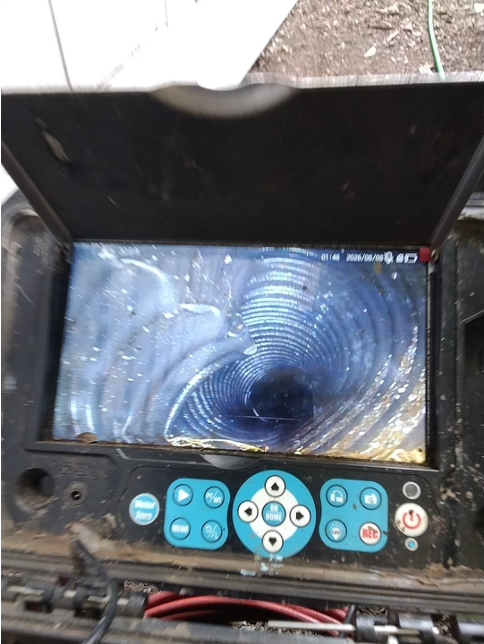
Step one is the camera inspection. A waterproof camera goes through the cleanout access point (typically in the basement) and travels the length of the main drain lateral, transmitting live video to a monitor above ground. The whole inspection takes under an hour. What it shows: scale buildup on pipe walls, root intrusion, offset joints, belly sections where solids pool, and any structural damage. You watch in real time. There's no guessing.
If buildup is found, hydro jetting clears it properly. A high-pressure water jetting head runs through the line, blasting the full circumference of the pipe at up to 4,000 PSI. Unlike a snake, which punches a hole through a blockage, hydro jetting cleans the pipe walls. Grease, scale, and root debris are flushed out, not just punctured. The pipe that comes out of a jetting session is as close to clear as it's going to get without replacement.
The result is a main drain that enters the fall season clean and at full capacity, rather than one that's been restricting flow since spring and waiting for the right moment to back up.
Signs Your Cranston Home's Drains Need Attention Now
Not every Cranston home needs fall drain service every year. Here are the signs that suggest yours does:
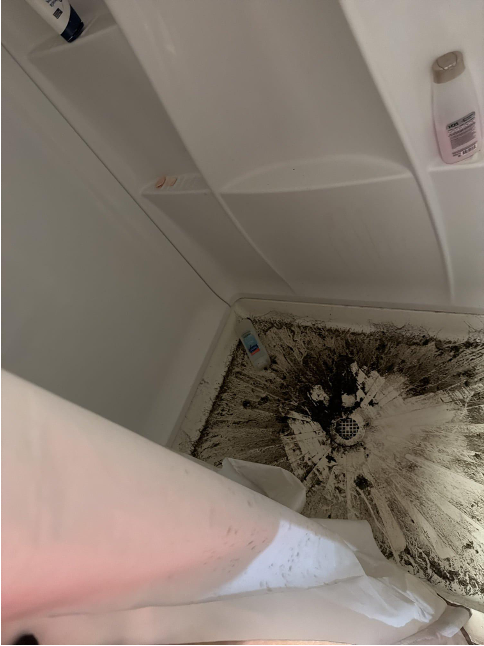
Multiple slow drains. If more than one fixture in the house drains slowly — bathroom sink, kitchen, shower — the issue is in the shared main line, not one individual drain. That's a sign of significant buildup.
Gurgling toilets. When air is displaced through the toilet because the main line is partially obstructed, you'll hear it when the washing machine drains or the shower runs. It's one of the clearest signals that something is wrong deeper in the system.
Drains that temporarily improved and slowed again. If you've had a drain snaked once or twice and the problem keeps returning, the pipe wall buildup was never addressed. That's exactly the situation hydro jetting resolves.
A sewage smell from basement floor drains. Partial blockages allow organic matter to accumulate in the line, producing gas. If the smell is seasonal or periodic, the blockage is building.
A home built before 1980 that has never had a drain inspection. This alone is a reason to look. Not because something is definitely wrong, but because it's been in the ground for 50+ years and you simply don't know.
Frequently Asked Questions
How often should I have my drains professionally cleaned? For most Cranston homes, an inspection every two to three years is reasonable maintenance — more frequently if you've had prior issues, if there's heavy tree coverage over the sewer line, or if the home was built before 1970. Older homes with clay or cast iron pipe benefit from more regular attention.
Is fall really the best time, or can this wait until spring? Fall is better. Spring addresses problems that developed over winter. Fall prevents them from developing in the first place, and it does so before the heaviest cooking and indoor usage months of the year. The best time to clean a drain is before it backs up.
Do I need to be home during the service call? Yes. A technician needs access to the cleanout in your basement or the nearest fixture for the camera. Most inspections and cleanings are completed in two to three hours.
Does Zoom Drain service Cranston? Yes. Zoom Drain Rhode Island serves Cranston and all surrounding communities. We offer same-day and next-day appointments for most service calls.
Get Ahead of It This September
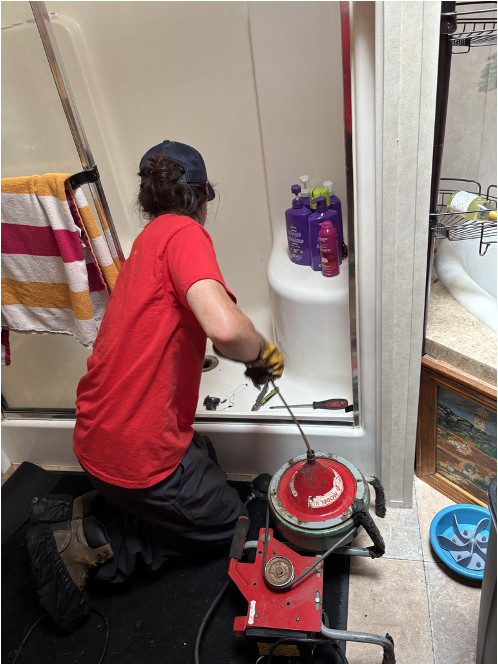
The backup that happens in November was preventable in September. That's true for most of the drain emergencies we respond to in Cranston homes. The signs were there earlier in the year, and by the time the household is back at full strength, there's no slack left in the system.
Call Zoom Drain Rhode Island to schedule a fall drain inspection for your Cranston home. Camera inspection, honest assessment, no unnecessary work. We'll show you exactly what's in your pipes and let you decide what to do about it.
Zoom Drain Rhode Island provides drain cleaning, camera inspection, hydro jetting, and sewer line services throughout Cranston and all of Rhode Island.