
.2608261226310.jpeg)
It's a Saturday evening in late August in Harrisville. The family has been over most of the day for a cookout in the backyard. The kids are in and out, and it’s a full house for the first time all summer. Around seven o'clock, someone mentions the toilet in the main bathroom isn't flushing right. By eight, nothing in the house is draining. The basement floor drain is backing up. You call a plumber. No answer. You call another. Voicemail. You search for drain service near Burrillville and scroll through results that are either national chains with three-day wait estimates or local companies whose websites haven't been updated since 2019.
It's a familiar scenario to anyone who's lived in the rural communities of northwestern Rhode Island long enough to have a plumbing problem on a weekend.
The distance from the traffic, from the density, from the coast that makes these towns worth living in also creates a very real gap in service coverage. And for drain emergencies, which don't schedule themselves around business hours or geography, that gap matters.
Zoom Drain Rhode Island covers it.
The Rural Service Gap Is Real — and It Doesn't Have to Be Yours
Most drain and plumbing service companies in Rhode Island draw their coverage boundaries around the population centers: Providence, Cranston, Warwick, Pawtucket. Some extend to Woonsocket. Very few extend meaningful, responsive coverage to Foster, Glocester, Burrillville, Harrisville, Pascoag, Chepachet, and Scituate. Even the ones that do list these towns on a webpage don't necessarily answer the phone on a Saturday night or arrive in any reasonable window of time.
Homeowners in this part of the state are conditioned to expect either a long wait or a no-show when they call for emergency service. Many delay calling at all, hoping the problem resolves itself. It rarely does. Main line blockages don't clear on their own, and sewer gas (produced by backed-up waste) is a genuine health hazard. The longer you wait, the worse the backup gets and the greater the risk of waste reaching finished spaces in the home.
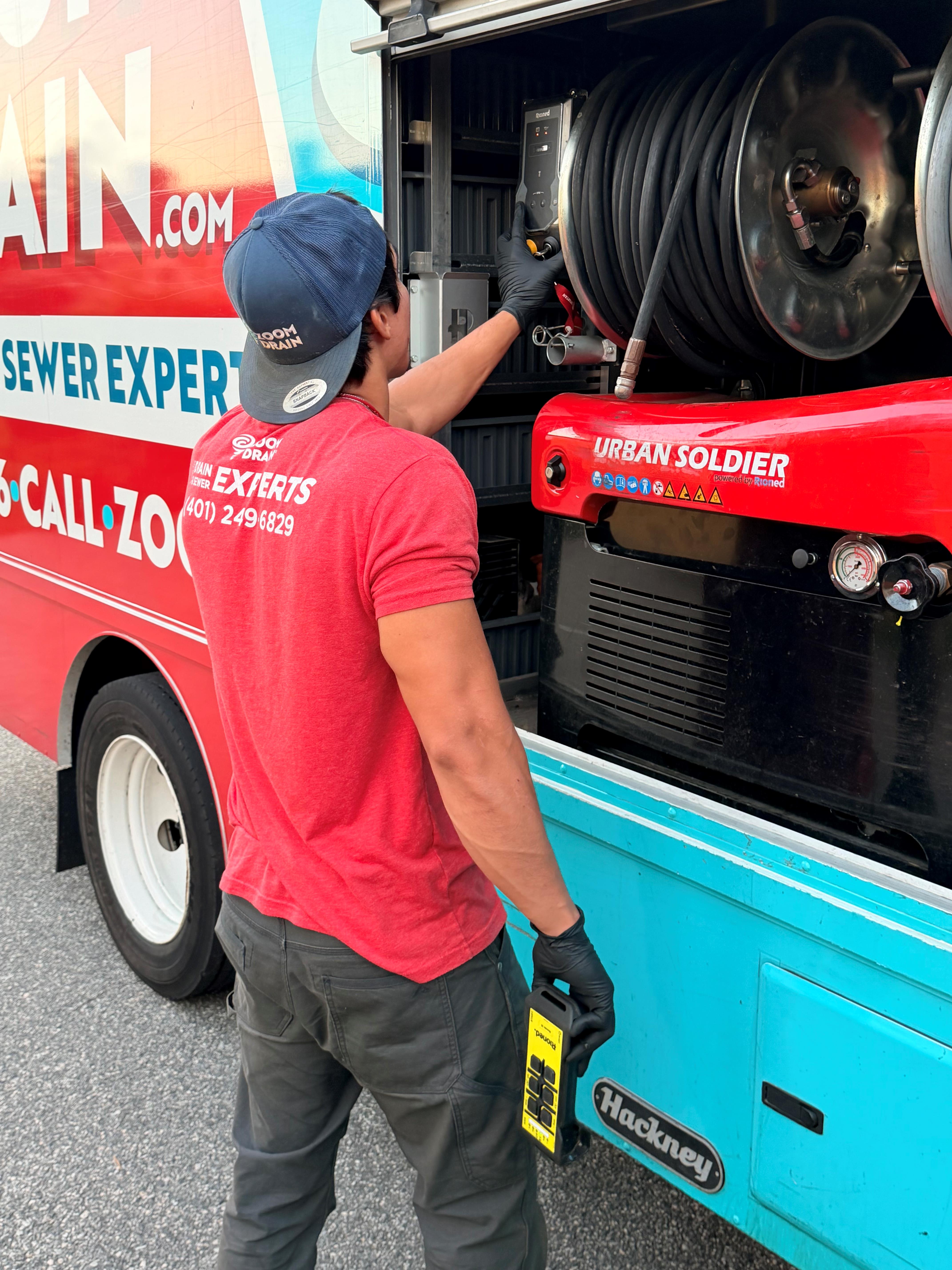
Zoom Drain Rhode Island specifically and intentionally serves northwestern Rhode Island. If you're in Burrillville, Harrisville, Foster, Glocester, Scituate, Pascoag, or Chepachet, we come to you with a full service truck carrying camera inspection equipment and hydro jetting capability, not just a snake and a hope.
What Qualifies as a Drain Emergency
Not every slow drain is an emergency. But some situations genuinely cannot wait, and knowing the difference helps you make the right call without unnecessary delay.
Call immediately if you're experiencing:
- Multiple toilets or drains backing up at the same time. This is the signature of a main line blockage. The main sewer line connects all the fixtures in your home to the street or septic system. When the main line is blocked, nothing in the house can drain.
- Sewage smell inside the house, especially in the basement. Sewer gas contains hydrogen sulfide and methane, both of which are hazardous at elevated concentrations. A strong sewage odor indoors is not a cosmetic issue.
- Visible sewage backup in a floor drain, tub, or toilet. If waste is coming up rather than going down, the system is full and the blockage is complete.
- Water backing up in the shower or tub when the washing machine runs. This means the standpipe or the drain lateral is restricted enough that the washing machine's discharge is finding the path of least resistance: through your shower drain.
These are not situations where a wait-and-see approach is appropriate. They are situations where the problem will only get worse, and where water and waste damage accumulates by the hour.
Why August Is the Wrong Month to Ignore a Warning Sign
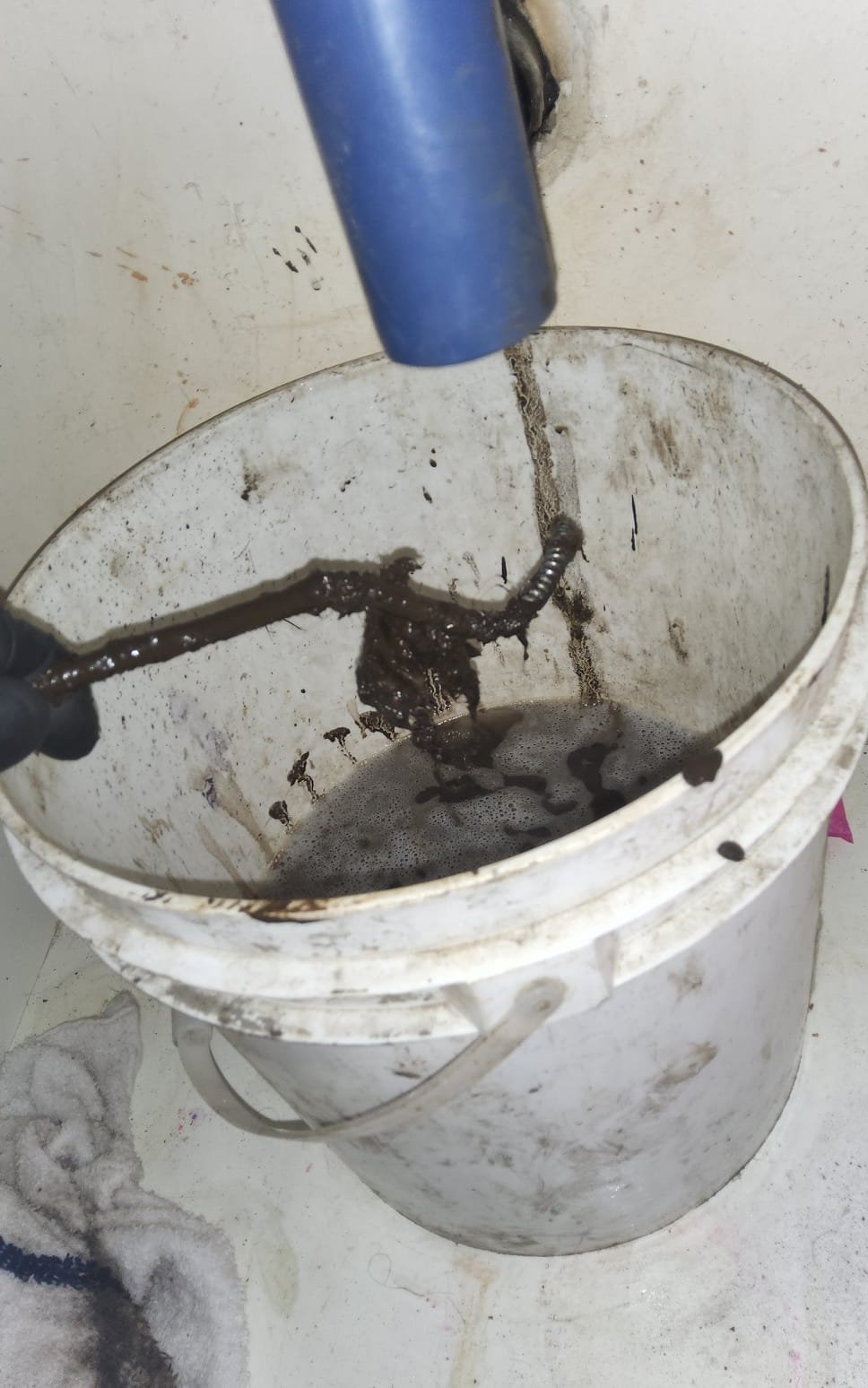
The end of summer puts more demand on drain systems than almost any other time of year; more people, more showers, more laundry, more cooking. Households that have been running at full capacity through the season are pushing aging pipes harder than they handle during quieter months. Cookout grease, for instance, doesn't just run down the drain and disappear. It cools and solidifies in the pipe, and a summer's worth of backyard cooking leaves a significant deposit.
It's also the time of year when people returning from summer travel discover problems that developed while they were gone; a toilet that runs continuously can accelerate root intrusion, a slow drain that was just starting in June is now nearly stopped by the end of August.
If you've noticed warning signs over the summer and have been putting off calling, now is the right time to address it. Before fall, before the temperature drops and outdoor access becomes more difficult.
What to Do While You Wait for Service
If you've called and a technician is on the way, there are a few things you can do to limit damage and make the service call more efficient:
Stop using water in the house. Every gallon you put into the system has nowhere to go when the main line is blocked. Continued water use increases the pressure on the backup and risks pushing waste further into finished spaces.
Don't use chemical drain cleaners. Products like Drano or Liquid-Plumr are formulated for minor, localized clogs. They do nothing for main line blockages, and the caustic chemicals can damage older cast iron and clay pipes, making an already bad situation worse. They also create a hazard for the technician working in the drain.
Protect your basement if possible. If a floor drain is actively backing up, move belongings away from it. A wet-dry vacuum can help manage standing water, but it will refill as long as the blockage persists.
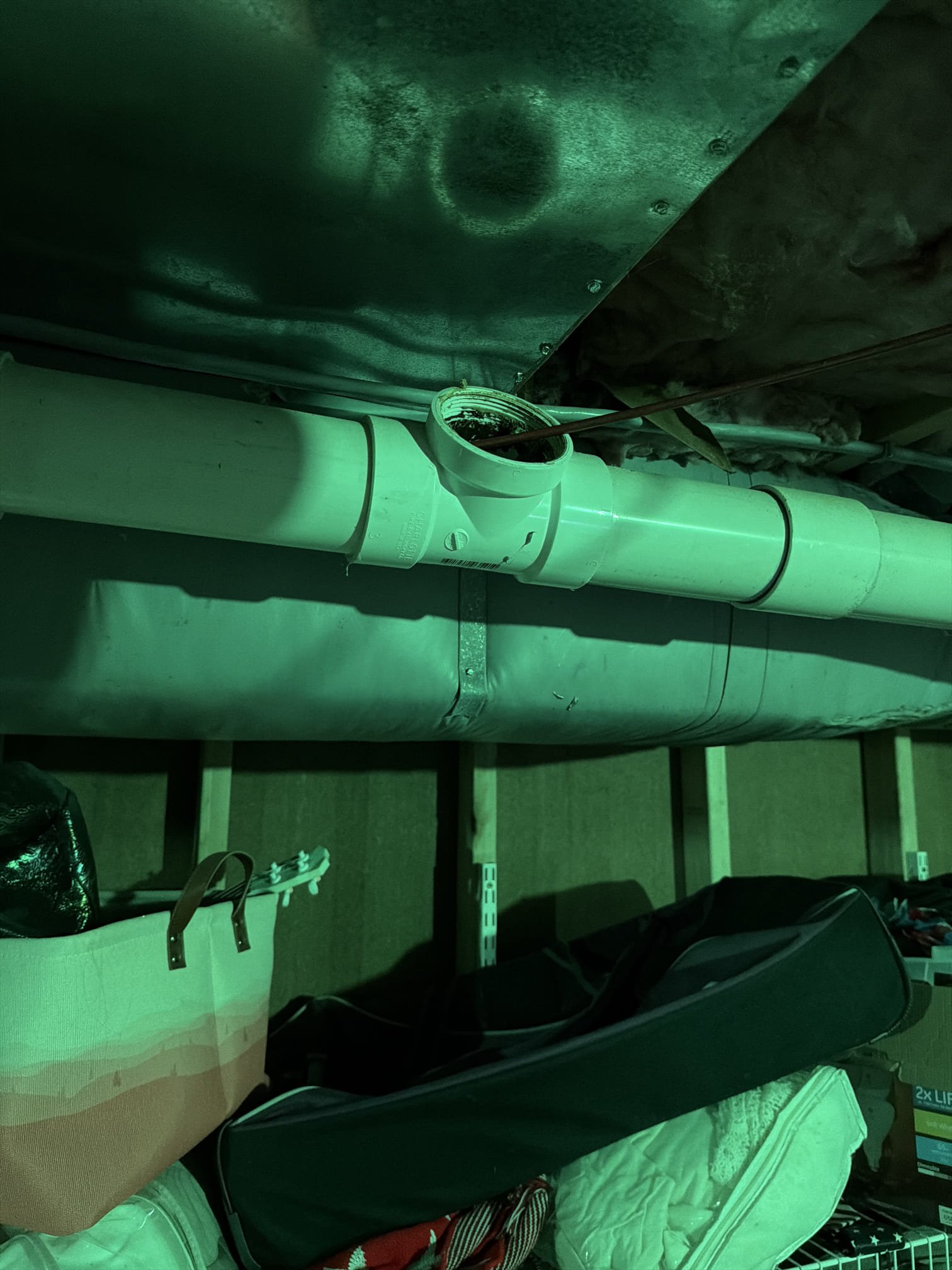
Find your clean out access, if you know where it is. A cleanout is a capped pipe fitting — often in the basement, near the foundation, or just outside the house — that provides direct access to the drain line. Knowing where it is before the technician arrives saves time.
What to Expect from a Zoom Drain Service Call
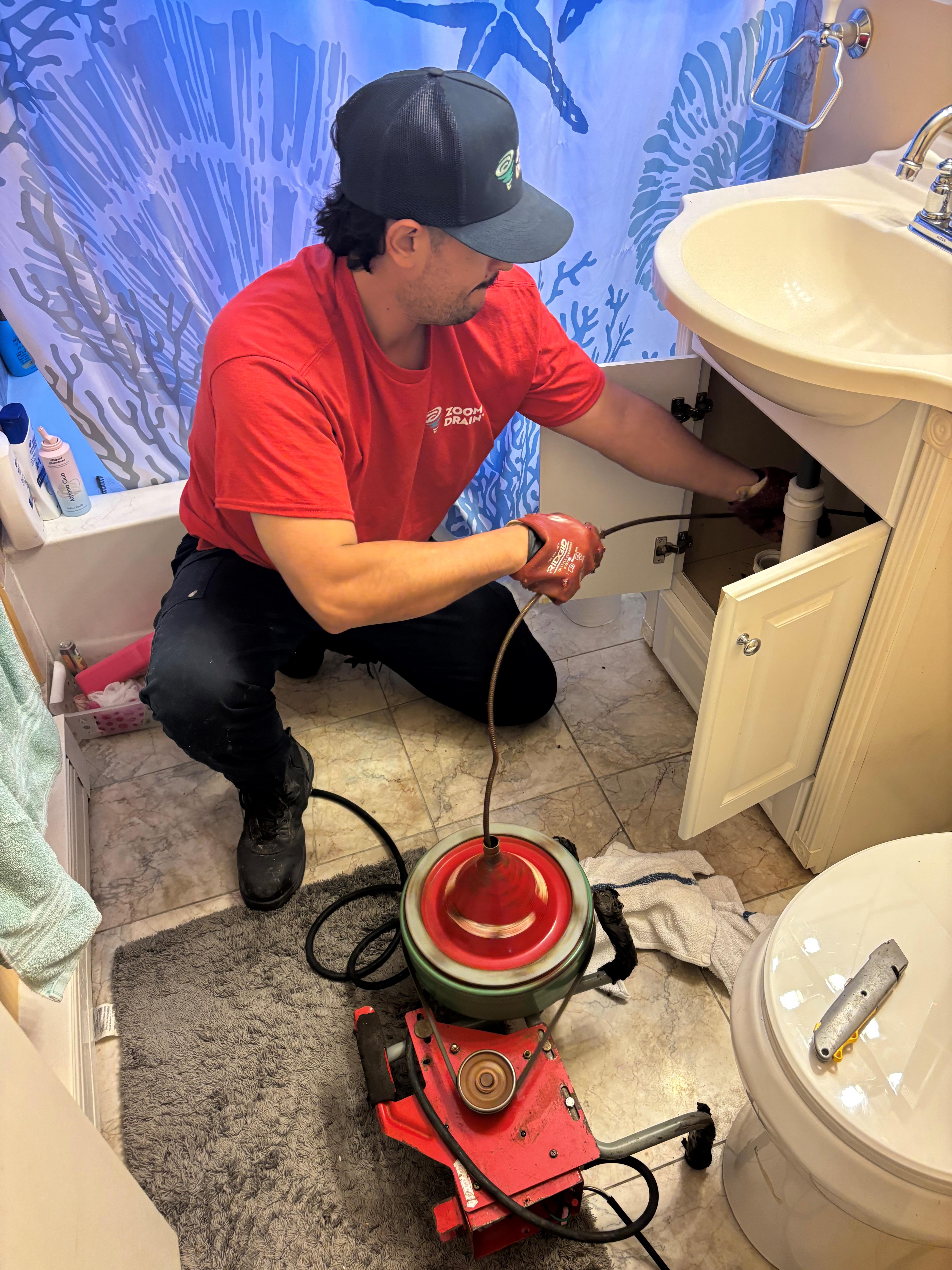
When a Zoom Drain Rhode Island technician arrives, they arrive with equipment, not a snake and a business card. Every service call starts with a diagnosis.
A camera goes into the line first. That inspection shows exactly where the blockage is, what's causing it, and whether there's any pipe damage that needs to be factored into the repair approach. You see what we see. There's no guessing, no recommending services you don't need, and no charging for procedures that aren't right for your specific situation.
For most main line blockages (grease accumulation, root intrusion, soft debris), hydro jetting resolves the issue in a single visit. The line is cleared, the camera makes another pass to confirm the pipe is open and clean, and you're given a clear explanation of what caused the backup and whether any follow-up is warranted.
Most emergency drain calls in northwestern Rhode Island are resolved the same day.
Frequently Asked Questions
Does Zoom Drain serve Foster, Glocester, Burrillville, Harrisville, Pascoag, Chepachet, and Scituate? Yes. All of those towns are within our service area. We specifically serve northwestern Rhode Island because we know it's an underserved area for specialized drain service.
How quickly can you respond to an emergency drain call? Response times vary by time of day and current call volume, but emergency drain service is a priority. Call us directly to get an accurate ETA rather than submitting a web form. Phone calls get the fastest response.
Will I need to pay an emergency service premium? Emergency or after-hours calls may carry a different rate than standard business-hours appointments. When you call, we'll be upfront about pricing before any work begins — no surprises on the invoice.
What if the problem is with my septic system rather than my drain line? Zoom Drain specializes in drain and sewer lines, from the fixtures inside your home to the point where your lateral connects to the municipal sewer or your septic inlet. If the problem is within the septic system itself (the tank, the leach field), we'll tell you clearly and help point you in the right direction. What we can tell you from a camera inspection is exactly where the blockage is, so you know who to call and for what.
Is it safe to stay in the house during a main line backup? If there is active sewage odor indoors, it's worth ventilating the space and limiting time in the basement until the issue is resolved. Sewer gas at high concentrations is hazardous. For a backup that's primarily in the drain system without strong odor, you can typically stay in the home while waiting for service. Just don't use any water-based fixtures.
Don't Wait. Don't Wonder If Anyone Will Come.
Drain emergencies in Burrillville and Foster and Glocester and Harrisville and every other town in this corner of Rhode Island don't get better with time. They get worse, and they get more expensive.
You don't have to be 45 minutes from the nearest responsive service company. Zoom Drain Rhode Island is here, and we come to you.
When your drains back up, call Zoom Drain Rhode Island. Same-day service, camera inspection on every call, and honest answers about what it will take to fix it.
Zoom Drain Rhode Island provides emergency drain service, main line clearing, hydro jetting, and camera inspection throughout northwestern Rhode Island, including Burrillville, Harrisville, Foster, Glocester, Scituate, Pascoag, and Chepachet.