

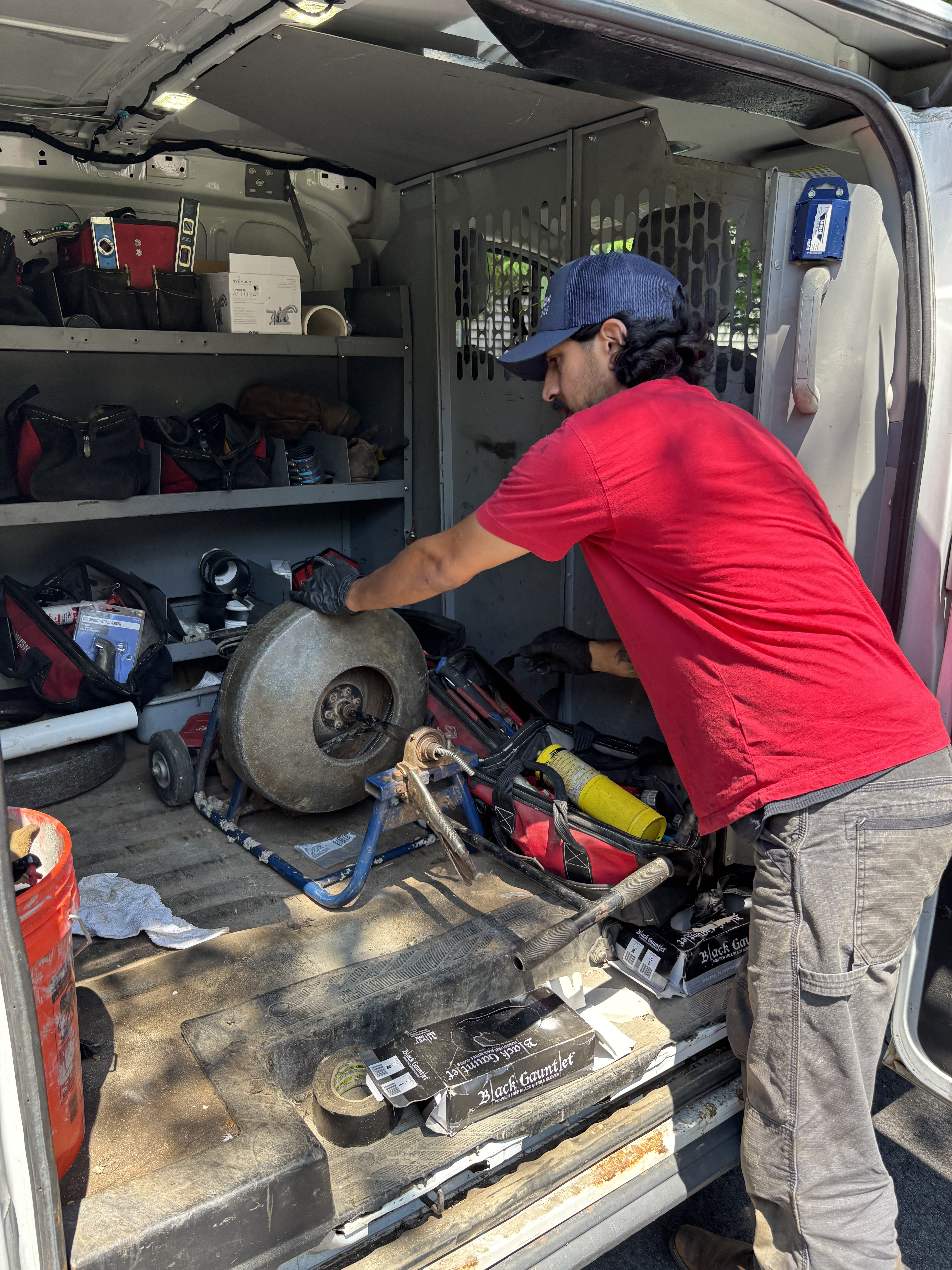
A kitchen drain backup doesn't schedule itself around your quiet Tuesday. It happens on a Friday at 6 PM, ninety minutes into dinner service, when the reservation book is full and the line is eight covers deep. The floor drains in the kitchen start rising. The dishwasher won't drain. You're making calls to anyone who might respond after hours while your cooks work around standing water.
Every Rhode Island restaurant operator who has been in that situation has had the same thought: why didn't I deal with this earlier?
The answer is usually simple — drain maintenance isn't visible, isn't urgent on a normal Tuesday, and tends to get pushed down the list until it can't be pushed anymore. This is a guide for getting ahead of it before fall service ramps up, before the drains that handled a moderate summer load meet the full weight of a busy September-through-December.
.jpeg)
Why Restaurant Drain Lines Fail Differently Than Residential Ones
A residential kitchen generates some grease, some food particles, and a reasonable daily volume of water through its drains. A commercial kitchen generates a fundamentally different kind of load.
The volume alone is significant — a busy Rhode Island restaurant may process hundreds of covers on a Friday night, each one involving prep, cooking, plating, and dishwashing. Every step generates FOG: fats, oils, and grease. Butter clarified for sauce work. Rendered fat from proteins. Fryer oil that makes it into the floor drain rather than the waste container. Cooking spray residue from sheet pans going into the dish machine. Multiply this across a full service week and the daily FOG load entering a commercial kitchen's drain system is orders of magnitude higher than anything a residential drain handles.
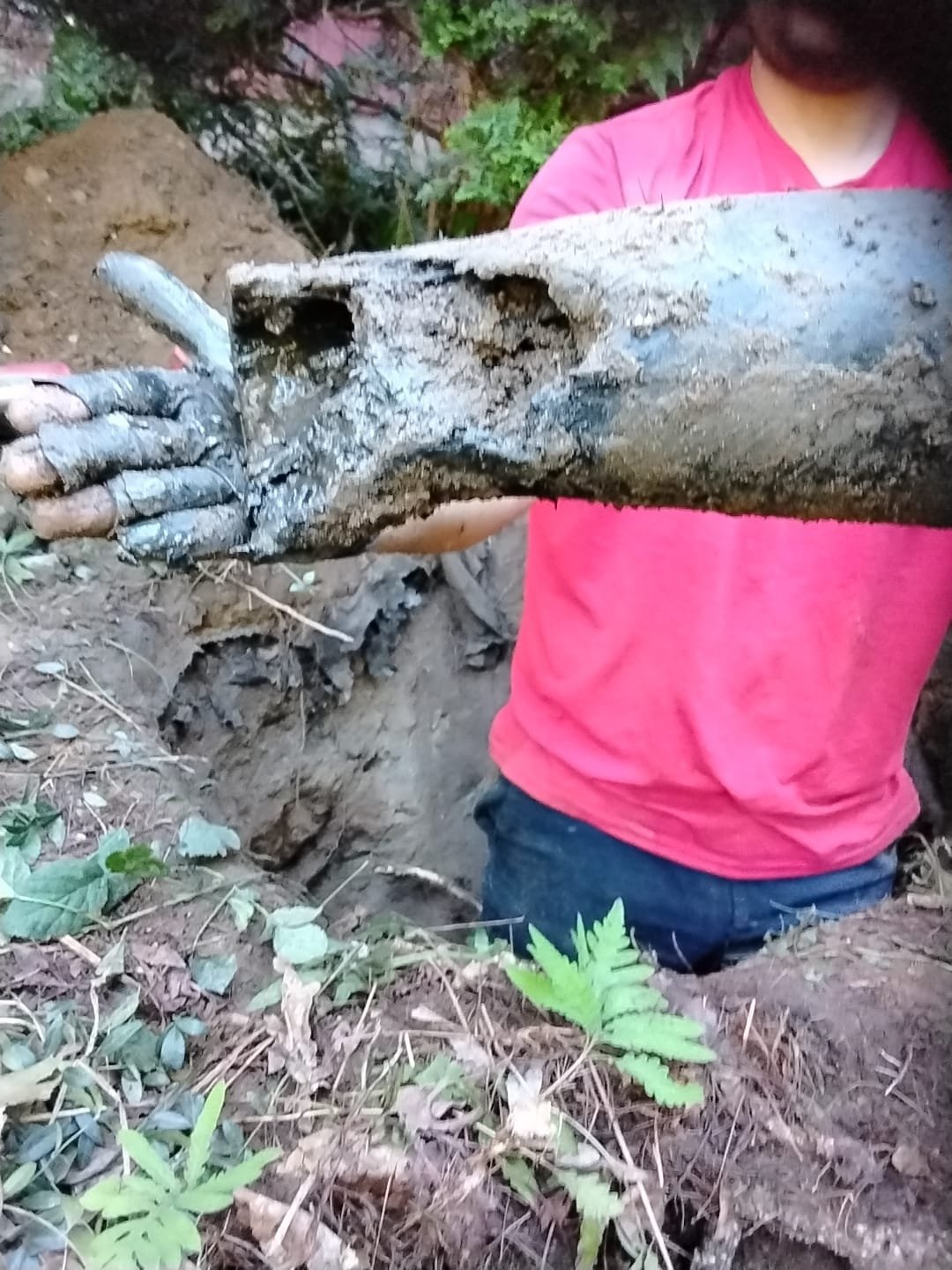
Grease behaves predictably in a drain line: it flows freely when it's hot and liquefied, and it cools and solidifies as it moves away from the heat of the kitchen. The farther it travels from the drain, the more it cools, and the more it adheres to the pipe wall. What starts as a thin film becomes a layer. The layer becomes a restriction. The restriction becomes a blockage — and the first time you notice it is when the floor drain is rising during a service rush.
The Grease Trap: Necessary, But Not Sufficient
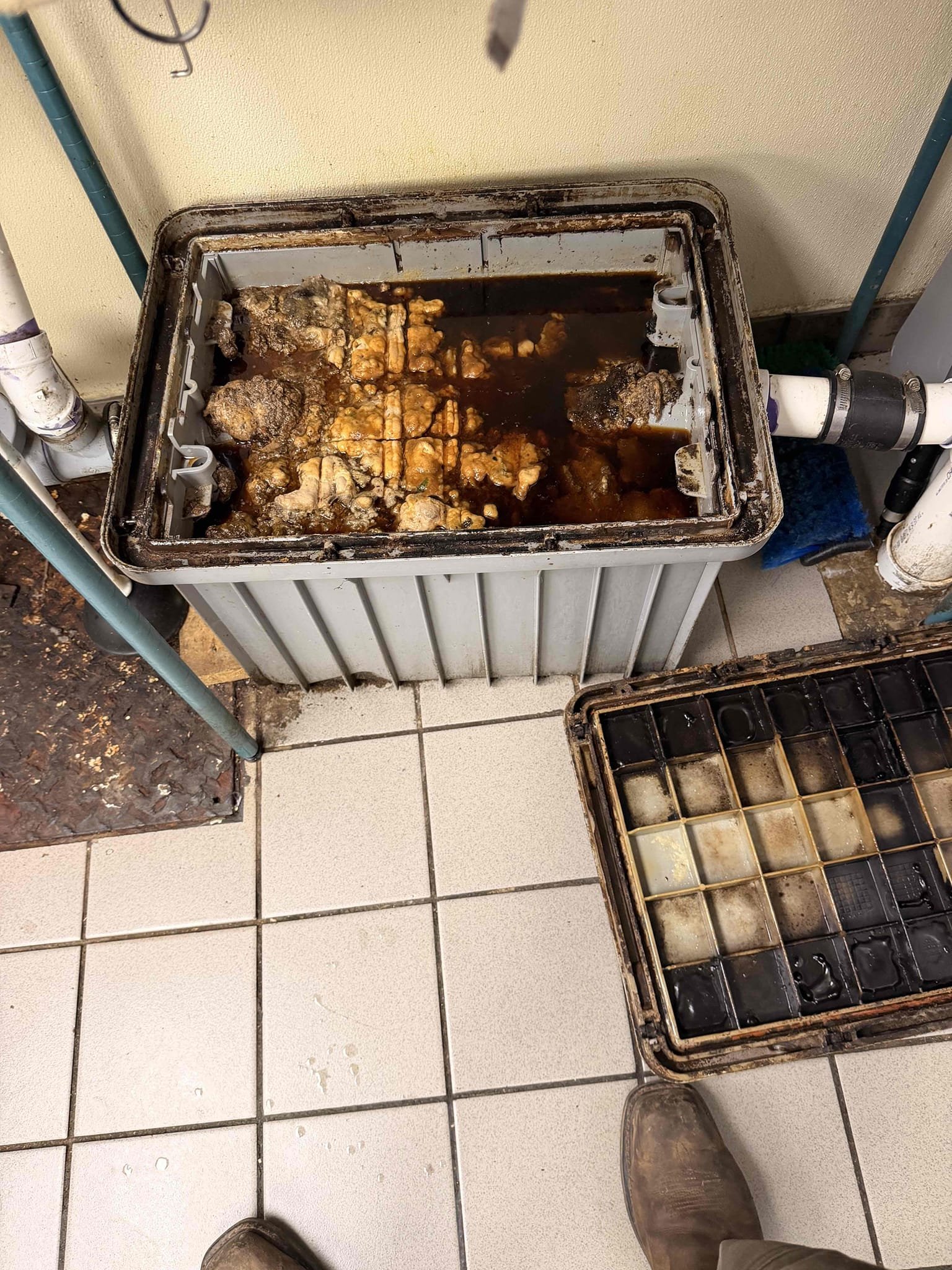
Every commercial kitchen in Rhode Island is required to have a grease interceptor — a grease trap that captures FOG before it enters the municipal sewer system. Most operators are familiar with the routine: the trap needs to be pumped regularly, typically every one to three months for high-volume kitchens, and failure to maintain it creates both a compliance issue and a blockage risk.
What the grease trap doesn't do is eliminate the grease problem in the drain lines themselves.
Between the kitchen floor drains and the grease trap, the pipe runs through the kitchen and often through the wall before reaching the interceptor. That section accumulates grease coating just like any other drain line — and it's not being cleaned when the trap is pumped. Similarly, the drain line from the trap to the sewer main carries everything the trap doesn't capture: fine grease particles, emulsified oils, and suspended solids that pass through the interceptor's screen.
Over time, these sections of pipe — upstream of the trap, downstream of the trap, and lateral runs throughout the kitchen — build up a coating that progressively narrows the pipe and slows drainage. By the time the floor drains are noticeably slow during peak service, the buildup is already significant.
Signs Your Restaurant's Drain Lines Need Professional Attention
Drains that run slowly during or after peak service hours. This is the most common first symptom. Floor drains that handle normal prep-period flow begin lagging when service volume peaks and the drain load is heaviest. The restriction was always there — it's just that lower flow could get through it and peak flow can't.
Persistent odor from floor drains even after cleaning. A properly flowing drain flushes organic material through the system. When buildup accumulates in the pipe, it creates a surface where organic matter collects and decomposes — producing the sulfur-compound odor that no amount of floor drain cleaning tablets addresses, because the source is in the pipe wall, not at the drain opening.
Multiple floor drains backing up simultaneously. When two or more floor drains back up at the same time, the blockage is in the shared main line downstream of where those drains converge — not in any individual drain run. This is a more serious condition than a single slow drain and usually indicates a significant restriction or a complete blockage developing in the main.
Fruit fly presence near floor drains. Fruit flies breed in organic buildup in drain lines — the biofilm of grease and decomposing material on pipe walls is a breeding environment. If you're managing a fruit fly problem in a clean kitchen and it traces back to the floor drains, the issue is in the pipe, not on the surface.
Grease trap backing up more frequently than the pumping schedule should produce. If a trap that was pumped a month ago is already full or slow, the drain lines feeding it may be constricted enough that waste is backing up into the trap rather than flowing through it normally.
.png)
Commercial Hydro Jetting: The Right Tool for Kitchen Drain Lines
Standard drain snaking is inadequate for commercial kitchen drain lines. A snake creates an opening through a grease blockage, but grease is not a debris plug — it's a coating. The coating on the pipe wall around the opening remains after the snake passes, and it catches new material almost immediately. The drain that was slow on Friday will be slow again by the following Friday.
Commercial hydro jetting delivers high-pressure water through the drain line at pressures up to 4,000 PSI, with nozzles specifically designed for grease-coated pipe. The water jets forward and backward simultaneously as the nozzle moves through the line, scrubbing grease from the pipe walls rather than just punching through it. The result is a pipe that's open at its full diameter, with clean walls that don't immediately re-accumulate material.
For high-volume kitchens, the recommended maintenance schedule is quarterly hydro jetting of the primary drain lines and annual camera inspection to assess the overall condition of the pipe system. Moderate-volume kitchens typically maintain well on a semi-annual jetting schedule.
The economics are straightforward: a scheduled quarterly jetting, planned around your closed days or early morning hours before prep, costs a fraction of what an emergency service call during Friday service costs — in direct expense, lost revenue, and the wear on the team managing the crisis.
Scheduling Service Around Your Operation
One of the consistent frustrations restaurant operators have with service companies is scheduling. A drain cleaning that requires shutting down the kitchen during lunch prep is not a service call that fits a working restaurant.
Zoom Drain Rhode Island works around restaurant operations. Service calls can be scheduled for early morning before prep begins, on closed days, or after late service — whatever disrupts your operation the least. For preventive maintenance calls, we confirm the scheduling in advance and arrive in the window we committed to.
For emergency calls during service, we respond as quickly as possible and work to get the kitchen functional with minimum downtime. Camera inspection on arrival means we know what we're dealing with before we start, not after we've tried three different approaches.
Frequently Asked Questions
How often does a commercial kitchen drain line need professional cleaning? High-volume kitchens — full-service restaurants running multiple meals daily — benefit from quarterly hydro jetting of the primary drain runs. Lower-volume operations can maintain well on a semi-annual schedule. Annual camera inspection is recommended for all commercial kitchen drain systems regardless of volume.
Can we be operational while the drain service is happening? It depends on which lines are being serviced. Isolated drain runs can often be serviced while the rest of the kitchen operates. Main line work typically requires a shutdown of kitchen water use during the service window. We confirm the operational impact before scheduling.
Our grease trap was just pumped. Why are drains still slow? Because the trap and the drain lines are separate systems. A pumped trap is functioning correctly as a grease interceptor — but it doesn't clean the drain pipe between the kitchen and the trap, or the lateral from the trap to the sewer main. If drains are slow after a trap pumping, the issue is in the pipe, not the trap.
Is Zoom Drain set up to work with commercial accounts on a maintenance schedule? Yes. We work with restaurants and commercial food service operations on scheduled maintenance programs — recurring quarterly or semi-annual drain service, with priority response for emergency calls. Ask about our commercial maintenance program when you call.
Does Zoom Drain serve restaurants throughout Rhode Island, not just Providence? Yes. We serve commercial customers statewide — Providence, Cranston, Warwick, Woonsocket, Newport, and everywhere in between.
Handle It Before the Fall Rush
September is the right moment. Summer's lighter service volume gave your drain lines a relative break. The fall dining season, holiday parties, and the busiest service months of the year are coming. Getting the kitchen drain lines cleaned and inspected now means going into that stretch with a system that can handle what you're about to put through it.
Call Zoom Drain Rhode Island to schedule a commercial kitchen drain inspection and cleaning. We'll camera inspect the lines, hydro jet what needs it, and give you an honest assessment of the pipe's condition — so you're not finding out what's in there during a Friday service rush.
Zoom Drain Rhode Island provides commercial drain cleaning, hydro jetting, grease line service, and camera inspection for restaurants and food service operations throughout Rhode Island.